














The Ministry of Transport and Communications has proposed removing the legal requirement for municipalities to establish low-emission zones in resort towns and larger cities – a move that has drawn criticism from the Ministry of Environment and environmental groups.
Under current legislation, low-emission zones were required to be implemented in 13 Lithuanian towns with more than 50,000 residents by January 1, 2024. However, only the city of Kaunas has fulfilled the mandate so far.
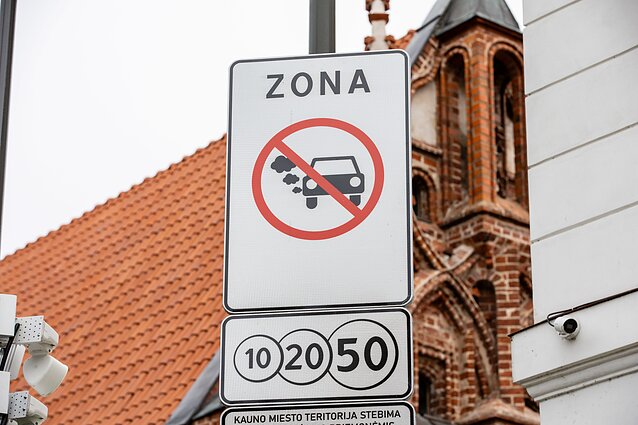
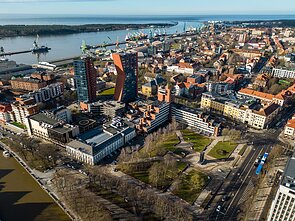
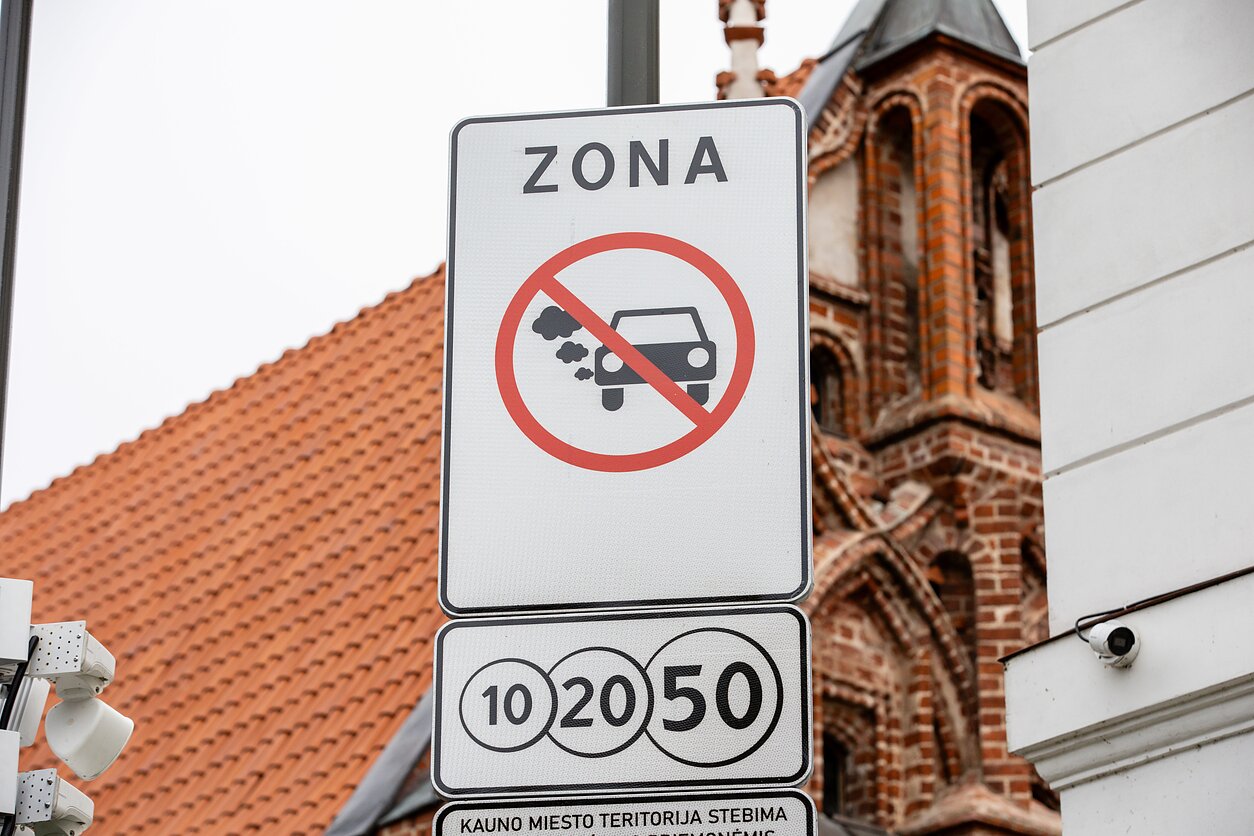
Kaunas has introduced signage marking a designated low-emission area in its Old Town, including Rotušės Square and surrounding streets such as Muitinės and Daukšos. Drivers entering the zone are charged a €2 fee, which includes the first hour of parking.
According to city officials, traffic in the area has dropped by more than 25% since the zone’s introduction.
“We’re seeing that dissatisfaction has really decreased, and people have come to accept the system. We believe it has definitely reduced transit traffic,” said Martynas Matusevičius, a representative of the Kaunas city administration.
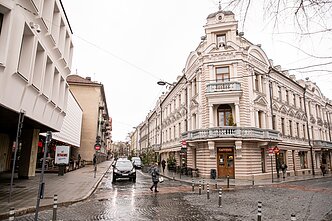
Vilnius has also drafted plans for a low-emission zone, which would include Islandijos Street and parts of Vilniaus, Liejyklos, Klaipėdos and Benediktinių streets. However, the city has not yet set a fee for entry.
The Transport Ministry argues that current regulations lack enforcement mechanisms for municipalities that fail to comply and notes that in some cities, traffic levels do not justify establishing a low-emission zone.
“We want to shift from obligation to permission,” said Deputy Transport Minister Juras Taminskas. “All municipalities would have the right – not the duty – to create such zones, based on community feedback and local evaluations.”
The Environment Ministry opposes the proposal, warning that decisions should be based on expert assessments and air quality data, not political preference.
“I would recommend conducting a proper analysis. We shouldn’t treat all cities the same, but rather take into account the actual pollution levels,” said Deputy Environment Minister Ramūnas Krugelis.
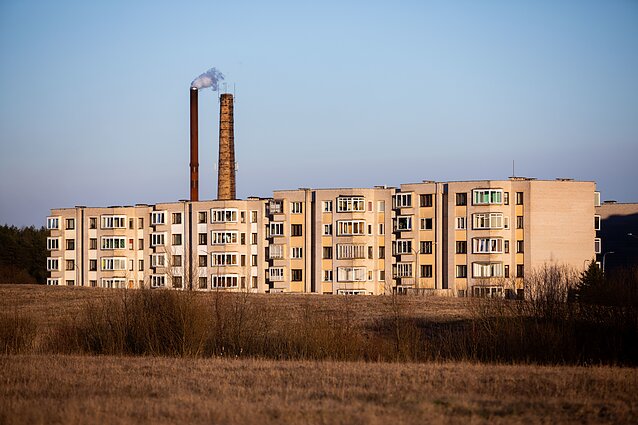
In the district of Zarasai, where a zone is technically required under the current law, implementation has stalled. Officials say pollution levels in the area do not exceed national limits, and the most heavily trafficked routes – such as the A6 highway through Vytauto Street – fall under national jurisdiction.
“There are no highly polluted areas in our municipality,” said Irina Melkova, a representative of the Zarasai district administration. “And the area with the highest measured pollution is on a state road, which we do not manage.”
Environmental organisations have also criticised the proposal, warning it would undermine efforts to reduce vehicle emissions.

“Eliminating the requirement entirely is a step backward,” said Domantas Tracevičius, head of the Circular Economy Coalition. “Every town should be evaluated individually. In a place like Vilnius, where the city centre is clearly affected by traffic-related pollution, these zones are necessary.”
The Seimas, Lithuania’s parliament, is expected to debate the proposal in the coming weeks.

Newsletter
Every Friday morning.