














A group of conservative MPs has proposed expanding the grounds for taking away Lithuanian citizenship from people who express support for “aggressor states” or pose a threat to “national security”.
Two years ago, the Lithuanian parliament, at the time dominated by the conservatives, passed a law that allows taking away the passport from foreign nationals granted Lithuanian citizenship by way of exception for their special merits. The law was tailored for ice dancer Margarita Drobiazko, a Lithuanian-Russian citizen who continued to perform in Russia. She had been granted Lithuanian citizenship in 1993 for her merits representing the country in international competitions.
The new proposal would extend this to all dual citizens, regardless of how they acquired the Lithuanian passport.
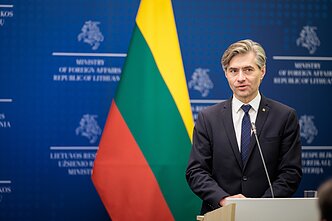
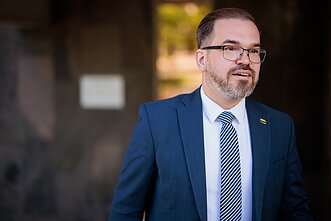
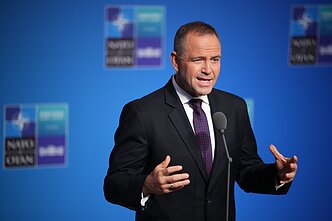
The bill has been tabled by MPs Agnė Bilotaitė, Laurynas Kasčiūnas, Dalia Asanavičiūtė, Arvydas Anušauskas and Žygimantas Pavilionis, all members of the Homeland Union (TS-LKD) group.
Under their amendment to the Law on Citizenship, dual citizens would lose their Lithuanian passports if they support a foreign state that poses a threat to the security interests of Lithuania or other EU member states, or of their allies. The same would apply to those who support or participate in actions by a foreign state that violate international law.
Under the proposal, such individuals would be barred from acquiring, restoring, retaining or regaining Lithuanian citizenship. Those who already hold it could have it revoked.
“We see cases where Russian citizens, active supporters of the regime, and their descendants have obtained Lithuanian citizenship on various grounds. This allows them to circumvent sanctions and various restrictions on Russian citizens,” Asanavičiūtė told BNS.

“They’re not seeking Lithuanian citizenship out of patriotism or a connection to their roots, but to evade sanctions. I believe extending the criteria is the right step. It would also put all dual citizens on an equal footing when it comes to accountability,” she added.
Asanavičiūtė emphasised that this would only apply to individuals who hold more than one citizenship.
“Under the Convention on the Reduction of Statelessness, which Lithuania has signed, we can’t strip someone of their only citizenship,” she said.
In 2023, the parliament amended the Law on Citizenship to allow the revocation of citizenship granted by exception if the individual poses a threat to Lithuania’s security interests or publicly supports a state that threatens the security of Lithuania, EU countries or their allies.
Based on the new law, President Gitanas Nausėda has revoked the citizenships of Drobiazko, ballet dancer Ilze Liepa and businessman and former KGB employee Yuri Kudimov.

Following appeals by Drobiazko and Kudimov, the Constitutional Court is currently reviewing whether the law is in line with the Constitution.
However, the current Law on Citizenship also allows foreign nationals to acquire Lithuanian citizenship on grounds other than by way of exception. For example, dual citizenship is permitted for those who left or were deported from Lithuania before the restoration of independence and their descendants, those who married Lithuanian citizens, and so on.
Calls to tighten the rules grew louder after the investigative journalism centre Siena reported that two children of Russian billionaire Roman Abramovich – Anna and Arkady – hold Lithuanian passports and may have helped their father circumvent international sanctions.

Newsletter
Every Friday morning.