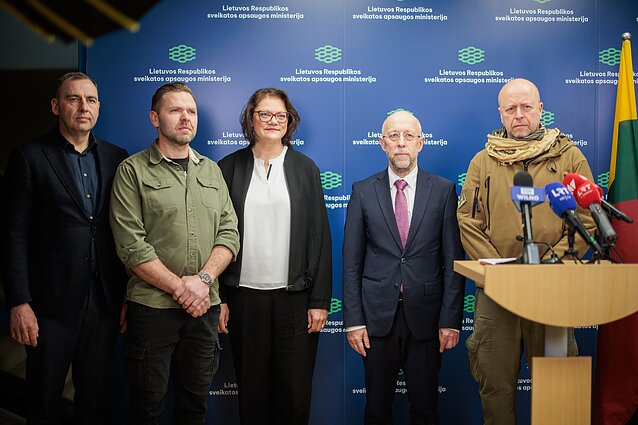










The first group of Lithuanian medics have returned from their internship at Ukrainian medical institutions and are going to share their experience with their colleagues in Lithuania soon.
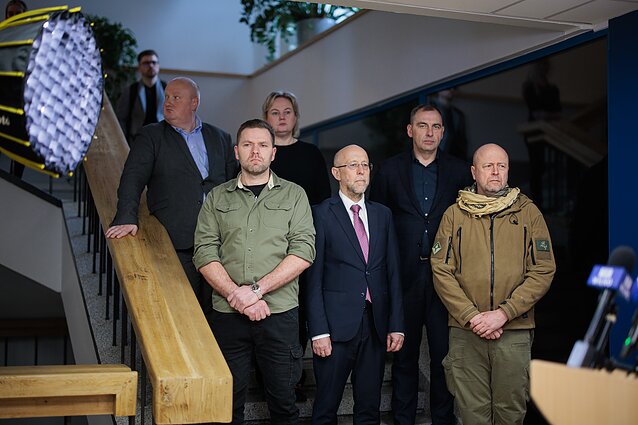
“Just as a doctor can only learn the art by practicing at the patient’s bedside, we as a country, as medics, can only learn what is happening in battlefield conditions by going and seeing how it really is,” Audrius Šimaitis, director general of Klaipėda University Hospital, told a press conference on Friday.
The internship lasted two weeks. The exact number of its participants is not specified, but BNS heard that the team consisted of up to ten medics.
Later, Šimaitis said, these doctors will pass on their experience not only to the doctors of Klaipėda University Hospital, but also to doctors from the country’s entire western region.
Jonas Ohman, head of the Blue/Yellow NGO that ensured the safe presence and logistics of the Lithuanian medics, said that given the current geopolitical situation, Lithuania had to be prepared for various situations.
“We are happy to offer the opportunity to use this infrastructure in Ukraine, where it is not easy to operate, [...] and to gradually help pass on this very necessary experience to us,” he said.
One of the doctors who went to Ukraine is Nerijus Klimas, an anaesthesiologist from Klaipėda University Hospital. In his words, the level of professionalism of Ukrainian doctors is very high.
The Lithuanian doctors were interested in the organisational changes made at hospitals, such as the transfer of patients from the frontline to treatment facilities, changes in logistics, and changes in documentation.
The Ukrainian medics particularly stressed the need for infrastructure changes.
“We need to assess the possibilities of using the underground structures we have at our hospital. Treatment facilities must become sufficiently autonomous, with their own separate energy and water sources,” Klimas said.
Tadas Abelkis, a traumatologist at Klaipėda University Hospital, also stressed the professionalism and hard work demonstrated by his Ukrainian colleagues.
“Everything is set up: the work of the operating theatres, the work of the anaesthesiologists, the arrival of patients, their departure, their rehabilitation, the patients’ subsequent return to life – it all works precisely,” he said.
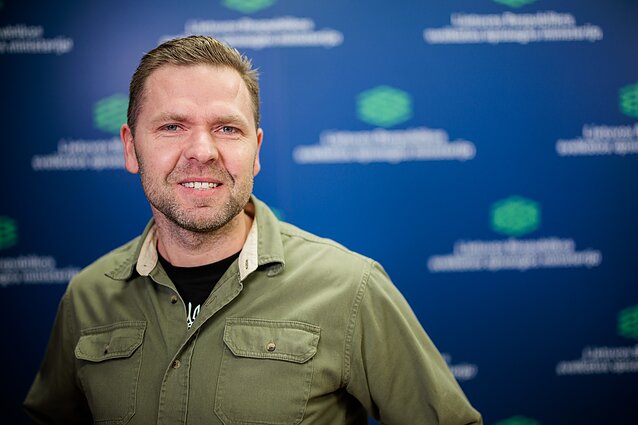
Health Minister Marija Jakubauskienė says that stepping up the resilience of the health system to threats is now one of her ministry’s priorities.
“We plan to send medical teams from all regions of Lithuania and they will include anaesthesiologists, surgeons, traumatologists, nurses, ambulance medics and mental health specialists. And we plan to have those missions completed by this autumn,” she said.
Lithuania is one of the first countries in Europe to undertake such a project.
In early March, the health minister said that most of the country’s health institutions have plans for operating in a war situation, but the level of preparedness is not sufficient.

Newsletter
Every Friday morning.