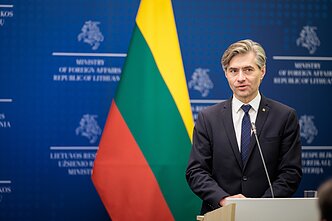


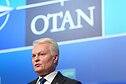

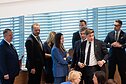



Lithuania would consider joining the “coalition of the willing” proposed by the United Kingdom and France to bring peace to Ukraine, says President Gitanas Nausėda.
“The UK and France want to take the lead in deploying their potential military power to ensure peace, they are ready to provide substantial forces for this purpose, and they are creating a so-called coalition of the willing – they are inviting countries that can contribute to this coalition to the extent that they can. Lithuania is ready to consider forming such a peacekeeping corps according to its capabilities,” Nausėda told BNS in Rome on Monday evening.
The Lithuanian president made the remarks after the leaders of the continent’s major countries met in London last Sunday where they pledged to increase defence spending and form a coalition to ensure the implementation of a possible peace in Ukraine.
After the meeting, UK Prime Minister Keir Starmer also announced that he had agreed with European leaders to draw up a peace plan for Ukraine, which will be presented to the United States.
Meanwhile, French President Emmanuel Macron has proposed a one-month partial ceasefire in Ukraine. He suggests halting air and sea fighting and attacks on energy infrastructure but would not, at least initially, stop fighting on land.

According to the French leader, the one-month ceasefire between Russia and Ukraine would show Moscow’s commitment to ending the war.
“These are good initiatives,” Nausėda commented. “The only thing is that it is important that all of us here in Europe are united on this issue. We will see what is signalled by countries that have slightly different views, to say the least. These are Hungary and Slovakia.”
“But the involvement of the US is also very important,” he added. “They [the Americans] give a material expression to the security guarantee and allow us to hope that this ceasefire will not be a symbolic act. This is the role we expect the US to play and I hope it can play it.”
An extraordinary EU summit is planned in Brussels later this week to discuss possible European security guarantees for Kyiv and to agree on a new arms package.
President Nausėda hopes the summit will turn words into deeds.
“It is important that we take a decision on the 20-billion-euro military aid to Ukraine. [...] I believe that we will not be distracted and will move forward with sanctions and the use of frozen assets,” he said.
“There should be no misconception that if we are seeking peace with Russia, we will start making concessions to it in all areas and forget about what it is responsible for, lift sanctions, and so on,” President Nausėda said, adding that it would be unjust and “irresponsible”.

Newsletter
Every Friday morning.