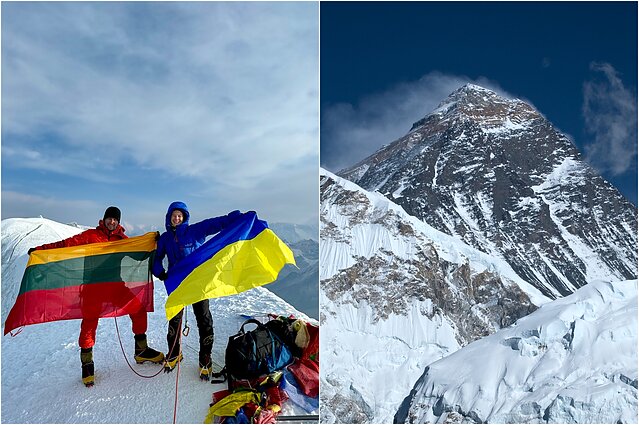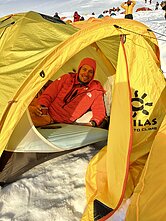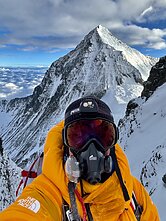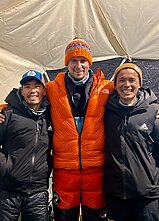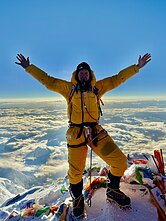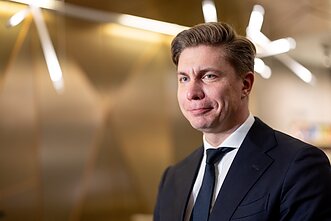

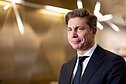



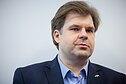

Only about 50 people in the world have climbed all 14 of the world’s peaks over 8,000 metres. Mindaugas Šatkauskas, a Lithuanian entrepreneur and mountain lover, will attempt to join the list over the next two years.
Back in 2024, Šatkauskas became the first Lithuanian to climb Everest and Lhotse in 24 hours. In an interview with LRT.lt, he talks about how his ambitious 14-peak plan was born, the cost of such expeditions, and what risks he will face in the mountains.
When Reinhold Messner, one of the world’s best mountaineers, was once asked why he climbs mountains, he replied “Because they exist”. Have you ever answered that question for yourself? Why do you climb?
I don’t know, it’s just that there is chemistry with the mountains. There is no explanation for that attraction. And now I climb because it’s good to live when you have a big goal and a dream. It’s what drives me, it’s what makes life so interesting. I always say, what is the dream if it’s not big and not a bit scary? The mountains give you that.
As far as I know, you discovered mountains by chance and now have about three years of mountaineering experience. Could you tell us how you found yourself in the mountains and started climbing the highest peaks in the world in a very short time?
It’s now exactly three years since I was introduced to the mountains. In 2022, I went on a trip to Nepal, which was unusual for me. I travelled alone – something I had never done in my life. The purpose of my trip was to volunteer, something I had never done in my life either. After volunteering, I had a goal to go on a hike, to the mountains or somewhere else. I have never done a hike, not even in Lithuania. It was a completely unusual format for me, out of my comfort zone. Nepal was a country from another planet.
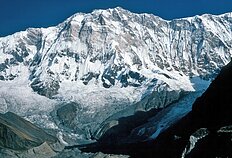
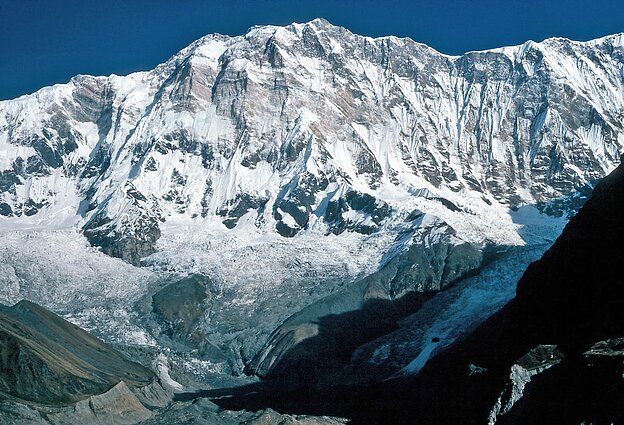
After volunteering, I was planning a hike to Annapurna base camp. It was February, off-season. I didn’t know anything about the mountains. I told the locals in Nepal that I wanted to go hiking. A guide showed up, but he was more of an amateur, he probably just wanted to make money.
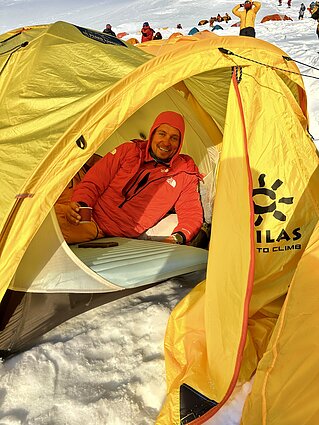
When we went on the hike, there was a storm, and the weather conditions were very bad. Just before that, I read about a disaster where more than 20 hikers died in a storm near Annapurna in 2014. All I could think was that we would suffer the same fate. We finally reached the base camp of the mountain, and we didn’t die. But then I said to myself, thank you, I don’t want anything more to do with the mountains.
I remember, at that time, I was still thinking about those people who were mountaineering, and they seemed to me to be complete freaks, I didn’t understand them.
Did you get that mountain fever on your first hike?
It seems very likely that I got it during the hike, which had an incubation period of about a month. When I came back from Nepal, about a month later, I started to read about the mountains, to watch films.
At that time, I was going through a period in my life where I wanted a big challenge, a big dream. I was 37 at the time. I was approaching 40 and wanted to do something before I turned 40, to set a goal and achieve it. Then I thought irresponsibly that I would like to climb Everest. So, I set myself the goal of climbing Everest by the age of 40. This was around May–June 2022. I realised that I needed to prepare, 2023 would be too early, but I set myself the goal of climbing Everest in the spring of 2024, before my 40th birthday.
In November 2022, I went to Nepal to climb Ama Dablam (6,812 m). This is definitely not a mountain for a beginner. [...] This mountain became my turning point because it was really technically difficult. I can say that it was the most challenging experience for me so far, even compared to Everest or Lhotse. It was difficult to climb steep slopes with a rope. Once I had successfully climbed that mountain, I had more confidence.
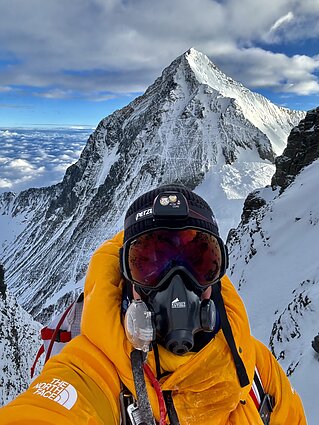
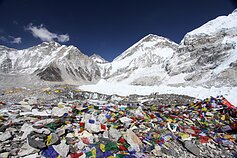
In January 2023, I went to climb the Kilimanjaro volcano. In May 2023, I also went to Nepal to climb two 6,000-metre mountains. When I arrived, I also passed through Everest base camp, which made me even more fascinated by the mountain and the desire to climb it. In September 2023, I came to Nepal again and climbed Manaslu (8,163 m) to test how I felt at the altitude of 8 kilometres.
Finally, in 2024, you successfully climbed Everest and then Lhotse, becoming the first Lithuanian to make such a double ascent. Was that when the idea of attempting all 14 peaks above 8,000 metres was born?
I spent a lot of time in Nepal, and most of it was with the members of the agency 14 Peaks Expedition. There were people there who had climbed all 14 peaks, climbed Everest, K2, and so on several times. I was also in contact with Kristina Harila from Norway, who holds the speed record for climbing all 14 peaks. My ambition and appetite for mountains grew in that environment. Those people expanded my perception.
After Everest, I realised that I could not live without a big dream, I didn’t want to. So, the question automatically came up – what next? And then it occurred to me that I had already climbed three peaks above 8,000 metres. So, why not try another 11?
Looking at those peaks, we see names like Nanga Parbat (8,126 m), Annapurna (8,091 m), K2 (8,611 m) and get chills. Aren’t you afraid?
Mountains and fear go hand in hand. People tell me that I’m fearless. I don’t agree. I’m really scared, but I accept the fear. After all, bravery isn’t about not being afraid, it’s about being afraid but going anyway.
My first mountain will be Annapurna, then Makalu (8,485 m) and Kanchenjunga (8,586 m). Maybe I will try Nanga Parbat in the summer. If things go very well, I will also think about other peaks in Pakistan. In the meantime, I plan to climb Dhaulagiri (8,167 m) in autumn.
Annapurna has the worst fatality statistics, which is even worse than K2, at around 30 percent. So, naturally, there is fear.
How did your family react to your desire to climb all the 8,000-metre peaks? Do they understand the risks involved?
Well, my girlfriend is a mountaineer herself. She understands and supports me, but she’s not very supportive of the idea of starting from Annapurna. She would like me to start as late as possible with this mountain.
As for the other members of the family, who are less aware of the risks, they are still not too happy, and they were not too happy before Everest either. I don’t see joy in their eyes, but I don’t tell them too much about the dangers and risks.
What does your preparation look like? Maybe you have already started sleeping in altitude tents?
I’m not acclimatising in Lithuania, so for now, the goal is physical preparation and building my endurance. [...] Talking about my current form, I’m already much more prepared than ever before.
Have you seen any deaths in the mountains in your relatively short mountaineering experience?
I’ve seen people who died on Everest being lowered down.
Not many people are climbing the highest peaks not only because of the risks but also because of the high cost of the expeditions. How much does it cost to climb Everest, for example?
The minimum amount of money to climb Everest is around 40,000 euros, but the average, I would say, is closer to 60,000 euros.
What is not included in this amount?
It doesn’t include plane tickets, tips for the Sherpa. For example, if you successfully climb Everest, you give the Sherpa around 2,000 euros. This price also doesn’t include climbing equipment.
How much does the equipment cost to climb an 8,000-metre mountain?
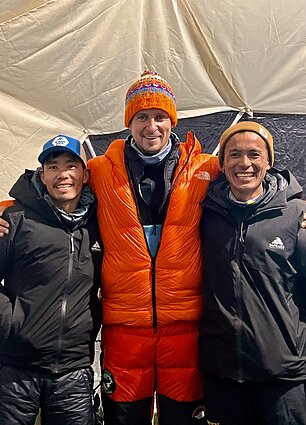
Depends on the level of equipment. I’ll talk about clothing for the summit. Let’s say a down suit – 2,000, euros, shoes – around 1,300 euros, crampons, headbands, rucksack, helmet – another 200–300 euros each. You need more than one sleeping bag, and a sleeping bag for the assault alone costs around 1,300 euros. You also need thinner clothes for when you’re not at the peak. I estimate that the whole outfit could cost around 10,000 euros.
How much does the whole expedition of 14 peaks cost?
Around 400,000 euros. That’s a higher price. You could probably get a lower price. Perhaps, with a lot of savings, it is possible to fit into the budget of 200,000–250,000 euros. But I don’t aim for as cheap as possible. I want it to be as safe as possible. Since I want to climb the remaining 11 peaks in two years, the logistics must be fast. However, the 400,000 euros I mentioned is not the limit. It’s possible to spend even more.
Will you look for sponsors?
I’ll try to use my own savings. I’m not actively looking for sponsors, but if there are those who would like to contribute, who find this project interesting, I would be happy to take them on board because the amount of money is large.
How did you feel when you climbed to the top of Everest?
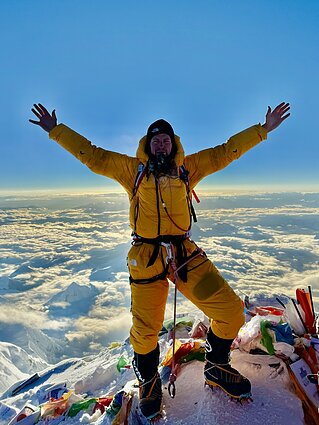
I would say I felt a kind of euphoria. Of course, we were lucky because the weather was very good. When you get to the top, you’re tired, you realise that you still have to go down, so there is that fear.
For me, the Everest expedition was really difficult, I was ill, so it was a question of whether I would be able to attempt the summit at all. There was a lot of psychological tension. I was also fresh in mountaineering, so there was a lot of joy when I got to the top. The feeling was strong.
What is the hardest thing that has happened to you in the mountains?
Physically, the hardest was climbing Ama Dablam. It was brutally hard, probably because I didn’t have the experience and wasn’t prepared to the maximum.
Psychologically, the hardest was on Everest. When I was in base camp, I was due to summit in five days and I had a fever. The doctor said that I must go down and get treatment because I would not improve at this altitude. You don’t know whether you will be able to climb or not.
If you manage all 14 peaks successfully, what could you possibly do next? It’s hard to think of things more difficult than that on this planet.
I don’t know, people are running through deserts and so on. I always have all sorts of goals, all sorts of thoughts. I jokingly say that I wanted to climb Everest by 40, so maybe it would be good to land on the moon by 50. We’ll see. For now, I’m concentrating on my current expeditions.

Newsletter
Every Friday morning.