















An additional 19.9 million euros (20.6 million US dollars) is needed to help Ukrainian refugees in Lithuania between 2025 and 2026, according to the United Nations Refugee Agency (UNHCR).
“The financial needs are close to 21 million US dollars, but this is every two years,” Annika Sandlund, UNHCR’s representative for the Nordics and Baltics, said on Wednesday.
This estimate does not include the support already provided or planned by the Lithuanian government.
“We must continue to stand with the millions of Ukrainians forced to leave behind their homes. In a time of great uncertainty, Lithuania has provided unwavering support, demonstrating solidarity when it is needed most. As we continue to hope for better days in Ukraine, we must ensure that this support remains strong,” said Sandlund.
This year alone, the need for assistance to refugees from Ukraine is estimated at around 10.5 million euros (10.9 million US dollars).
The UN estimates that the number of Ukrainian refugees in Lithuania will increase from almost 48,000 to 60,000 within two years.
“What we’re looking at is a refugee population of 60,000 and this includes both people already here and potential new arrivals,” Sandlund said.

Basic needs met
A study presented by UNHCR on Wednesday “highlights strong social and economic inclusion among refugees, with most reporting that their basic needs are being met”, the agency said in a press release.
According to the study, 53 percent of working-age Ukrainian refugees in Lithuania have regular employment, and 83 percent of refugee children aged 7–18 are enrolled in schools.
Seventy-eight percent of refugees live in private accommodations, 83 percent have access to health care, and 72 percent report positive relations with the host community.
“These indicators point to a favourable environment for Ukrainian refugees in Lithuania,” UNHCR said.
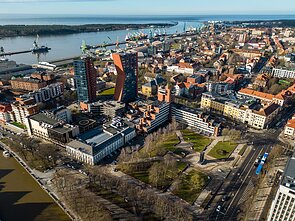
Most Ukrainian refugees in Lithuania have settled in the regions of Vilnius (43 percent), Kaunas (22 percent), and Klaipėda (17 percent). The majority come from Ukraine’s Kharkiv, Dnipropetrovsk, Donetsk and Kherson regions. UNHCR reports that 67 percent of refugees do not plan to leave Lithuania in the next 12 months.
Over the past year, the number of Ukrainian refugees in Lithuania has declined by nearly 5,000 – from 52,600 to 47,800. Some have returned to Ukraine or moved to other countries.
According to the UN agency, 6.8 million Ukrainian refugees have left their country and 92 percent of them have been registered in Europe.

Funding for more than just basic needs
Last year, Lithuania’s Caritas provided assistance to more than 10,000 refugees from Ukraine, while the NGO Save the Children helped 4,000, and the Lithuanian Refugee Council assisted 2,000. UNHCR financially supported these organisations.
The UN agency said its partners in Lithuania plan to use the funds raised “to run initiatives like youth inclusion, educational seminars for adults and children, workshops on job-related skills, language courses, entrepreneurship support, social cohesion enhancement, mental health and psychosocial support, training in digital skills”, and others.
Financial support is also needed to meet the basic needs of new arrivals, such as clothing and hygiene products.
Some of the funds will go toward raising awareness about human trafficking and operating an information hotline.
UNHCR collaborates with 266 partners across 11 host countries. A total of 1.16 billion euros (1.2 billion US dollars) is needed to help Ukrainians in these countries.

Work getting harder for organisations
Laura Masiulienė, a senior adviser in the Foreigners’ Integration Group at the Social Security and Labour Ministry, said that the work of supporting refugees is ongoing, as people continue to arrive in Lithuania.
“The war in Ukraine continues and people who were forced to flee their homes still need shelter, safety and support,” she said.
Since the war began, Lithuania has taken in more than 91,000 Ukrainian refugees and is currently hosting over 47,000, according to Masiulienė.
“But we know that challenges remain and refugees still face difficulties with integration, mental health support, and language learning. Thus your organisations’ work in this field remains highly important,” she said.
Masiulienė noted that the work of support organisations is becoming increasingly difficult, as many are facing declining funding.

Newsletter
Every Friday morning.