

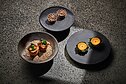










Lithuanian Tatar Zita Milkamanovič is reviving traditional Tatar dishes from her grandparents’ stories.
The first Tatar settlements were established in Lithuania by Vytautas the Great in 1397. The Tatars were the Grand Duke’s personal guards and assisted him in the famous Battle of Grunwald.
Since then, this Muslim minority has become part of Lithuania, performing military and economic duties. Over the years, they preserved their traditions and customs, mostly practised in the Keturiasdešimt Totorių village near Vilnius, which dates back to the times of the Grand Duchy of Lithuania.
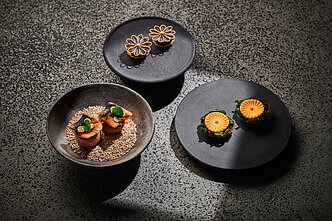
Zita also works to preserve and promote traditional Lithuanian Tatar dishes and organises cooking classes.
“I have never been interested in cooking before. I just lived with it because I saw my grandmother and mother cooking. They asked me to cook, but I didn’t cook. I come from a completely different background – I graduated in interior furniture design, and I never imagined that I would make gastronomy my life,” the Lithuanian Tatar shares.
“At some point, it became very interesting and important to me. I lived in England for many years as an expatriate, and even when I was there, I was organising meetings and talking about our village on social media,” she adds.

One of the forgotten Tatar dishes is dried goose, which Zita traditionally prepares in a barrel.
“We have a lot of forgotten dishes. Even at home, hardly anyone knows how to make dishes like dried goose. We have revived this dish, and I will be making it for the fourth season in a row,” she says. “We will be able to taste it in spring because the preparation period begins now.”
Tatars do not eat pork, so dried goose serves as a perfect replacement for it, Zita says.
“There are still some older people who remember those recipes. All the dishes are quite complex, they require collective work and a lot of time,” she notes.
“The Alytus and Varėna regions used to cook dried goose, but it was not very popular in the Vilnius region, even though many Tatar families raised goose. Tatars do not eat pork, and fat is very useful and needed everywhere, so goose was suitable as a bird,” the Tatar woman continues.
To preserve the goose meat during the summer, the Tatars used to dry it and used the remaining goose fat to make lard.
“It’s a long process, but quite simple. We remove the fat and make lard – fry it with onions or skin and salt and melt it. Then we can eat it with black bread. The rest of the meat is dried – we cut the goose in half, salt it, put it in a barrel, and forget about the meat for two weeks,” Zita explains.
After two weeks, the goose must be taken out of the barrel, rinsed of salt, and then put in the oven for just one minute.
“When the fat starts to melt, we take it out, cool it, wrap it in cheesecloth, and hang it in a well-ventilated attic until spring. Somewhere around mid-March, I bring myself a goose and carve it. When it is still cold in March, the goose is still frozen, so when you bring it to room temperature and put that slice on your palm, the fat starts to melt,” the woman says.
“The fat is very good for health. My grandmother and mother told me that they used to use the melted goose fat without salt as a medicine, applying it to their chest to relieve cough and to treat wounds,” Zita adds.

She is also trying to revive ritual dishes.
“These are our ritual dishes, intended for certain ceremonies, such as funerals, 40 days after the funeral, and anniversaries. In the Vilnius region, they didn’t make štukamensas (stewed beef or mutton with bean sauce) because it is a ceremonial dish from Alytus,” Zita says.
“The chunks of meat, cooked with spices, are served on the table, and white beans are served as a sauce. The sauce is prepared in a special way – sugar is burnt to a dark caramel colour and poured over the beans,” she explains.
The Tatar woman notes that one of the most popular Tatar sweets, halva, is made in Lithuania without sunflower seeds and nuts, as these ingredients are simply not typical of the country’s climate.
“Making halva is a collective effort. It is a large mass, and you have to stir it, so it doesn’t burn. [It is made of] honey, flour, and melted butter – that’s it,” Zita says.

Newsletter
Every Friday morning.