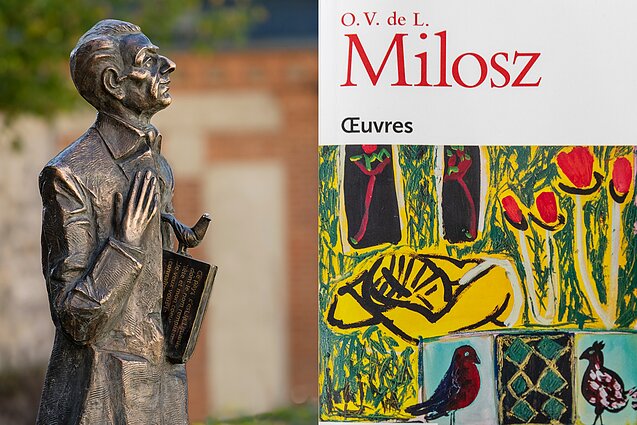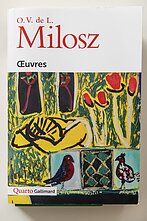















As part of the Lithuanian Season in France, a monumental edition of the complete works of Oscar Vladislas de Lubicz-Milosz, the enigmatic French-Lithuanian poet and diplomat better known as Oscar Milosz, has recently been published.
This 1,280-page volume, the culmination of years of dedicated work by Olivier Piveteau and Christophe Langlois of Les Amis de Milosz (The Friends of Milosz), is a testament to Milosz’s enduring legacy. Prestigious French publisher Gallimard has brought this ambitious project to life, including hundreds of illustrations and photographs.
The dream to publish Milosz’s complete works was shared by Janine Kohler and Richard Backis, former presidents of Les Amis de Milosz. However, it was Mr Langlois’ valuable connections and persuasive efforts that ultimately secured Gallimard’s support.
In the introduction, Mr Langlois sheds light on Milosz’s unique poetic style and his significant contributions to the French literary landscape. Olivier Piveteau, meanwhile, places Milosz’s work and life within a broader historical context.
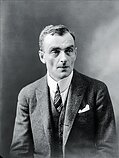
Born in 1877 into a noble family in present-day Belarus, Milosz moved to France at the age of 12. He later served as a Lithuanian diplomat, representing his newly independent nation at the Versailles Peace Conference.
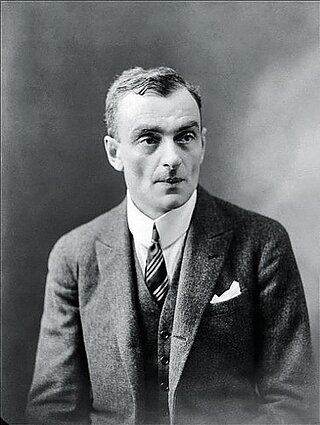
While diplomacy was his day job, his true passion lay in poetry. A polyglot – fluent in French, English, German, Polish, Russian and Hebrew – Milosz drew inspiration from Lithuanian folklore, Hebrew spirituality, French and European literature and philosophy. He even translated works by Byron and Goethe.
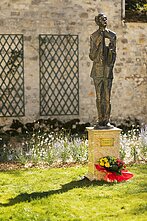
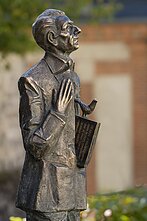
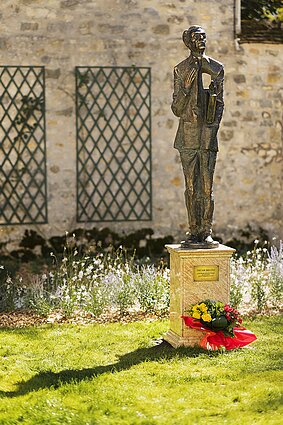
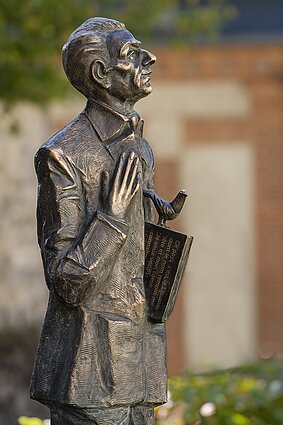
His solitary existence, often compared to that of a Franciscan monk, added to his enigmatic allure. Milosz passed away in 1939 in Fontainebleau, where he was interned. Five years ago, a statue of Milosz by Klaudijus Pūdymas was unveiled in the garden of a cultural centre of Fontainebleau, an hour south of Paris.
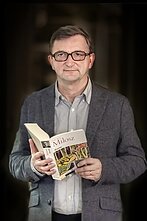
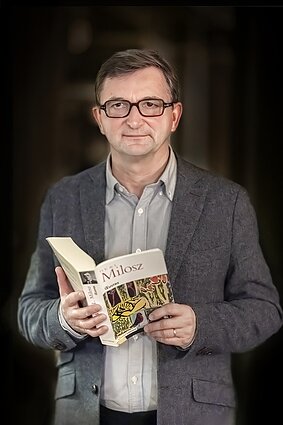
We meet Olivier Piveteau in Paris.
What was it that drew you to the literature of Oscar Milosz, a figure not widely known in France?
During my fourth year of studying French literature at the University of Paris, I met an old lady who asked if I was familiar with Milosz. She gave me one of his texts, and that evening, I began reading. After a few pages, I realised that this was an exceptional writer. I was immediately captivated by his unique style.
Although I had initially chosen Julien Gracq for my thesis, I persuaded my supervisor to let me focus on the lesser-known Milosz. It was the beginning of a 40-year rewarding relationship.
Why is Oscar Milosz still relatively unknown in France?
Milosz was not very well known during his lifetime. His literary friends were convinced that his works would be widely recognised after his death, placing him among the greatest writers of the 20th century. For various reasons, however, he has remained largely overlooked.
Despite having his entire output published between 1957 and 1990, he is primarily known for his poetry, mostly among librarians and booksellers. While few readers are familiar with his work, he does have a small but dedicated following.
Is Oscar Milosz primarily considered a literary cult figure?
The famous Czech writer Milan Kundera, who lived in exile in France, once asked his Italian translator if he knew the “great foreigner” Oscar Milosz. When the translator admitted he didn’t, Kundera enthusiastically spoke about Milosz’s literary output.
Kundera, like many others, had discovered Milosz’s work by chance. In an essay entitled “An Encounter”, he wrote about Milosz’s unique style and form. Kundera was astonished that there was nothing that preceded or required knowing Milosz, unlike writers like Verlaine or Rimbaud.
This experience is not uncommon. People often discover Milosz either by chance or through the recommendation of others. When they do, it can be a surprising and profound encounter. The door to his literary world opens to reveal a truly unique and captivating universe.
How significant is Oscar Milosz in the context of Franco-Lithuanian relations?
Oscar Milosz played a crucial role in shaping Franco-Lithuanian relations at various stages. In 1919, he became a Lithuanian citizen and dedicated himself to the newly independent republic. He introduced Lithuania to the French, a country that had been largely unknown and off the map for half a century. Before that time, the French often considered Lithuania part of Poland. Milosz wrote extensively in the press, organised conferences, and effectively became a symbol of the Lithuanian soul.
After Milosz’s death in 1939 and the Second World War, many Lithuanian diplomats and their children remained in France, keeping the memory of their homeland alive. During the Soviet era, Milosz’s works were known in Lithuania among a select group of writers, primarily circulating clandestinely. His writings offered a sense of hope and a vision of a future independent Lithuania.
Since Lithuania regained its independence, there has been renewed interest in Milosz’s literary legacy. Lithuanian diplomats have maintained close ties with individuals and organisations interested in Milosz’s work in France, such as Les Amis de Milosz.
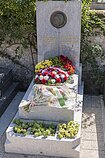
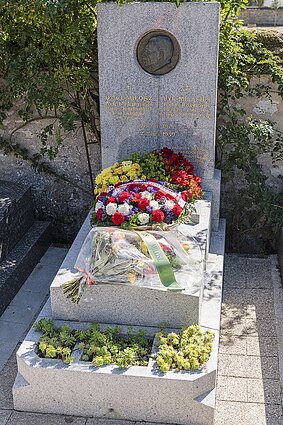
His literary legacy continues to serve as a bridge between France and Lithuania, strengthening diplomatic relations. Most recently, Lithuanian President Nausėdas went to honour Milosz’s grave in Fontainebleau. That was a first.
Given the importance of the historical context of the interwar period, would it be beneficial to publish Milosz’s extensive political opinions and diplomatic correspondences, which are not included in this epic publication?
André Silvaire, founder of Les Amis de Milosz in 1966, published all of Milosz’s literary works. While Milosz’s voluminous diplomatic correspondence is of significant historical importance, it is less so from a literary perspective. Few of these texts have been studied, but they offer valuable insights into the interwar period and Milosz’s own thinking.
He was a proponent of a European federation, even envisioning a theocratic European monarchy, reflecting his deep Christian faith. While this idea may seem outdated and unrealistic today, it undoubtedly foreshadowed the concept of a European Union.
Milosz’s diverse background led him to view himself as a transnational figure, a European poet without borders. In this sense, he was truly a man ahead of his time.
Is Jurga Vilė’s illustrated book Fallen from the Moon: A Dream about Oscar Milosz and Other Birds (Lithuanian: Nukritę iš Mėnulio. Sapnas apie Oskarą Milašių ir kitus paukščius) a significant testament to Milosz’s influence?
The book has not yet been translated into French, and I don’t read Lithuanian. However, I know Jurga and I hope a translation will be available soon. Such books help reignite interest in Oscar Milosz.
It’s fascinating to see how, in the last 20 years, Oscar Milosz has evolved into a real “personage” in Lithuania, not just a writer. He has become a romantic figure, even a theatrical character, appearing in a play called Madagaskaras, by Marius Ivaškevičius, in 2004. While his portrayal in the play is somewhat humorous, it’s interesting to see how his legend has grown.

Newsletter
Every Friday morning.