








The Lithuanian cabinet approved the central government’s draft budget for 2025 on Wednesday.
Budget revenue is expected to grow by 5.9 percent, to 17.98 billion euros, and expenditure is projected to increase by 11.7 percent, to 23.02 billion euros, next year compared to this year’s targets.
The budget deficit is projected at 3 percent of GDP, same as this year, with government debt at 43.2 percent of GDP.
The draft budget will be submitted to the parliament, Seimas, on Thursday. It is likely to be amended and adopted by the new parliament before Christmas.
Military spending at 3.03%
Lithuania’s appropriations for national defence should reach 3.03 percent of GDP next year, according to the 2025 state budget bill published on Wednesday.
The military budget next year would amount to just over 2.5 billion euros, but the bill also provides for the possibility of borrowing for defence if needed.
Funds from the Defence Fund, which will be financed with tax increases adopted this year, are expected to account for around 240 million euros in the budget.
This year, appropriations for national defence amount to around 3.2 percent of GDP, but the amount in absolute terms is similar to next year’s.
In recent years, Lithuania has substantially increased military spending in response to Russia’s invasion of Ukraine.
The country aims to establish an infantry division by 2030, to get ready to host a German brigade within three years and prepare for universal conscription.

Little room for changes by new govt
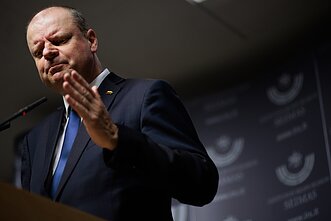
Lithuanian Finance Minister Gintarė Skaistė says she does not see much room for the next government to make changes to the budget bill.
“If the new government wants to adhere to the fiscal discipline required by international commitments, particularly the Maastricht criteria, then raising spending in individual segments will require cuts in others,” she told a press conference.
The minister reiterated that the main expenditures in next year’s budget are tied to commitments to index pensions and social benefits, along with political agreements to raise teachers’ salaries and boost defence spending.
“Therefore, I personally don’t see much room to cut certain expenditures,” she said.

Newsletter
Every Friday morning.