








LRT English Newsletter – April 24, 2026.
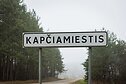
After months of protests, political intrigues, and heated local debates, Lithuania's parliament has finally pulled the trigger – approving the establishment of a military training ground near Kapčiamiestis in the country's southwest.
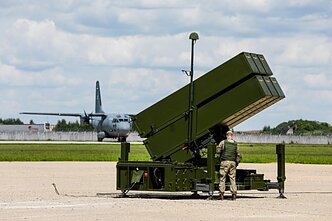
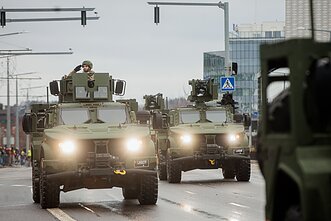
The military and defence ministry say the area is crucial for the German brigade stationed in Lithuania and for preparing forces to defend the so-called Suwalki Gap – a narrow strip of land linking the Baltic states with the rest of Europe, flanked on one side by Russia's Kaliningrad and on the other by Belarus.
But getting here has been anything but simple. The site selection unleashed a wave of backlash from local residents, fringe agitators, and populists within the government itself – culminating in a number of protests outside the parliament and in Kapčiamiestis itself.
The original fault lines are covered here.
In summary, locals are worried about compensation for the homesteads that will have to be bought by the state, noise, lost land, and what happens to a tourism industry built on the area's pristine, forested landscape. Darker accusations (corruption, “warmongering”) have also circulated. The military, for its part, offers a blunt rejoinder: Belarusian training grounds and shooting ranges already sit on the other side of the border, and locals can already hear them.
The political fallout, however, may prove the most combustible element of all. When the law came up for its first reading, every vote against it came from inside the ruling coalition – seven from Remigijus Žemaitaitis's Nemunas Dawn party (including Žemaitaitis himself), and three from the Lithuanian Farmers and Greens and Christian Families Union. The Social Democrats were not amused, and promptly demanded their coalition partners explain themselves.
Žemaitaitis has denied pressuring the Social Democrats over the deal, and for now says there are no doubts about the coalition's future – but the tensions have not gone away.
MORE DEFENCE UPDATES
– Russia's Defence Ministry published the addresses of companies it claimed were helping produce drones for Ukraine – a list spanning numerous European countries, including a firm in Vilnius. It threatened "unpredictable consequences" to follow. The Czech Republic demanded an explanation; Germany called the threats "completely unacceptable."
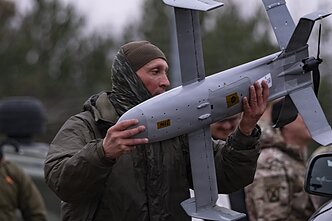
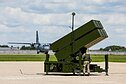
– Bypassing standard procurement rules, the Lithuanian government has approved a pilot purchase of the American-made Merops AS-3 Surveyor, a non-lethal interceptor drone system. The decision is prompted by recent incidents involving Russian and Ukrainian drones entering Lithuanian airspace, as well as smuggling balloons from Belarus.
– The government has also simplified the rules for Lithuanian citizens wishing to serve in foreign militaries. Under the new framework, the defence minister would decide on permits for citizens seeking to join another state's military where foreign citizenship or an oath of allegiance is required.
THE IRAN EFFECT
A war thousands of kilometres away is squeezing Lithuanian wallets. Commercial banks and institutions have raised their average inflation forecasts for this year to between 3.7% and 6%, driven by the continuing US-led conflict with Iran. With Lithuania already posting one of the EU's highest inflation rates in March, the government has been scrambling for quick fixes.
The most immediate one: parliament approved a temporary cut to diesel excise duty. Train ticket prices were also halved.
But according to Prime Minister Inga Ruginienė, these measures aren’t sufficient should the conflict continue. "A difficult autumn is approaching," she warned, making clear that further household relief measures are already being considered.
The economic pain is only half the story. The war has also stretched American weapons stockpiles, and according to Reuters, Washington has quietly delayed arms deliveries to European allies – the Baltic states among them.
To stay relevant and visible to its American ally, Lithuania is deliberating a contribution of logistics and demining capabilities to help secure the Strait of Hormuz, either directly or as part of a European initiative.
BABIES, MIGRANTS, AND A MOSQUE
As Lithuania continues to struggle with one of the EU's lowest birth rates, politicians are full of creative ideas for enticing families to grow. Experts are less convinced. The only quick fix for falling demographics, they argue, is labour migration from third countries – a strategy the Lithuanian government has already been applying, whether politicians choose to acknowledge it or not.
But labour migration brings its own headaches, and the question of how much effort the country should put into integrating newcomers is one that Vilnius is currently wrestling with in public.
Is the city is genuinely prepared to make newcomers feel at home – by, for example, ensuring they have sufficient places of worship? Here, Vilnius Mayor Valdas Benkunskas has made his position rather clear. He opposes building a mosque in the capital, arguing it would send a signal drawing migrants specifically to Vilnius – despite the city's Muslim community having no mosque of their own within the city limits. For now, Muslim residents pray in community centres, while two mosques serve worshippers in villages near the capital.
Experts have not been kind to the Mayor's logic. Scholars were quick to point out that a place of worship does not conjure an immigrant population into existence. His separate claim that a foreign-born population reaching around 10% in a city raises the risk of segregated communities or "ghettos," drew equally sharp rebukes, with researchers noting it has no empirical backing.
THE FICO AFFAIR
Slovak Prime Minister Robert Fico expressed outrage over the weekend after the Baltic states refused to allow him to use their airspace for his planned trip to Moscow in May – where he intends to attend Russia's Victory Day commemorations. He made the same journey a year ago, despite calls from European officials to boycott the event. This year, he has vowed to find an alternative route.
Ukraine, for its part, thanked the Baltic states for the decision.
MORE TRAVEL UPDATES
– For EU travelers: Wizz Air will launch direct flights between Vilnius and Prague this autumn.
– For non-EU travelers: a new border control system requiring biometric data from non-EU travellers is now in full use at all Lithuanian border crossing points.
– For rail fans: Lithuania plans to complete the Rail Baltica by the end of 2033.
– For Airport enjoyers: Lithuania has no need for a fourth airport, says the prime minister.
IN COURTS:
– Lithuania’s Justice Ministry appealed a court ruling ordering the registration of a same-sex partnership, which recognised the first same-sex partnership in Lithuania last August.
– High-profile Lithuanians, including Vilhelmas Germanas and Mindaugas Navickas, have been charged with €23m crypto mining fraud case.
– Three suspects, including the victim's ex-wife, have appeared in court over the kindapping and murder of a paramedic in northern Lithuania.
– A government representative filed a lawsuit against the Vilnius district municipality for failing to rename streets named after Polish cleric sanctioned for paedophilia.
EDITOR’S PICKS:
– Russia wages battles on the frontline, and in occupied Ukrainian schools.
– Life feels easier in Lithuania, says US-raised influencer.
– The World Lithuanian Community wants state leaders to treat dual citizenship as a national security issue.
– Check out an exhibit about kanklės – the symbol of Lithuanian identity – or discover Gen Z voices in Art.
– Want to know how Shrek learned to speak Lithuanian?
Written by Austė Sargytė
Edited by Benas Gerdžiūnas

Newsletter
Every Friday morning.