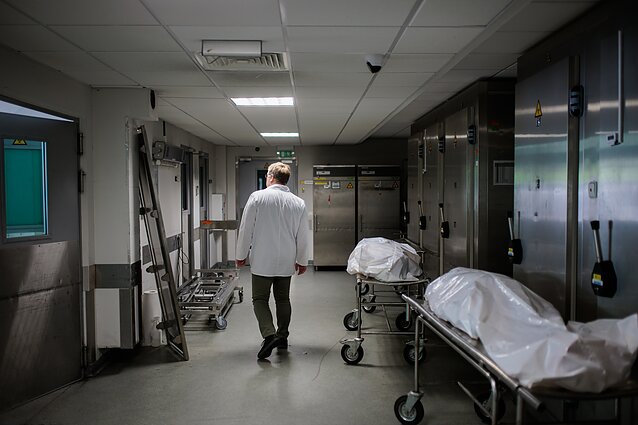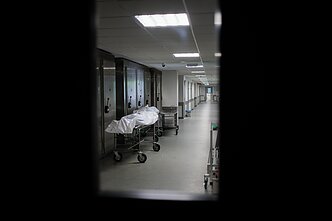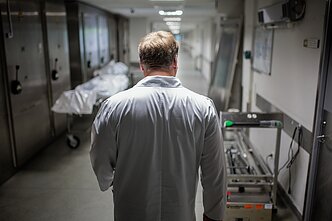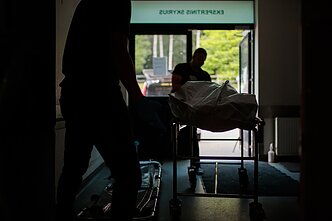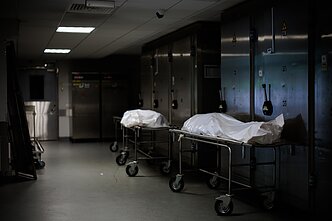















The unmistakable stench of a decomposing human body hits you as soon as you enter the State Forensic Medical Examiner's morgue. Even after leaving the building, the smell of death lingers on.
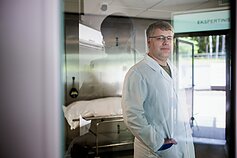
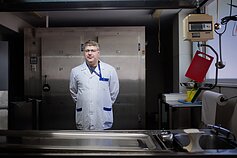
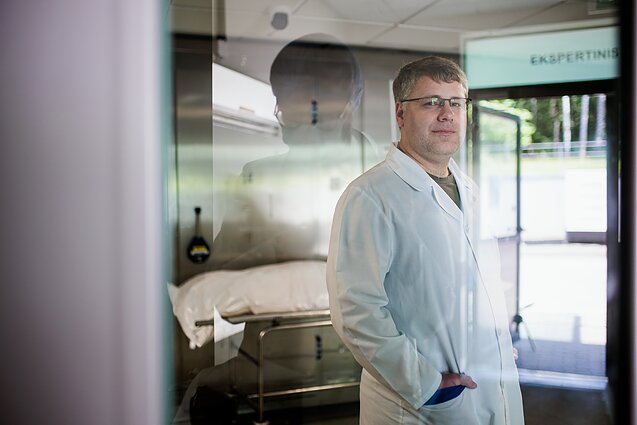
"I am triumphant when the cause of a mysterious death is solved. My findings help to solve the murder and punish the perpetrators," says Ovidijus Petkelis, a forensic expert who has examined the bodies of some 2,000 people.
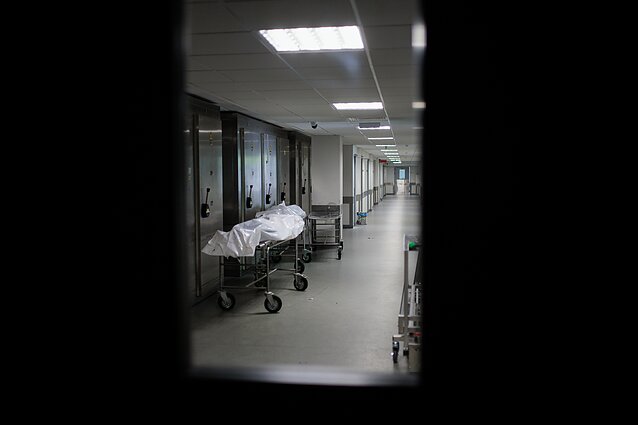
LRT.lt opens the doors of the central morgue of the service, behind which an average of twenty autopsies are carried out every day.
What kind of bodies are brought to your morgue?
People who did not die in the hospital and whose cause of death is unclear. Also, people who are suspected of violent death or apparent homicide, people who have died in traffic accidents and other deaths. Suicides, drownings and people who have been burnt in a fire are also brought to us.
The smell of a decomposing human body is not only in the cool mortuary rooms, but also in your office, which is much further away. The smell is extremely disgusting and hardly comparable to anything else. Are you used to it?
It is impossible to get used to this specific smell. But you just have to accept it as an inevitable part of your job. However, what you smell today is nothing compared to the smell of badly decomposed bodies.
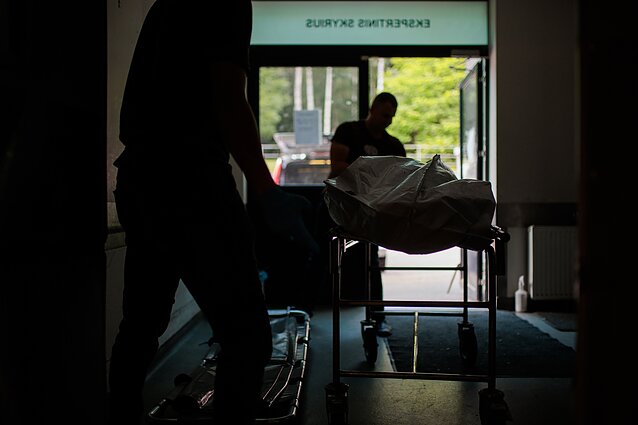
The support staff light incense and try other means to eradicate the smell, but nothing works. For me, this just makes the smell even more disgusting.
Eventually, the smell of the corpses gets into my hair and skin, even though we wear disposable overalls, two gloves, a mask and special goggles when we work with these bodies.
For me personally, the smell and the sight of pus are the most disgusting. Especially when we see the abdominal cavity of a corpse full of greenish-yellow jelly.
In your work, it seems that such images should no longer be shocking.
It's not shocking, it's just terribly unpleasant. Like the corpses that arrive completely covered in fly larvae. Before examining such a body, the worms have to be washed off with a water hose. The worms burrow down to the bone.
Have you ever been sick?
Yes, not so much because of the smell, but because of the look. When you're scraping a very decomposed body, the whole skin peels off in pieces like a film.
What were your most memorable autopsies?
The body of a man on whom I counted as many as seventy stab and slash wounds. I found that the injuries had been inflicted with two different knives, which took the pre-trial investigation in a new direction, because at first it was thought that there was only one killer. After my expert examination, it turned out to be two.
We also examined the body of another man with what appeared to be thirty gunshot wounds. The forensic experts said that this is how the husband dealt with his wife's lover.
Have there been cases where you have investigated a person who was murdered when there were no circumstances or signs of violence on the body?
Once a woman's body was brought in. I investigated that she had been strangled, although there were no external signs. The autopsy did not reveal any pathology as to why she died. I then had to carry out further tests. When I lifted the soft tissues of the face, I noticed tiny bruises and miniature bruises in the conjunctiva of the eyes. This suggested that the woman's nose and mouth had been pinched, causing her to suffocate.
There are victims of such violence where, at first sight, there are no traces of murder on the body. Sometimes I open the skull and see blood spilling into the brain. This means that the head has been crushed. We can identify when the trauma was sustained in a fall and when the blood spillage was the result of a deliberate blow. Then forensic investigators will start to look into the circumstances.
Is it possible to determine whether the person jumped from the ninth floor or was pushed by someone?
Realistically, no. Unless he was pushed very hard and left specific injuries.
Is it true that it is possible to determine the exact time of death as shown in films?
This is more of a fantasy of the filmmakers, not reality. Yet films sometimes show pathologists examining a corpse with tweezers. This is also fiction, as is snacking near corpses. Certainly, nobody eats or drinks in these rooms.
People say that after death a corpse continues to grow nails and hair for some time. A myth?
Absolutely. For anything to grow, the cells need to be alive.
How does the autopsy procedure work?
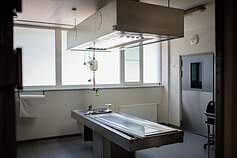
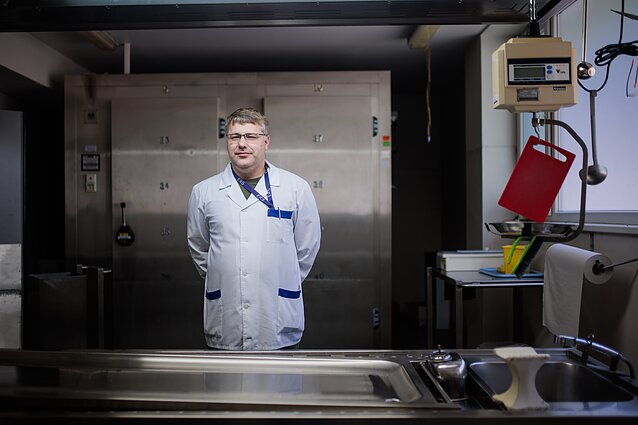
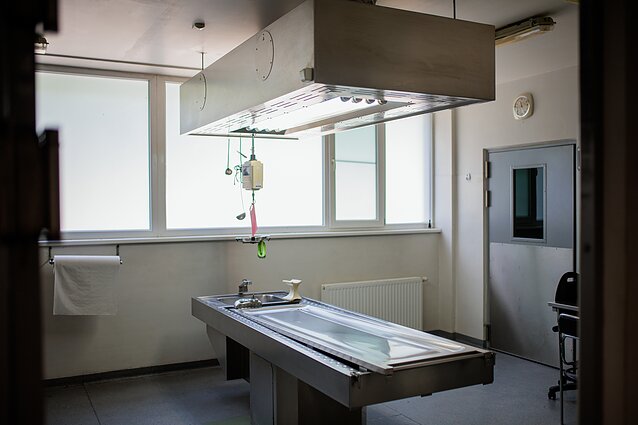
The body is brought to the morgue and placed on the autopsy table. Initially, the body is carefully examined externally, everything of significance is recorded and photographed, and the cadaveric phenomena are assessed. Then the internal examination begins.
The support worker makes an incision from the neck to the pubic bone and opens the chest and abdominal cavities. The whole set of organs is checked, including the tongue. Each organ is weighed, measured and examined before being returned to the cavities and sutured.
What is the point of putting the organs inside?
In case there is a need for a re-examination. Certainly, nobody puts cotton wool in the abdomen, as people say. Indeed, the brain is not returned to the skull. The cavity is filled with special paper.
Is the skull of the deceased opened in all cases?
Yes. All the internal organs must be examined and the brain can give a lot of information to determine the cause of death.
Does a team of several people work on the autopsy?
Usually three people: an expert, a support worker and a medical registrar.
How would you describe the people who work with cadavers?
Specific people.
What makes them specific?
They are not afraid of corpses. I don’t ask what’s wrong with them (laughs).
You seem to be a very calm person.
My wife would disagree with you.
In your morgue, there are sometimes identification procedures involving relatives. What are their reactions?
Very varied. From an indifferent "yes, it's him" to tears, hysterics, fainting. I have also noticed that it is mostly women who come to the identification procedure. Men very rarely come.
Are there any emotionally difficult autopsies?
Without exception, all my colleagues find it most emotionally difficult to examine the bodies of young children. Most of us have small children, so you start to think, what if it was my child? I have done dozens of autopsies myself. There have been resonance cases where I have examined the bodies of murdered children.
I have also felt sorry for young people who had no pathology and were killed in a traffic accident or committed suicide. Then there is a sense of futility.
An autopsy usually takes about an hour when the death is non-violent and the cause is clear. For example, a heart attack. In which cases can an autopsy take longer?
If the cause of death cannot be determined quickly. Or a complex homicide. For example, the body I mentioned with seventy stab wounds. It took three days to carry out the autopsy.
One day was spent just describing the clothes. It was necessary to describe and photograph every single knife hole and to match it with the wound on the body. Another day was spent counting all the injuries, measuring them and determining the depth of the damage. On the third day, the examination of the organs.
Does it happen that the body is brought in parts?
It happens. Especially after train wrecks, and air crashes. I remember one case where a man blew himself up. Only fragments of his body were brought in. I had to put the pieces together to make a picture.
Once, a colleague and I were examining the fragments of two people's bodies after a plane crash. She was working on one table, me on the other. My colleague says: "Listen, don't you have a second heart, because I can't find one in my kit."
Is black humour a part of your work?
What else can you do?
What's the hardest part of your job?
Make sure you don't make a mistake in determining the cause of death, that you don't miss important details, and that you carry out the necessary follow-up investigations. After all, our findings often determine the solving of a crime, and the fate of people.
Sometimes I go home and worry whether I have missed anything in the autopsy. Once I had to go back to the morgue, open up the body again and take additional material for drug tests to be one hundred percent sure of my conclusion.
Have there been any curious cases?
When the Forensic Science Service was located in Šiaurės Miestelis (in Vilnius), there was a story of a Roma man who stole the body of his relative from the morgue.
Another case was when the bodies of the deceased were mixed up and given to the wrong relatives. The staff responsible received penalties. I am pleased that such human errors are extremely rare.