










From this September, the government will no longer subsidise the tuition fees of Ukrainian students newly enrolled in Lithuanian universities and colleges.
The decision has surprised some, including the president’s office. The reasons could be many, not least Kyiv’s pressure to stop the “brain drain”.
Further reading
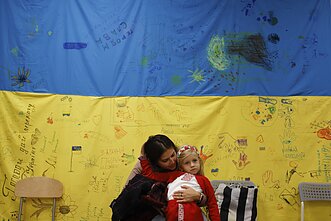
Arina Balaban came to Lithuania from Ukraine just after Russia’s large-scale invasion in February 2022. At home, she lost everything, she says. Now, she is looking forward to the coming academic year when she’ll start year three of her undergraduate studies at Vilnius University.
“I had more opportunities when I knew the government would pay for my studies. It meant a lot to me,” says Arina.
For Arina and other Ukrainians, 60 percent of their tuition fees are covered by the Lithuanian government, while their schools cover the rest. However, Ukrainian students who want to start their studies this academic year will no longer benefit from the government’s largesse.
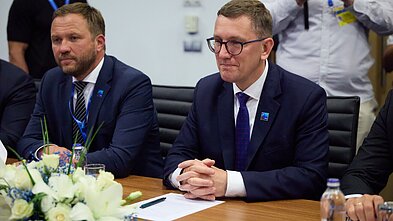
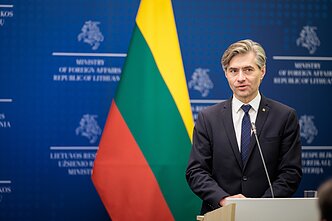
“Since the flow of refugees has sharply declined, and this measure was designed to address the refugee situation, the higher education institutions themselves can find solutions,” says Education Vice Minister Justas Nugaras.
And indeed some universities and colleges plan to continue to let Ukrainians study for free, but they say it is a burden.
Vytautas Magnus University (VDU) in Kaunas has received about two hundred applications from Ukrainians and has already accepted one hundred. How much it will cost is still being calculated, as some students will receive only partial tuition fee compensations.

“This is a difficult situation because the need for support for Ukraine hasn’t gone away,” says Vilma Bijeikienė, vice-rector for communication at VDU.
Vilnius College also promises to continue to welcome Ukrainian students.
“It is a benefit that some students even stay at Vilnius College to work,” says Andriejus Sadauskis, the school’s deputy director.
Vilnius College has received 25 applications. Covering their tuition will cost about 50,000 euros a year.
However, Sadauskis says he understands why the government decided not to pay the tuition fees.
“It is what it is, it’s the ministry’s decision. We knew that it was not going to be permanent and that the government’s resources are limited,” he says.
However, the decision has recently drawn criticism from the president’s office.
“It’s about the principle –equal support and unified system,” says Paulius Baltokas, an adviser to the president.
However, the ministry says the support system was never comprehensive or uniform. “Universities themselves would decide what kind of scholarships to give,” says Education Vice Minister Nugaras.

Moreover, he adds, Ukrainian students still have opportunities to study in Lithuania.
“Those who have graduated from Lithuanian schools can enrol through the common application system together with Lithuanians” and get into government-funded spots, says Nugaras.
There are over fifty Ukrainian graduates applying through the common system. But to do that, they have to take the same exams as their Lithuanian peers, a high bar to clear after spending just two years in the national education system.
“Very few apply because they have not passed the necessary exams,” says Bijeikienė of VDU.

One reason why the Lithuanian government made the decision to phase out the tuition support programme may be Kyiv’s own expressed desire to encourage repatriation and prevent the “brain drain”.
“We organise all assistance measures for Ukrainian citizens in Lithuania in response to the needs of the Ukrainian state, in cooperation and without encouraging brain drain from Ukraine,” the Ministry of Education was quoted by BNS in July. “This is the wish of the Ukrainian side. There are higher education institutions in Ukraine and there is no need to transfer studies elsewhere at the moment.”
Arina says she sees her studies in Vilnius as an investment. She is planning to bring her skills back to Ukraine once she can return. Meanwhile, the discontinuation of tuition support will make the situation of her compatriots worse.
“This will affect students like me from hot spots, Donetsk region, places where there is fighting with Russia,” she says.
Over the last two years, more than 1,000 Ukrainian students have benefited from the programme. It cost the Lithuanian government 11 million euros.

Newsletter
Every Friday morning.