










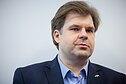


“It’s up to us to decide how we spend our time, and I think it’s best to spend it on meaningful things,” says Agnė Židelevičiūtė from Kaunas as she travels to volunteer in a Ukrainian hospital. The future school graduate talks about her decision in an interview with LRT.lt.
How did you end up in Ukraine and why?
I’ve just finished 11th grade, I’m 18. When the war broke out in 2014, I was just 8 or 7 years old, and I remember hearing stories from my family and seeing on TV what was happening in Ukraine.
At that moment, as a little girl, it touched my heart so much. I realised that these things were happening. I’m not Ukrainian, but there were many Ukrainian children in my circle. I grew up among Ukrainian people. My parents didn’t hide what was happening, that [the war] was close, they made me understand that the world is not only a happy and safe bubble.
When I heard [about the war], I realised how much I wanted to help those people. I have been dreaming about this for 10 years, thinking I would like to come and volunteer.
In 2022, I realised I was serious and said to myself: when I turn 18, I will get on a bus and go. My birthday was on April 13, I finished 11th grade, passed my intermediate exams, and went to Ukraine.
A few weeks ago, I met [head of NGO Blue/Yellow] Jonas Ohman, whom I admire a lot. He asked me what I was doing, and I said I wanted to go to Ukraine. He found me an opportunity to volunteer at the Ternopil Hospital. For two weeks, I worked in the surgical ward, assisting the nurses in various jobs [...]. Now, I’m going to the Kharkiv region, but I cannot say much about it for security reasons.

I would like to stress that volunteering is necessary. The people of Ukraine will need help for many years to come, but it is up to us to decide how we can help. We don’t need everyone to go to war zones. We can go to regions that are safer, we can help in Lithuania. If we cannot help financially, we can help with things, we can talk on social media.
The saddest thing is that some people come to terms with the atrocities and take it for granted. Some forget, some don’t want to dwell on these horrific and stressful events. I think you cannot forget. If everyone thinks that someone else will help, no one will help.
How did your friends and family react to your trip to Ukraine?
I’m an only child. My mum and dad have known about my wish to go to Ukraine for a long time and have been very supportive. They are very close to me, like best friends. I have a very good relationship with them, and I’m very happy that they support me. My relatives and friends are also supportive. A small part was against it, they didn’t see the point, why I was going or how I could help. But the closest people have supported me tremendously.
Weren’t you anxious? After all, some people today are even afraid to travel to Lithuania because it is supposedly not safe.
Anxiety and fear are perfectly understandable, it is human – I’m speaking as someone who plans to study psychology and wants to become a therapist. Of course, you are not going on holiday, and the threat level is high. But it seems to me that life can be lived in a meaningful way, and the sense of meaning here is greater than the fear. You are also preparing for this both physically and psychologically.
How exactly do you need to prepare?
You need to find contacts in the place where you are going. I’ve taken good care of both medicines and essentials. I belong to the Riflemen’s Union, so I know what you might need. The most important thing is to know what’s going on, for example, what to do if you hear air raid sirens.
I think it’s also important to accept help from others. Jonas Ohman was a big help to me. It was my first trip to Ukraine, but there are people who go there all the time, and they themselves say that they don’t know what to expect because sometimes things change very quickly.

The world was recently shocked by the Russian attack on a children’s hospital. You also work in hospitals. What’s the mood there?
The mood is different. Of course, their country is under attack. But I always say – you cannot give up emotionally. We must concentrate on what we can do at the moment, which is to help. For the Ukrainians, too: they must remain vigilant, they cannot give up.
The hospital workloads are heavy, the shifts are long, and sometimes they are very tiring. But they feel a sense of purpose: that they are doing their work for a reason, that they are saving people, sometimes the dearest ones.
It is very important not to exhaust oneself. You have to take care of yourself, too, to feel balanced. It is easy to burn out, to break down, so rest and sleep are very important, although not always possible. If you lose yourself, you lose everything.
How do you help yourself in difficult times?
For me, the most important thing is sleep and rest. If I don’t rest, I’m burnt out on the first day. I also write down my emotions every morning and evening so that I don’t have to keep them inside. There are also breathing exercises that I do every morning and evening.

It is important to be hopeful and to understand what is happening. Even if we take good care of ourselves, sometimes we get very worried. Then it is important to try to look at the situation from a distance, to see the bigger picture, not the details. For me, it is important to look at the good, the positive side, even in Ukraine. It is important to understand what I can do and to take other things as lessons. People try to do a lot and when something doesn’t work out, they worry. I’m glad that my parents taught me to enjoy the moment.
You interact with soldiers as well. What do you notice? Many experts point out that Ukrainian soldiers do not rest and that they will have psychological problems in the future.
I admire their strength; it is not easy for them. But soldiers are different, and some of them carry on with a smile and optimism. I know that when I come to work, there will be soldiers who will come up to me and ask how I feel.
Some soldiers have injuries that are treatable, but they will never be able to fight again. I have seen many soldiers who feel angry with themselves, ashamed that they will no longer be useful to their country. That is why psychological rehabilitation is important.
The soldiers are grateful to the nurses and the doctors. Also, to the Lithuanians for doing so much for Ukraine. I see that the Ukrainians are extremely grateful to Lithuania, and they say that if, God forbid, day X comes, they will defend us. You go to the smallest shop in Ternopil, you talk to the saleswoman, and she immediately says: “Thank you, Lithuanians, for helping.” Everybody knows that we are doing a lot and helping Ukraine. Everybody feels grateful.

What are your future plans? You will probably go back to school in autumn.
Yes, I plan to stay in school, finish 12th grade, pass my exams, and enrol in psychology [...]. When I was volunteering at Kaunas Clinics, I also visited a psychiatric clinic to see what the work of a psychiatrist was like. I want to do meaningful things, and it’s a field that not only interests me but also seems very important.

Newsletter
Every Friday morning.