
















Bidding goodbye to one’s girlhood and boyhood on the eve of a marriage has a long tradition in Lithuania, even if today’s hen and stag parties owe more to Hollywood films than 19-century village celebrations.
What would our great-grandmothers say about the hen party?
Hen parties and stag parties are not at all a modern idea, says ethnographer Nijolė Juta Gornatkevičė. Our great-grandmothers and great-grandfathers could tell us a lot about these celebrations, because until a century ago, it was unthinkable to have a village wedding without the bride, the groom and their friends getting together on the eve of the big day.
According to the ethnographer, as late as the beginning of the 20th century, hen and stag nights were a kind of introductory part of weddings. Just before the wedding, the bride-to-be would gather her closest friends and her mother and, in the company of women, have an evening to mark her transition to womanhood.
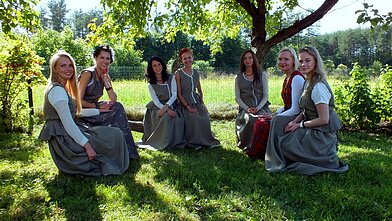
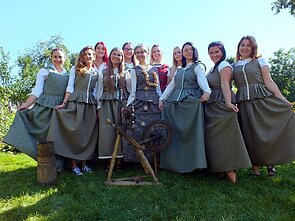
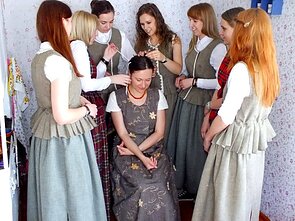
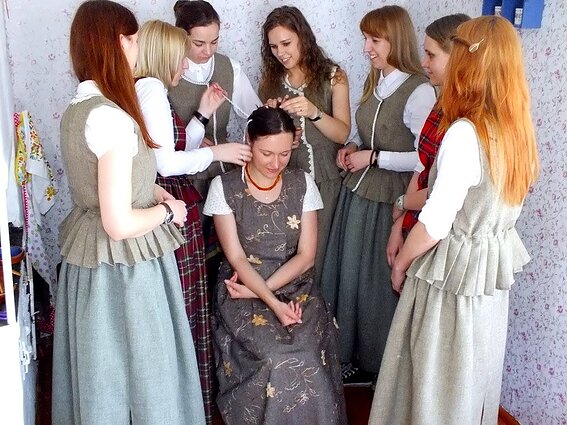
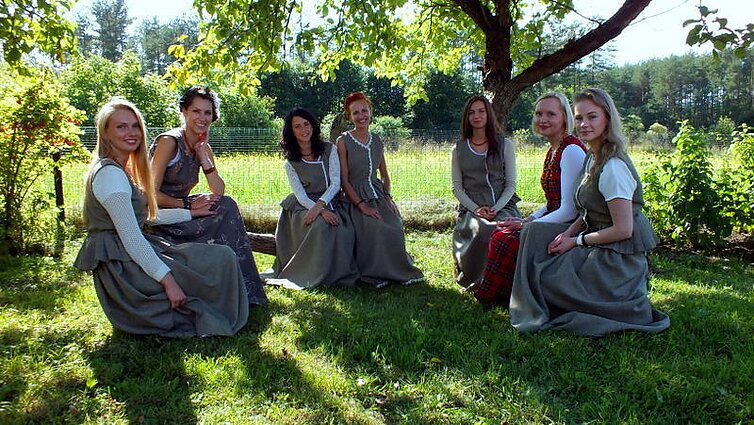
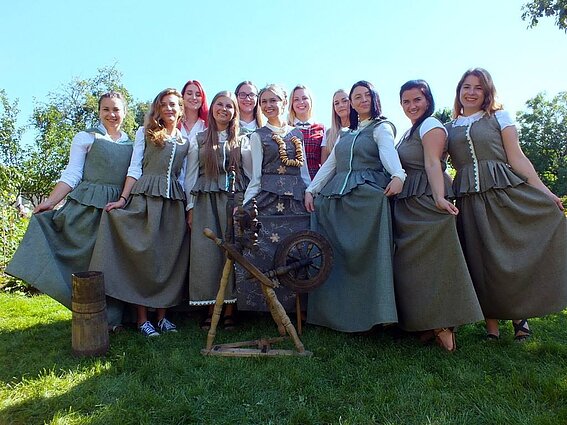
The girls would dress up for the occasion, and the bride, if she was well-off, would often have an elaborate dress made according to the traditions of her region. The bride’s farewell rituals were held on the hen night, and the bridesmaids also dressed up the bride for the big day.
“The gathered girls would first sit the bride on a bread barrel and comb her hair. They’d make two braids, place them on top of her head and decorate with ribbons. This ritual combing marked the bride’s transition from girlhood to womanhood, as according to the old tradition, after the wedding a woman was no longer allowed to display her hair and had to wear a hat,” says the ethnographer.
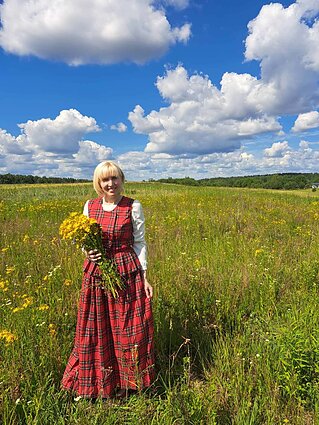
The dressed-up bride would first go to say goodbye to her rue garden, which symbolised her youth, and then, with a group of friends, she would make a round to say goodbye to the entire village, collecting gifts from neighbours. A sweet table was usually prepared for the hen night: the girls would set it with their own cakes, and the bride had to treat all her friends.
Sorrows and laughter
Unlike today, the hen party was not an evening of fun. There were tears and lamentations, says the ethnographer, and there was a sense of unease and fear among the women.
“In the old days, around the beginning of the 20th century, it was usually the parents who chose the groom for the bride. You couldn’t pick, you might as well be in love with someone else, but you had to marry, say, an old widower. That is why the hen night was not lacking in lamentations, wistful songs about the bride meeting the unknown of her new family,” says Gornatkevičė.
“The bride’s mother also played a very important role, staying by her daughter’s side. The mother would start combing the bride’s hair, take part in the farewell and the mourning, and help the girls set the table. It was hard for the mother, her heart ached and she didn’t know if her married daughter would be as happy in her new family as she was in her childhood home.”
However, the hen night was also a joyful celebration, because almost every woman dreamed of getting married, says the ethnographer: “No girl wanted to be an old maid, she was afraid of being alone, so she was happy to get married – that was very important. Spinsterhood was an even worse fate than marrying someone you didn’t love.”
Gornatkevičė notes that there are fewer written sources about stag nights, but it is known that the groom-to-be, his father, the matchmaker and cousins also celebrated the evening. The mood there was much more cheerful than at the bride’s home.
“On the eve of the wedding, the guys would gather around the salty table for dinner, feasting on bacon, and the groom’s dad would bring vodka. The men would make gifts for the bridesmaids and the bride and sing. The bachelor party was more fun than the hen party, with no mourning. On the contrary, there was no shortage of jokes from the matchmaker, fatherly advice and rejoicing that the groom would soon have a wife and be a married man,” says the ethnographer.
Western winds and return to tradition
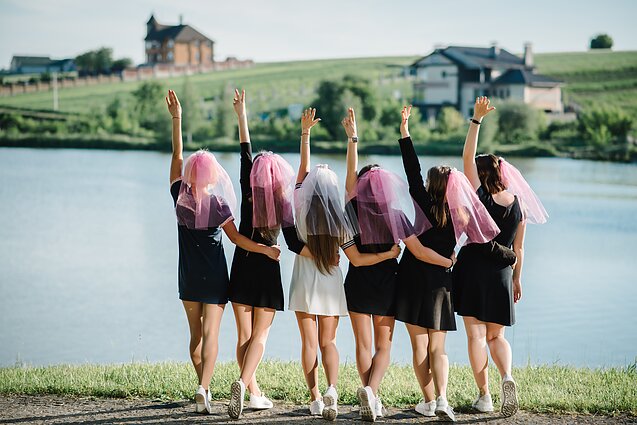
By the 1970s, the wedding eve traditions had been largely abandoned and revived only in independent Lithuania. As Gornatkevičė points out, around 2006, Western hen and stag parties became popular. The focus shifted away from folk traditions to pure partying.
“During the Soviet era, our mothers didn’t hold the hen night, but when this tradition was revived, girls started celebrating after the Hollywood script they saw in the movies,” says Gornatkevičė.
The ethnographer, who organises folk-style hen parties, notes that recently more and more girls are turning to old traditions, and hen nights are becoming more sophisticated and meaningful.
“I notice a trend that vulgarity is decreasing year by year, hen parties are becoming more spiritual, and girls are more likely to choose to spend a sincere and meaningful time together. Apparently, we want to be authentic, it has become important to preserve our national identity. As far as I have heard, all those who choose to celebrate the hen party according to folk traditions are happy, because such a celebration is different and very much their own.”

Newsletter
Every Friday morning.