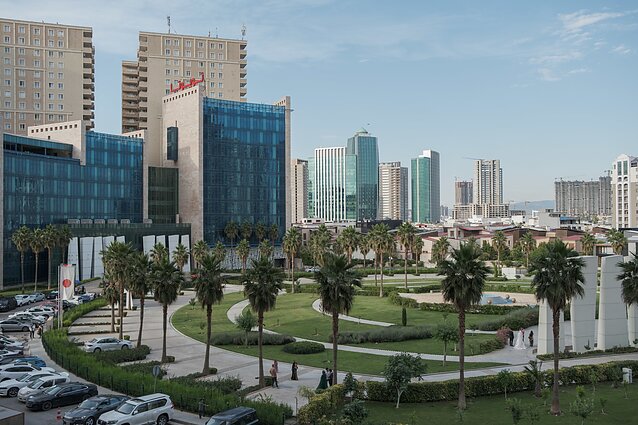















The image of modern Iraq is tarnished by scenes of war and violence. However, the country's emerging digital sector and the young people building it are now trying to change the perception of the country – both at home and abroad.
“People in Lithuania probably think we only have bombings,” said Polla Fattah, professor at the University of Kurdistan in Erbil. The private university is among the dozens of institutions preparing the new cohort of students to help spearhead Iraq’s digital transformation.
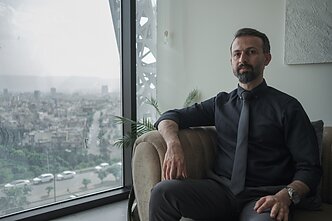
This new generation of Iraqis includes former migrants who studied and worked abroad before coming home to help build the country’s future. One of them is Mohammed Anwar, a co-founder of Stack Solvers, a local startup focused on the country’s medical sector.
After finishing his degree in Sheffield in the United Kingdom, he headed home where he founded the first startup with his friends. While building the businesses, he also became a professor at a local university.
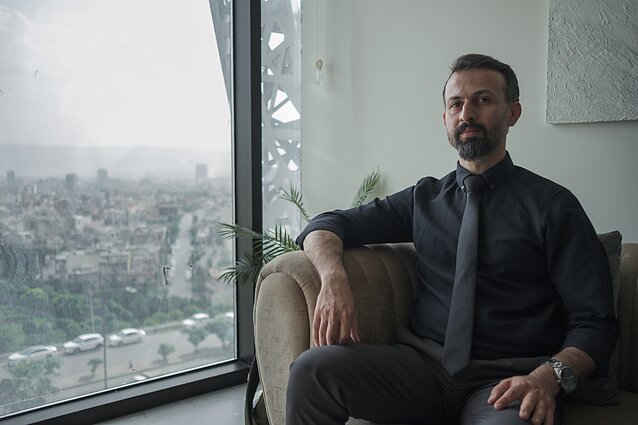
“I’m always motivating my students that they are studying a really good sector, that their future is really bright,” he said in his offices overlooking Sulaymaniyah, Kurdistan’s second-largest city.
Today, not war, but economic instability remains the key problem, Anwar said.
“It’s because our economy is based on public sector salaries, and when that is not going very well, it affects the whole economy,” he said.
In 2017, Kurdistan held an independence referendum, which the federal Iraqi government did not recognise. Baghdad then crushed the independence drive by imposing controls on the region’s borders and seizing several areas claimed by the Kurdish authorities.
Recently, Baghdad ordered Kurds to hand over all oil revenues, which was the main source of income for the government, in exchange for a share of the federal spending being allocated to the autonomous region.
Public sector salaries are now thus paid out by Baghdad. And when there are disagreements between the Kurds and federal Iraqi authorities, pay is withheld for months at a time, affecting over 50 percent of the population that relies on government jobs paying north of 350 US dollars per month.
The IT sector, meanwhile, can offer salaries at least double or triple the amount – and relative freedom from politics. “Entrepreneurship and startups are seen as a partial solution” to the rentier economy, said Shivan Fazil, senior researcher at the Institute of Regional and International Studies (IRIS) in Iraq.
Despite the conflict and increasing encroachment by Baghdad, the Kurdistan Region of Iraq still has its own security forces and maintains quasi-independent foreign relations and internal policies.
Yet years of successive wars have destroyed the country’s reputation at home and abroad.
“International investors don’t trust Iraq while local businesses don’t trust the local [IT] products,” said Zana Ahmed, founder of Enlightors, a local marketing and PR startup.
The country also remains barred from many international banking gateways, including money transfer platforms like PayPal and Apple Pay. Recently, Iraq’s Central Bank heeded requests from the US to crack down on local banks that are accused of helping Iran-linked groups launder money, as well as being involved in sanction evasion and terror group financing.
Addressing the isolation would help the country fully join the global financial and banking systems. But the pace is slow, Ahmed added.
“I told [officials]: I know you guys love construction and oil, but [the digital sector] is really the future,” he said.
Lithuania’s footprint
Osmos, a Lithuanian NGO, is among one of many actors aiming to help the country’s digital transition and emerging IT sector.
And even if its involvement in Iraq is dwarfed by NGOs from countries like Germany, Osmos still managed to run “one of the most successful [EU] projects”, which involved dozens of young people receiving additional training and international work experience, said Žilvinas Švedkauskas, managing director of the organisation.
Digital Explorers is one of several pilot projects under the EU umbrella to foster local talent. Although it is funded almost entirely by Brussels – some 400,000 euros in total – Lithuania has also partnered by putting forth around 20,000 euros for the project.
“This is not a country that lacks money – it’s a place that lacks international exposure and is dealing with stereotypes due to the [past] conflicts,” said Švedkauskas.
The aim is to both train Iraqis there, thus discouraging irregular migration, but also push Lithuanian companies to hire the local talent pool and create workplaces there.

“One of the pillars is to upscale the people [in IT] here, on the other hand, it is also to show to Lithuanian companies that there is a market there,” said Eglė Dmukauskaitė, head of finance and administration at Osmos.
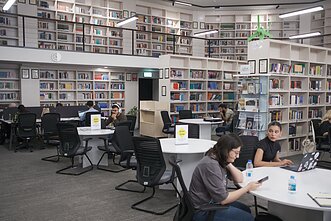
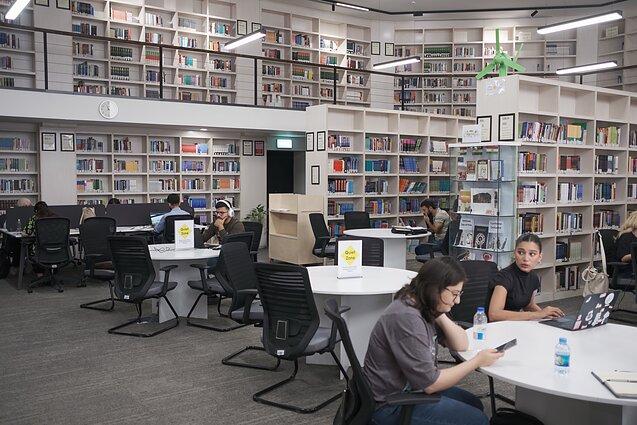
A way to make it happen is to partner up with local universities to improve the curriculum as well as offer work experience and studies abroad. This would address the problem of too many young people with too many degrees that don’t mean much, according to staff members at the public Sulaymaniyah Polytechnic University.
“If you want to encourage people to go into startups, including the IT sector, education is key. Unfortunately, the universities in Iraq do not equip the younger generation for life after education,” said Fazil, researcher at IRIS.
“We have 800,000 to 1 million graduates in Iraq entering the labour market each year. Unfortunately, the job market has not kept pace,” he added.
In Iraq, two-thirds of all people are under 25. Among them, one in six are currently unemployed, with the soaring joblessness resulting in a fight or flight response, according to Fazil.
“In the rest of Iraq we saw protests, while in Kurdistan we saw a combination of protests, apathy, and illegal migration to Europe,” he added.
Vilnius has seen its stake in Iraq’s future grow following a migration crisis in 2021 when thousands of mostly Iraqi Kurds travelled to Belarus before crossing over to the Baltic states. The corridor was opened by the Alexander Lukashenko regime in response to EU sanctions placed in the wake of the brutal repressions against the country’s opposition.
“Our objective is to continue the work that the Lithuanian Foreign Ministry began during the migration crisis by turning the budding dialogue with our Iraqi partners from migration to learning digital competence and being able to create jobs,” said Švedkauskas.
For many in Iraq, the migration crisis was also the first time they heard of Lithuania. Many now claim to have a family member or an acquaintance who fled to the EU via the Belarusian route.
“I feel sorry for the guys running away, it’s not cheap to leave the country,” said Nawzad Al-Salihi, head of digital transformation at iQ Group, a major tech company in Iraq and Kurdistan. “With 10,000 euros [it takes to migrate], you could start a small business here.”
For that, however, people need both financial support and training. Lithuania, through NGOs like Osmos, are now trying to address the latter issue.
“I believe if we can train them, get them the right skill, then we will have fewer people leaving the country,” said Al-Salihi.
Post-oil future?
Over 90 percent of Iraq’s budget revenue comes from oil exports, making the country heavily susceptible to oil price shocks. Although Baghdad pays lip service to reforms, attempts at diversifying the economy stop once the prices bounce back, according to Fazil, researcher at IRIS.
“Baghdad and Erbil need to make the [regulatory and bureaucratic] groundwork and the infrastructure for the IT sector to flourish,” he added.
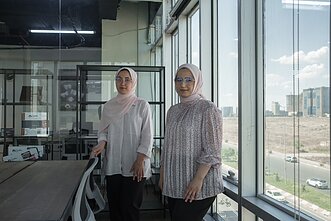
Shanga and Lara Saadallah are two sisters in their mid-twenties who founded Tevin Data, a data science startup, after finishing their studies and getting work experience in an American company.
“We need to shift from oil – a lot of people are now jobless and just waiting to be employed by the government, but they need to start businesses,” said Shanga Saadallah.
Shanga herself started her career in oil engineering, before switching to IT.
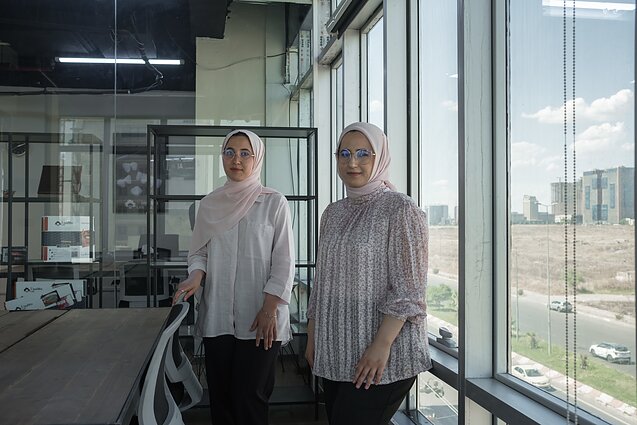
“We can’t replace oil in the short-term, but when hardcore regulations surrounding the environment and the production of oil [will hit Iraq], it will minimise the country’s ability to produce high numbers,“ Shanga said. “But right now the main problem is about employment and entrepreneurship [in IT] is solving it gradually.”
Over time, the growth in the IT sector “will help youths like us”, Shanga added. “We need to learn from others’ experiences, including from Lithuania. We need to find shortcuts because we don’t have time to start from scratch.”
The visit to Iraq has been organised as part of the "Digital Explorers – Iraq Edition" project with the financial assistance of the European Union, contracted by ICMPD through the Migration Partnership Facility. The contents of the article resulting from the visit do not necessarily reflect the views of ICMPD or the EU.

Newsletter
Every Friday morning.