














The request by an International Criminal Court (ICC) prosecutor to issue an arrest warrant for Israeli Prime Minister Benjamin Netanyahu is “unexpected” and “surprising”, the Lithuanian foreign minister says.
ICC Chief Prosecutor Karim Khan has said that Netanyahu and his Defence Minister Yaov Gallant may be responsible for war crimes and crimes against humanity in Gaza. The ICC is also seeking a warrant for Hamas’s leaders Yahya Sinwar, Mohammed Deif and Ismail Haniyeh for war crimes.
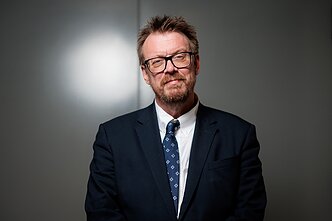
Commenting on the ICC’s bid, Lithuanian Foreign Minister Gabrielius Landsbergis said he found it surprising that both Netanyahu and Hamas leaders were put in the same category.
“It is an unexpected decision and perhaps a little surprising in its equation of the accused, because what is equated are the head of a democratic state and what we consider to be the head of a terrorist organisation,” Landsbergis told reporters at the Lithuanian parliament, Seimas, on Tuesday.

“From the initial comments that I have heard, the court did not emphasise the status of the defendants but the status of the victims,” he added.
Landsbergis stressed that no final decision had been taken on the arrest warrant for the Israeli prime minister.
“I want to stress that the decision is not final, it is the prosecutor’s appeal to the pre-trial authority, which has the final decision to make as to whether or not it will apply the arrest warrant,” he said.
Lithuania has been a supporter of Israel. However, it is also a state party of the Rome Treaty that undergirds the ICC.
Asked whether Lithuanian officials would detain Netanyahu if an arrest warrant is issued and the Israeli prime minister comes to Lithuania, Landsbergis said that “the people who are subject to restrictions, their travel possibilities, their geography are severely limited”.
“Lithuania is in a situation where we cannot choose whether we like or dislike the decisions of the international court,” he commented. “The same court has issued an arrest warrant for Vladimir Putin for crimes committed in Ukraine, we are part of that court and we have to take the decisions as they are.”

Newsletter
Every Friday morning.