
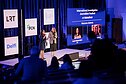





Last month’s Immanuel Kant Congress in Kaliningrad was attended by participants from Germany and Finland. The event, which featured discussions of the so-called Baltic Platform, is part of the Kremlin’s influence plan for the Baltic states and sought to push Moscow’s narratives under the guise of discussing ecological problems of the Baltic Sea.
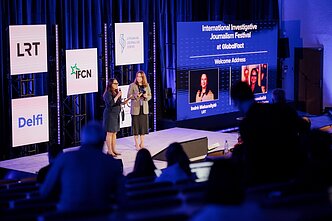
This international investigation was carried out LRT, Delfi Estonia, Finland’s Iltalehti, and Sweden’s Expressen, as well as teams from The Insider and Germany’s Paper Trail Media. The findings reveal how Russia is using its own platforms, that purportedly deal with neutral topics, to influence countries in its neighbourhood and grow its power.
Events dedicated to the 300th anniversary of Immanuel Kant, the philosopher who was born and lived all his life in the East Prussian city of Königsberg, now Kaliningrad, were organised in late April. The most significant event was the four-day congress, A Global Understanding of Philosophy, held at Immanuel Kant Baltic Federal University in Kaliningrad, Russia. It was attended by hundreds of participants, including from abroad.
Opening the congress was a greeting message from Russian President Vladimir Putin. It was his decree, signed on May 20, 2021, that instructed the responsible authorities to organise celebrations for the German philosopher’s anniversary.
“Dear friends, I would like to greet the participants and guests of the International Congress on the 300th anniversary of Immanuel Kant’s birth. The initiative to celebrate this anniversary in a big way has been actively supported both at home and abroad. This is a living proof of the enduring interest in the personality of this brilliant and unique thinker and in his philosophical works, which are still relevant today,” Russian Deputy Prime Minister Dmitry Chernyshenko conveyed Putin’s words at the opening of the Congress.

Invitees from Lithuania
The organisers said the congress attracted more than 300 participants, including guests and speakers from abroad: India, Uzbekistan, Belarus, Italy, Finland, Germany and other countries.
The LRT Investigation Team, alongside journalists from other countries who worked on the investigation, have seen evidence that the largest delegation was expected from Germany, more than 100 scholars and businesspeople. They were expected to afterwards exert influence on their own government to improve relations with Russia and to back off sanctions. The guests were to be flown in on a plane owned by the Russian energy giant Gazprom. However, the actual number of participants in the event shows that the plan was not fully successful and there is no record of any German businesspeople attending the event.
The LRT Investigation Team also asked Lithuanian scholars and institutions if they had received invitations to the Kant anniversary events in Kaliningrad.
“To my knowledge, no invitations have been received. We had no contact with Kaliningrad University even before the war, and none of our teachers worked with professors from Kaliningrad University. The contacts we had in other Russian cities broke down after the outbreak of the war. Since the Faculty of Philosophy has decided to cease any cooperation with Russian institutions, it is clear to all the teachers that there can be no cooperation until the situation has changed,” said Mintautas Gutauskas, president of the Lithuanian Philosophical Society.

Lithuania’s biggest universities and the ministries for education and economy have also indicated that they have not received any invitations.
However, the philosopher Arvydas Juozaitis confirmed that he had received an invitation to the Kant anniversary events. He served as cultural attaché at the Consulate General of Lithuania in Kaliningrad from 2004 to 2009.
Juozaitis said that six months ago he received an invitation from the Immanuel Kant Museum to come to the anniversary. The invitation came from Marina Yadova, one of the museum’s directors. However, Juozaitis said he did not respond and did not maintain any contacts. He said that before the Russian invasion of Ukraine, there had been plans to produce a stage a play about Kant, but the project was abandoned when the aggression began.
Under the cover of ecology
The programme reveals that Kant and philosophical discussions were only one part of the event. The aforementioned Kaliningrad Governor Alikhanov referred to Kant as a “Russian trophy” and urged the participants to find a new, “Russian interpretation of Kant”. According to him, Russia needs a revision of Kant’s legacy based on “current tasks”.
Alongside presentations on philosophy, Russia used the Western delegates to present narratives justifying its war in Ukraine and targeting the Baltic states. The whole second day of the conference was devoted to discussions on the so-called Baltic Platform. As the LRT Investigation Team and international partners reported a year ago, the project, designed to consolidate Russian interests in the Baltic states, was prepared by the Kremlin’s special services on behalf of Putin’s administration back in January 2023.
Further reading
Officially, the Baltic Platform is said to be an international discussion forum created on the initiative of Russian universities and research institutes: the Primakov Institute of World Economy and International Relations (IMEMO) of the Russian Academy of Sciences, the Moscow State Institute of International Relations (MGIMO) under the Ministry of Foreign Affairs of the Russian Federation, Immanuel Kant University, Saint Petersburg State University, and the European Institute of the Russian Academy of Sciences. The project was presented in July 2023 in Kaliningrad.
However, secret documents revealed that the Baltic Platform aims to legitimise Russia’s actions under the pretext of the ecological problems of the Baltic Sea, to show Moscow as a leader of initiatives, first using seemingly innocent and non-political topics, and then “gradually increasing the complexity and seriousness of the issues”.
The real point of the Baltic Platform is to spread narratives about the alleged militarisation of the Baltics, contrasting it with Russia’s proposed “peaceful and win-win solutions to the region’s problems” based on the principles of peace and good neighbourliness.
“The International Kant Congress is almost certainly part of the ‘Baltic Platform’ project announced in 2023. [...] The congress was organised to exploit the most important idea of the Baltic Platform, which is to use non-political, universal themes to attract participants from ‘unfriendly’ European countries and to encourage them to spread the Kremlin’s narrative, consciously or unconsciously, that Russia is a normal country, cannot be isolated, we should be ‘in dialogue’ with it and take its interests into account,” Lithuania’s intelligence agency, the State Security Department (VSD) commented to LRT.

It is almost certain that the congress at Immanuel Kant University will be used for propaganda, the VSD believes: it will be presented as a major international event where scholars from different countries discussed the relevance of Kant’s ideas. “But the conclusions will coincide with the Kremlin’s narrative, and participants from the so-called ‘unfriendly countries’ will play the role of an independent-minded academic society, undaunted by pressure and censorship from Western governments,” the VSD says.
Moreover, it warns, it is possible that Russian intelligence services may have used the Congress to gather information, recruit, and coordinate further activities.
The Baltic Platform has also been mentioned in press release by the Russian Foreign Ministry. It focused on foreign experts taking part in the discussions, “an equal dialogue with foreign partners”. It also added what the Kremlin really cares about – warnings that the Baltic Sea will not become NATO’s internal sea.
Sympathisers from Finland
“Political pluralism has become toxic in the Baltic capitals. This means a primitivisation of political choices and an unequivocal obedience to Washington. This is a norm from which it is not allowed to deviate,” spoke Alexander Dynkin, president of the Primakov Institute of World Economy and International Relations (IMEMO) of the Russian Academy of Sciences, at the congress.
He has been repeatedly identified in the Russian media as the inspirer and thought leader of the Baltic Platform. This former adviser to Russian Prime Minister Yevgeny Primakov and member of the scientific committees of the Russian Foreign Ministry and the Security Council has been talking for some time about the end of US dominance in the world, which is said to have come with the Russian invasion of Ukraine on February 24, 2022.

Fyodor Voitolovsky, director of IMEMO, told the congress that the Baltic coast should be restored as a non-nuclear zone. He argued at the congress that the deployment of Russian Iskander-M missile systems – both nuclear in Belarus and non-nuclear in Kaliningrad – was a step essentially provoked by the concentration of “huge conventional NATO weapons” in the Baltic states outstripping Russia’s capability.
“If this disparity were eliminated, we could talk about turning the Baltic Sea into a non-nuclear zone. And Russia would also support this. But the mobilisation of such a powerful force, the increase of rotational American forces in the Baltics – all this, of course, complicates the situation,” Voitolovsky said.
Alexei Gromyko, director of the European Institute of the Russian Academy of Sciences, said that the threat of nuclear war had intensified. While northern Europe has long been considered a relatively peaceful region, he argued, much has changed. Finland and Sweden, which have joined NATO, are to blame for this, according to Gromyko.
Joining these discussions at the Kaliningrad congress was Tarja Cronberg, a researcher at the Stockholm International Peace Research Institute (SIPRI). A member of the Green Party, she was a deputy at the Finnish parliament, served as minister for labour from 2007 to 2009 and as a member of the European Parliament from 2011 to 2014. Cronberg is a fierce opponent of Finland’s accession to NATO, and in 2014 she said that the European Union was partly to blame for the annexation of Crimea by forcing Ukraine to choose between Europe and Russia. She also opposed the first sanctions against Russia and argued that the Ukrainian crisis should be resolved through diplomatic channels and negotiations.

“I agree that the situation in the region is really difficult and tensions are rising. Kant said that international law must necessarily be based on the federalism of free states. Today, this idea can be linked to the growing threat of the use of nuclear weapons, despite the fact that many countries have pledged to observe restrictions on their production, transport and deployment,” Cronberg was quoted as saying in Kaliningrad by Rossiyskaya Gazeta (RG).
Following the uproar over her visit to Kaliningrad, Antti Helantera, the Finnish ambassador to Russia, confirmed that it was he who had recommended that the congress organisers contact Cronberg. “In the summer or autumn of 2023, I was contacted by the organisers of this event, IMEMO, and asked who from Finland could take part in the discussion. I told them that they could invite Cronberg and then it would be up to the invitee and the inviter to decide whether there would be an invitation and participation. As a speaker myself, I attended the Primakov readings in 2021, 2022, and 2023,” he said.
Dan Smith, director of SIPRI, also confirmed that he agreed to let Cronberg participate in the event. However, he explained that this was a personal decision of researcher and she did not speak on behalf of SIPRI. “Nevertheless, attending such a conference and networking is appropriate, even in difficult times,” said Smith.
Participants become recruits
Nerijus Maliukevičius, lecturer at the Institute of International Relations and Political Science at Vilnius University, says that Immanuel Kant University in general has been linked to a number of influence operations against the Baltic states.
“It may not be so visible, but let’s recall the notorious case of Vadim Smirnov who presented himself as a scholar from Immanuel Kant University but was a security agent working under cover, and that cover was provided by the institutions of Kant University, by research centres. One must understand that what is happening in the format of Kant University is also part of politics, part of intelligence operations,” Maliukevičius said.
According to the researcher, the event was a propaganda campaign to show the allegedly international character of Russian academic events, even in the face of sanctions. “But even those who are tempted to attend, or students, potentially become part of the recruitment process, and find themselves in the spotlight of the Russian intelligence authorities,” he said.
According to Maliukevičius, the point is having foreigners repeat the Kremlin’s talking points: the threat of World War Three, the demand for peace under any conditions in Ukraine. “And they echo it, they voice these claims. Perhaps not verbatim, but the main ideas get repeated,” he noted.

A set of soft power tools
On the eve of the Baltic Platform at the Kant congress, another platform, the so-called Valdai Club, expounded its positions.
“According to the experts of the Valdai Club, in a period of changing world order, dialogue between experts from different countries and scientific fields continues where there is an interest in objective and impartial analysis. And there is no question of isolating Russia,” the Russian news agency Ria Novosti quoted the club as saying after the event.
The Valdai Club is a platform for discussion among the Russian power elite. Since 2011, it has been run by the Russian Council on Foreign and Defence Policy, the International Affairs Council, MGU and the Higher School of Economics. The club’s annual meetings are attended by Putin, Russian Foreign Minister Sergey Lavrov and others. The club is on Ukraine’s and Canada’s sanctions list.
The Valdai Club is used as a Kremlin propaganda and foreign policy mouthpiece. It has been described as a ‘soft power’ tool used by the Russian authorities to sway Western researchers to their side, to build links between Russian and Western scientific communities, and to lay the foundations for Russian foreign policy initiatives.
“Russia regularly organises major international events – the Valdai Club debates, the St Petersburg Economic Forum, etc – to develop its narratives and interests. Since the beginning of Russia’s open aggression against Ukraine, these events have become more like parodies of themselves, as Russia’s aggressive policy has discouraged most of the participants from democratic countries, and the ‘honourable guests from abroad’ tend to come from countries such as Belarus, Iran, or Venezuela. However, Russia continues to organise such events because it has several main objectives: to demonstrate that it is not isolated in the international community; to cultivate its remaining sympathies and economic ties, however small, in ‘unfriendly’ countries; and to expand its ties and influence in the Global South,” the VSD commented to LRT.
The discussions of the Valdai Club and the Baltic Platform at the Kant Congress were also aimed at presenting and pushing the Russian government’s interests, the VSD stressed.

Newsletter
Every Friday morning.