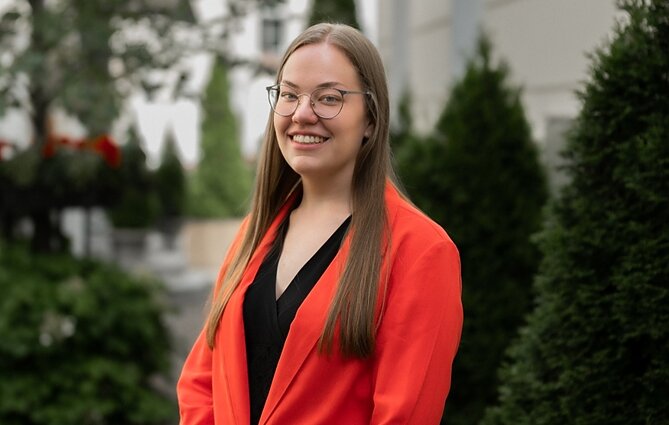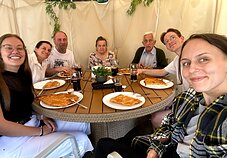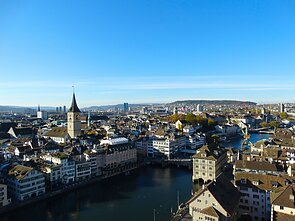














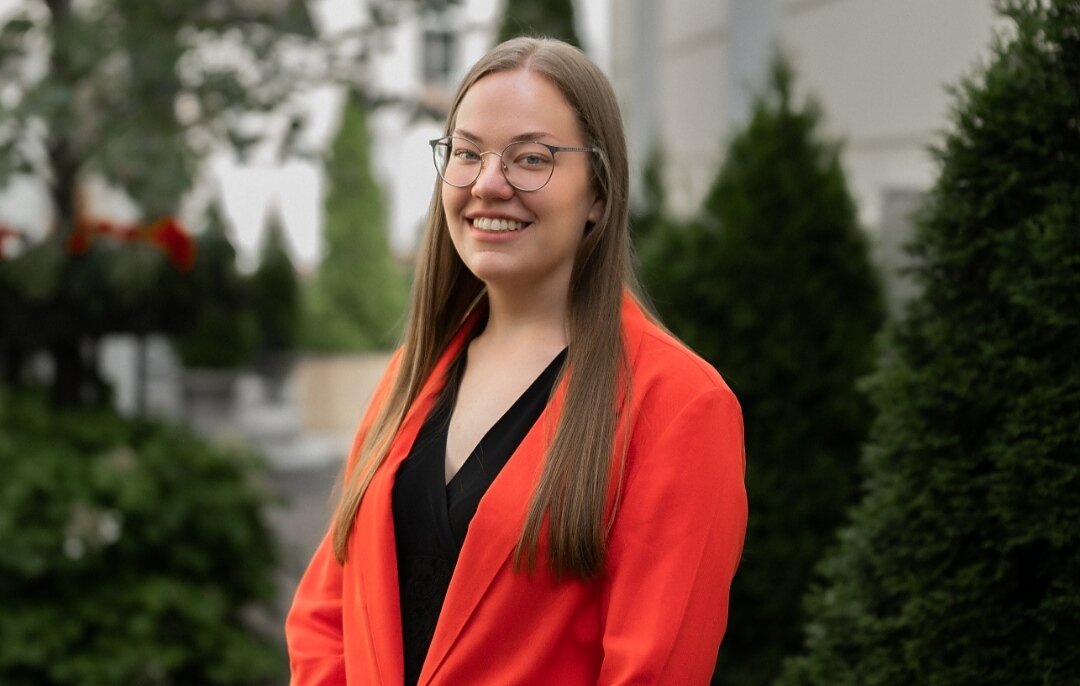
Brazilian of Lithuanian origin Larissa Mikalauskas has dreamt of visiting Lithuania all her life. Her dream finally came true in 2018 when her folk dance group took part in the Song Festival in Vilnius. “I landed in Lithuania at night and didn’t see much, but I remember thinking ‘home at last’,” she says.
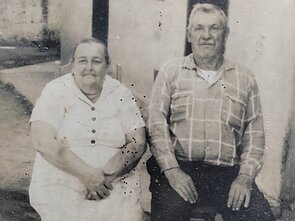
Larissa’s great-grandfather Stasys Mikalauskas was born in 1897 in the Lithuanian village of Dragočiai. He had a sister and five brothers, one of whom left for Argentina. The family has no information about the latter’s fate. Larissa’s great-grandfather, together with his wife Veronika and four children, came to Brazil in 1929 for political and economic reasons.
“Here in Brazil, they had four more children, including my grandfather. However, of the eight children, only four survived to adulthood, and my grandfather is the only one alive today,” Larissa says.
When Larissa’s great-grandparents arrived in Brazil, they stayed in the Immigrant House in São Paulo. Later, they lived in the Mooca district in the same region. Stasys got a job at one of the largest Brazilian beverage factories Antarctica and worked there until his retirement. Veronika, meanwhile, stayed at home to care for the children.
“After some time, they moved to the Vila Zelina neighbourhood, popular among immigrants, especially Lithuanians. They were involved in the community, meeting, speaking Lithuanian, and attending the Lithuanian parish, which they helped to build,” Larissa says.
“However, they were unable to keep in touch with their family in Lithuania because the letters were censored and did not reach the final destination,” she adds.

Sleeping with Lithuanian music
Although Larissa did not know her great-grandparents, she says she has been surrounded by Lithuanian culture since early childhood.
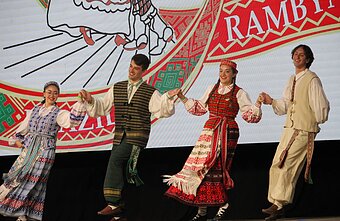
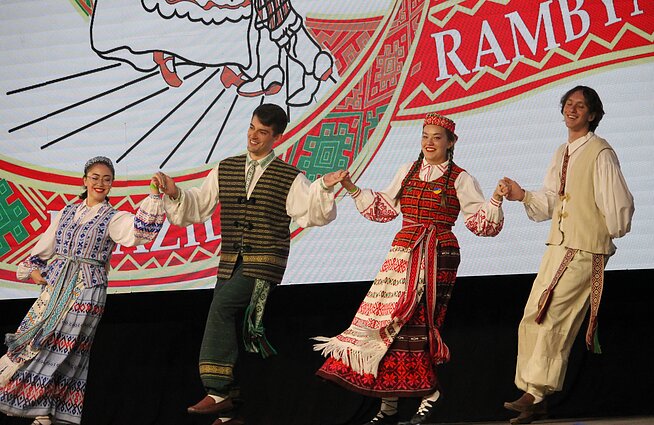
“My aunts, for example, danced in a folk dance group, participated in the Song Festival, one of them studied Lithuanian in Germany, and in 1998, she founded the dance group Rambynas. We have maintained the traditions of Lithuanian cooking and celebrations,” she says.
“My parents also tell me that when I was a baby, I used to sleep only when Lithuanian music was playing, or if my grandfather danced polka with me in his arms. I was born and raised in Lithuanian culture, so it is very natural to me,” Larissa shares.
It was only when she started going to school that she realised that the Lithuanian culture was not common in Brazil.
“Many people thought my surname was Greek and didn’t understand when I said Lithuanian words. It was only at school that I found out that these words were not Portuguese. It was a surprise for me and since then I had to learn to distinguish Lithuanian and Brazilian customs,” the woman says.
Finding family
Larissa remembers the stories she used to hear about Lithuania’s occupation and struggle for independence.
“I had the impression that Lithuania suffered a lot from foreign rule, but at the same time it fought for its freedom and culture. I admire Lithuania, and I am glad that such a small country was able to preserve its identity,” she shares.
Her family had no contact with relatives in Lithuania for many years, but Larissa’s aunt finally decided to find them. The search took a while.
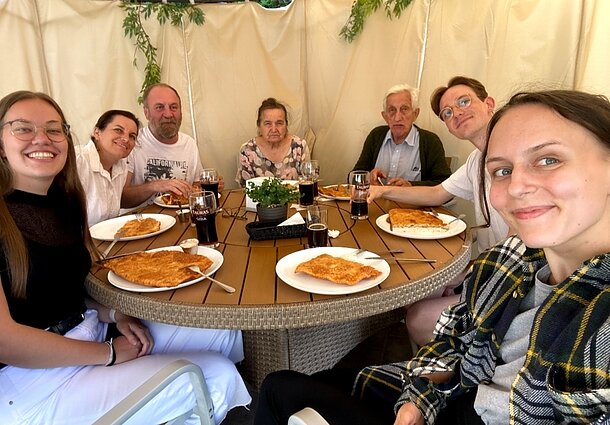
“With only a phone book, she decided to send letters to people with the same surname as ours – Mikalauskas. It wasn’t an easy process, but in May 2009, one of these letters reached the right person in Jonava. After 80 years, we finally found our family. It was a moment of great joy and emotion,” she shares.
Visiting Lithuania
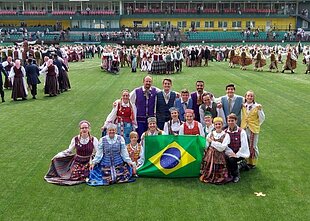
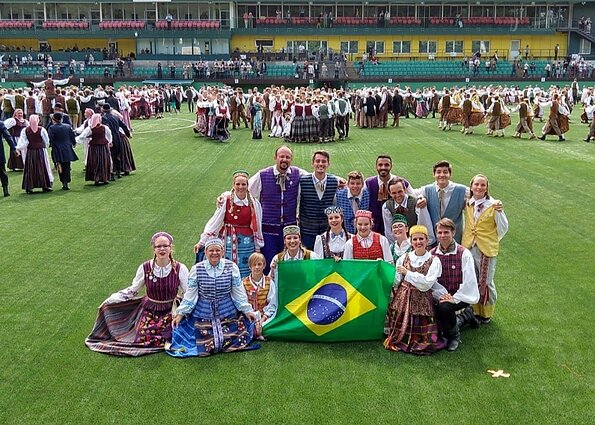
Larissa visited Lithuania for the first time in 2018 when she took part in the Song Festival. She says she had always dreamt about coming to Lithuania.
“The trip was expensive, and I was very young, so I had to wait until I could attend the festival with my dance group. It was worth the wait. Getting the news about the trip to Lithuania was one of the happiest moments of my life,” she smiles.
“I started counting the days until the trip. I landed in Lithuania at night and didn’t see much, but I remember thinking ‘home at last’. As the days went on, I became more and more enchanted by the beauty and tranquillity of the country,” the woman adds.
According to her, the architecture, the cleanliness, and the nature struck her the most in Lithuania.
“I’m from São Paulo, a city that is a concrete jungle with very few green areas. The silence and the feeling of security were also an unusual but positive reality in Lithuania,” Larissa says.
Learning Lithuanian
Larissa says that her great-grandparents spoke Lithuanian at home. But her grandfather and his sister, who were born in Brazil, spoke better Portuguese, so the Lithuanian language disappeared in the family over time.
“Out of six grandchildren, only one learned to speak Lithuanian, and out of 11 great-grandchildren, only my cousin and I can speak Lithuanian,” she notes.
She says she decided to learn Lithuanian when she was 12 but did not know how to go about it.
“But at the end of 2017, I heard about the Lithuanian language school Vilnis, and I attended classes until the pandemic started in 2020. In 2023, I lived in Lithuania for two months and had the opportunity to further improve my Lithuanian skills and speak more confidently,” Larissa explains.
“I still have a lot to learn, but I’m very happy with my progress and proud to speak the language of my ancestors,” she adds.
In 2020, Larissa had her Lithuanian citizenship restored. In her wods, she feels at least 80 percent Lithuanian.
“But I cannot deny that Brazil also defines my personality – I’m too Brazilian in Lithuania and too Lithuanian in Brazil. I love how affectionate people are in Brazil, smiling at strangers, kissing and hugging everyone. On the other hand, like Lithuanians, I’m quieter, patriotic because of my Lithuanian roots, and I know even more about Lithuania than I do about Brazil,” she says.
Even though Larissa lives in Brazil, she still does a lot for Lithuania: she is the International Relations Coordinator at the Lithuanian Youth Union in Brazil and works with the Lithuanian Consulate in São Paulo and the Lithuanian community in Brazil.
“I also follow the Lithuanian news and watch the basketball games, and I always support Lithuania in Eurovision and the Olympics. My heart is in two places at the same time, and I feel honoured,” she smiles.

Newsletter
Every Friday morning.