








Jewish Vilne, Polish Wilno or Lithuanian Vilnius? How has the ethnic composition of the Lithuanian capital changed over the years?
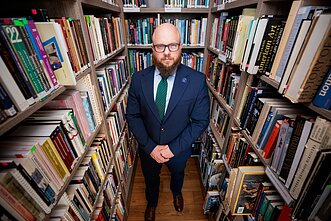
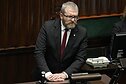
Historian Vitalija Stravinskienė addressed this question in the lecture “Putting together an ethnic mosaic: the transformation of Vilnius in the 20th century” held at the Vilnius Museum.
Dominant groups
At the end of the 19th century, Jews were the largest ethnic group in Vilnius. They were followed by Poles, Russians, Belarusians, and Lithuanians. But Poles soon overtook the Jews.
“At the end of the 19th century, every second inhabitant was Jewish. But after the First World War, due to certain political decisions and the restriction of the right of Jews to return to Vilnius, their number decreased, and the Polish population began to dominate,” Stravinskienė said.
During the First World War, around 90,000 people, including many Jews, left Vilnius as the German army was approaching. When the war ended, the Polish authorities, which took hold of the city, were reluctant to let them back in.
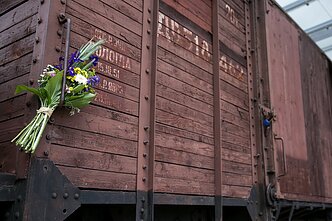
During the Second World War, the city and its population changed again. The Nazi occupation resulted in the extermination of approximately a third of Vilnius residents – the remaining Jews.

When the Soviets reoccupied Lithuania, their radical social, political, and cultural policies led to the Russian speakers overtaking the Lithuanian population in Vilnius.
“In 1951, officials of the Interior Ministry registered all the residents of Vilnius. It turned out that almost 180,000 people lived in the city, and 75 percent of them were of Slavic nationality: Russians, Poles, Ukrainians, and Belarusians. Only a quarter were Lithuanians,” Stravinskienė said.
“Lithuanians became the most numerous group in the late 1960s, and this situation continues until today,” she added.
Different factors
According to the historian, the most important factors that determined the ethnic mosaic of Vilnius in the 20th century were the political decisions, socio-economic changes, and the phenomenon of territorial expansion.
“As Polish Marshal Józef Piłsudski said, ‘Everyone wanted Vilnius’. Vilnius was a city where the interests of several states and peoples crossed,” Stravinskienė noted, adding that between 1914 and 1989, the political power in Vilnius changed 13 times.
Moreover, socio-economic changes, such as agricultural reforms, also played an important role.
“When the Soviet government began to create collective farms in Lithuania from 1948-1949, people from the countryside began to seek refuge and escape in the cities,” the historian said. “Then, the number of Vilnius residents increased. Everyone tried to find an easier, more comfortable life and to avoid the hated, imposed collective farms.”
Natural disasters and epidemics also left a mark on the city.
“There were great fires when Vilnius was almost destroyed. Similarly, a flood in interwar Vilnius could be called a natural disaster. The rising waters swept away several thousand wooden houses and filled up wells, and there was a risk of epidemics. Only the joint efforts of the city authorities, the population, and medics were able to prevent these disasters. The flood also struck Vilnius in 1951 and 1956,” Stravinskienė explained.


According to the historian, these factors are directly related to the changes in the status of the city and the phenomenon of territorial expansion. In the interwar years, Vilnius was a peripheral city, she noted.
“When Vilnius became part of Lithuania and its legal capital in 1939, this led to a desire to settle in Vilnius. [...] In the interwar period, it was perceived that although Vilnius was the fourth cultural capital of Poland, it was an extremely backward city – a land without industry, a purely agricultural land,” Stravinskienė said.
Key events
The historian pointed out several events that completely changed the composition of Vilnius' population. The first was the Holocaust in 1941-1944.
“In the interwar period, a third of Vilnius inhabitants were Jewish. [...] However, the Nazis and their collaborators destroyed more than half of them in the first months of the occupation. Before, there were around 60,000 Jews in Vilnius. In the first months, about 33,000 of them were killed,” Stravinskienė said.
The second shock was the relocation to Poland of Polish Jews and former Polish citizens who survived the Holocaust, which was implemented by the Soviet authorities.
“The Soviet Union came up with the great population transfer as part of the East-Central European unification plan, which included almost all countries and many peoples: Germans, Poles, Hungarians, Belarusians, Ukrainians, Russians, Lithuanians from Poland,” the historian explained.
The decision to relocate the Poles was taken in 1943 when it was agreed at the Tehran Conference of the Allied powers that the borders of post-war Europe would be reorganised, and Poland’s border would be based on the Curzon Line.

“The Polish population had to make a choice – either to leave for a geographically new Poland, or to stay and become citizens of Soviet Ukraine, Soviet Belarus, or Soviet Lithuania,” Stravinskienė said.
“The official name of the relocation operation was ‘evacuation’. Scholars have also given it various names, ranging from resettlement and deportation to ethnic cleansing. This is a matter of interpretation,” she added.
In 1945, more than 56,000 Vilnius residents left for Poland, with an additional 32,000 leaving in 1946.
At first, the Poles delayed and tried to sabotage the transfer, hoping that the international situation would change, and Vilnius would remain part of Poland. But the Soviet authorities stepped in and a relocation plan was drawn up, indicating the exact time when a person had to leave.
“If a person did not leave for objective reasons, such as illness or if they were not dismissed from work, they lost their right to leave and became Soviet citizens with an obligation to stay,” the historian explained.
Emptied city
“After 1946, there were around 30,000-35,000 old residents remaining in Vilnius. Some 15,000-20,000 Poles also remained. There were around 8,000-10,000 Lithuanians and a similar number of Russians and Belarusians combined,” Stravinskienė said.
At the beginning of 1945, special resolutions were passed to replace the departing Poles with inhabitants from other Lithuanian districts, towns, and villages. It was planned that some 30,000 people could relocate to Vilnius within a few months.
“The main burden was on Lithuania’s villages and towns. There were some provisions for an organised transfer of staff to Vilnius, in line with the practice of previous governments. It was also planned that graduates of special secondary and higher education institutions would remain in Vilnius,” the historian said.
According to her, however, the decisions were taken at the wrong time. The transfer of Poles was not in full swing yet, and Lithuanian newcomers had nowhere to stay when they arrived.
“The planners miscalculated. Because it didn’t work out, the plan was changed, and they decided to mobilise only 12,000 people. In reality, around 2,000 people arrived,” the historian shared.

Rapid expansion
“At the end of the Soviet era, the number of Vilnius inhabitants reached almost 600,000,” Stravinskienė noted.
According to her, migration led to the rapid growth of the city.
“Vilnius was a major city, a centre of attraction for various Soviet regions. Those who came to Lithuania mostly wanted to settle in Vilnius,” she said, adding that there were 96 ethnic minority groups in Vilnius, with 100 or more members, at the time.
About 20,000 inhabitants were also added by the authorities’ decisions to expand Vilnius territory.
“A major expansion of the city’s territory took place in 1968, when the inhabitants of the surrounding villages, that are today the residential neighbourhoods of Viršuliškės, Fabijoniškės, Pilaitė, woke up one day as Vilnius residents,” Stravinskienė said.

Newsletter
Every Friday morning.