







The history of Lithuanian Jews and the Holocaust is often reduced to official commemorations and guided tours, says Faina Kukliansky, chairwoman of the Jewish Community in Lithuania, as she calls for the Vilnius Ghetto to be remembered rather than commemorated.
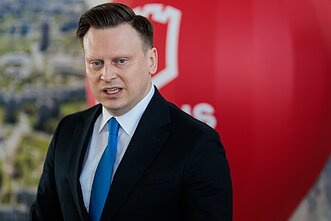
“It seems to me that the memory of the history of Lithuanian Jews and of the Vilnius Ghetto is being easily simplified to commemorations and excursions, to official protocol commemorations by government officials and interactive tours for foreigners. Ninety minutes is enough for both,” she said, addressing MPs on Thursday during the commemoration of the 80th anniversary of the liquidation of the Vilnius Ghetto.
“Now we have all gathered here to officially commemorate the liquidation of the Vilnius Ghetto 80 years ago. And I invite you, I urge you, not to commemorate the Vilnius Ghetto, but to remember it.”
Kukliansky said she regretted having to repeat the same thing on this occasion and remind about the unfinished Paneriai Memorial on the outskirts of Vilnius, as well as other projects that have not been implemented.

In her speech, she also reminded of the threat posed by anti-Semitism.
“Today, it is not fear but disgust and anger that must be our response to such statement, and unconditional condemnation is the only possible response to the hate speech that I unfortunately hear more and more. Do others not hear? Or do they hear but remain silent? Silence is a terrible thing when a storm of hatred builds up,” Kukliansky said.
A Jewish ghetto was established in central Vilnius on September 6, 1941, and almost 40,000 people were imprisoned there during the entire period of the ghetto’s existence. The ghetto was liquidated on September 23, 1943. Out of some 57,000 Vilnius Jews, only around 2,000 survived World War Two.
Some 200,000 of the approximately 220,000 Jews who lived in Lithuania before the war were exterminated in the Holocaust.

Further reading

Newsletter
Every Friday morning.