














The first satellite was launched into the Earth’s orbit in 1957. Today, there are around 8,500 active satellites orbiting our planet, according to Orbiting Now, and an unknown number of disused ones, making up the bulk of the space debris. A Lithuanian startup is working to offer solutions.
Proliferation of commercial space activities
Spaceflight Now, which monitors space missions, has counted up to 30 new satellites to be launched into Earth orbit by April 2024.
Marius Klimavičius, an aeronautical engineer and founder of the space startup Blackswan Space, says the growing number of satellite launches each year is a consequence of the proliferation of commercial companies operating in space.
“Growth is mainly driven by SpaceX with its Starlink satellites. It is launching a lot of satellites, with a planned number of 30,000 or more for the so-called full swarm,” says Klimavičius.
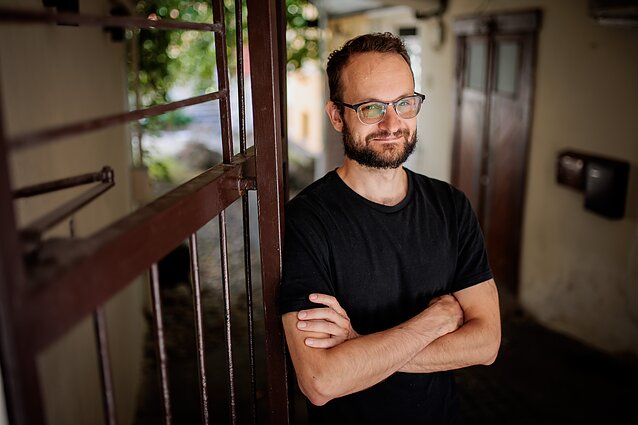
“There are other companies that want to compete with SpaceX, one of them is the European OneWeb. They have already launched around 300 satellites, and the entire swarm is 600 satellites. Then there’s Amazon, the Chinese, it adds up. And we estimate that by 2030, there will be 100,000 satellites orbiting the Earth,” he adds.
There are three main Earth orbits into which satellites are released: around 12 percent of satellites orbit in the geostationary orbit farthest from Earth (36,000 km), around 3 percent are in the middle orbit (5,000-15,000 km), and the largest number, around 84 percent, are launched into the low orbit closest to the Earth (500-1,000 km).
It is the latter, therefore, that is most affected by the problem of space debris, notes Klimantavičius.
Variety of space debris
Inactive satellites make up the bulk of space trash.
“The problem is when a satellite fails. If it is high enough, it won’t fall, it won’t burn up in the atmosphere, it just remains there. If there is no communication with it, you can no longer control it, you can’t move it, sometimes you don’t know where it is,” says Klimavičius.
But discarded satellites are not the only type of space junk.
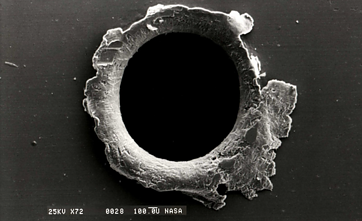
According to NASA, 27,000 pieces of space debris have been identified in Earth’s orbit in 2021, but many more objects polluting the space around our planet are simply too small to be noticed.

“[Space debris] is anything from the size of a millimetre, such as paint chips from a satellite or a rocket, to the size of a satellite. [...] Most are between a millimetre and a centimetre in size, millions of them,” says Klimavičius.
There are around a million objects sized between one and 10 centimetres, he adds.
The hazards of space debris and how to avoid them
Because space debris is not controlled from Earth, there is a high probability that it will hit an astronaut or an orbiting spacecraft.
In 1996, a French satellite was hit and damaged by a piece of debris from a French rocket that had exploded a decade earlier.
On February 10, 2009, an inoperative Russian spacecraft collided with and destroyed an operational US commercial Iridium spacecraft.
But it is not just big litter that is dangerous. According to NASA, millimetre-sized orbital debris poses the greatest risk to most low-Earth orbiting robotic spacecraft.

“All those objects that are in orbit, if they are more than 10 cm in size, can be tracked from Earth,” says Klimavičius. If a spacecraft approaches one too close, it has to manoeuvre around it.
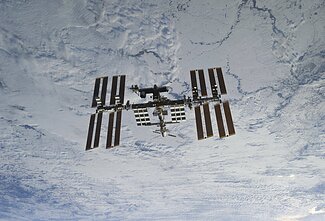
“The International Space Station has a special procedure. If it is known that it is going to pass through a potential debris cloud, or if there is a potential collision with a satellite or other object, they do certain manoeuvres to avoid a collision or to point a certain part of the station toward the debris, one that is better armoured,” says Klimavičius.
His company Blackswan Space, founded in 2019, is working with the European Space Agency to help tackle the problem of space debris. The company develops simulations that visualise what happens in Earth's orbit.
“We simulate [...] how much debris there is, how it moves around, and we also visualise it. In some cases, numbers are not enough – people want to see the debris, how it can collide, what the consequences are, how the amount of debris grows from one year to the next,” says Klimavičius.
Another goal of Blackswan Space is to increase the level of autonomy of satellites so that they can make specific decisions without human help.

This would, for example, ensure fewer collisions and autonomous disposal of the satellites, which would fall off and burn up in the Earth’s atmosphere when they are discarded.
More autonomous devices could also collect space debris themselves.
“If there is, say, a satellite that is not working, we can approach it with another satellite that has some kind of robotic manipulator or a net and can just catch it. This cannot yet be done, but we and other colleagues are working hard on it,” says Klimavičius.

Preventing worst-case scenario
The first satellites with the Lithuanian-developed autonomy-enhancing software should enter Earth orbit in about a year.
Klimavičius is pleased that the problem of space debris is becoming more visible – and solutions are being sought more actively.
“There is something called the Kessler syndrome. There is a video which shows that when you reach a certain amount of debris, it starts to multiply. And it is possible that certain orbits will become unusable because there will be too much debris.”
For that to happen, he adds, people would have to keep launching satellites and littering the orbit without addressing the problem for many years.
“We are now moving in a different direction because satellite operators and other people are taking the problem seriously,” says Klimavičius.

Newsletter
Every Friday morning.