








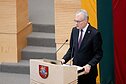



After the defence minister has suggested that Lithuania should quit the Convention on Cluster Munitions, presidential adviser Asta Skaisgirytė says Vilnius must first look at the consequences for its international reputation.
“We can discuss all the issues, but we have to bear in mind that Lithuania joined this convention in 2010 and withdrawing from international treaties has an impact on international prestige, always. To simply withdraw and suffer no consequences – it won’t happen this way. We need to analyse very well the consequences that this withdrawal could bring to Lithuania,” she told the radio Žinių Radijas on Tuesday.
Defence Minister Arvydas Anušauskas has said that the government has already drawn up a motion to withdraw from the convention and will coordinate it with other institutions.
According to him, the country needs abandon the ban “in order to acquire and use” cluster munitions. Lithuania, he insisted, is the only country bordering Russia that has signed the convention and “cannot even train specialists to clear them, to deal with them, because it cannot even bring such munitions in, have them, keep them and use them under this convention”.

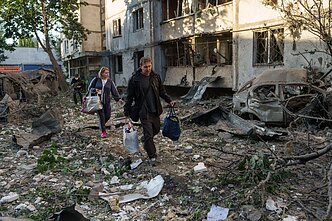
The issue came up after the US announced in July it would be supplying cluster munitions to Ukraine, drawing mixed reactions from allies. Russia has reportedly used the weapon in Ukraine.
Many human rights and arms control groups consider cluster munitions a violation of international law. They can contain hundreds of bomblets that, like a shotgun, splatter explosive shards across a wide area. That makes them effective at taking out a concentration of enemy forces, but also poses a particular threat to civilians.
Skaisgirytė noted that Lithuania joined the Convention because cluster munitions cause the most damage to civilians, as fields, roadsides and school grounds are mined. Children are often the victims of unexploded munitions.
“That is why there was a need for that convention many years ago. Lithuania joined because it realised it was the right thing to do. Now, in order to leave, we need to think very carefully. Of course, if the situation is such that it would be necessary for Lithuania’s security, then we are considering those new circumstances, yet at the moment we have other methods of defence that are more effective and less dangerous to civilians,” the president’s adviser said.

Lithuania ratified the convention in 2011. It prohibits the use, production and acquisition of cluster munitions and sets out specific obligations to address the humanitarian consequences of these weapons.
A cluster munition is a weapon containing multiple explosive submunitions. Cluster munitions are dropped from aircraft or fired from the ground or sea, opening up in mid-air to release tens or hundreds of submunitions, which can saturate an area up to the size of several football fields.
The Convention on Cluster Munitions was signed in Dublin in December 2008 and entered into force on August 1, 2010. So far, 112 countries have joined it. However, they do not include Latvia, Estonia, Poland and the United States.
Further reading

Newsletter
Every Friday morning.