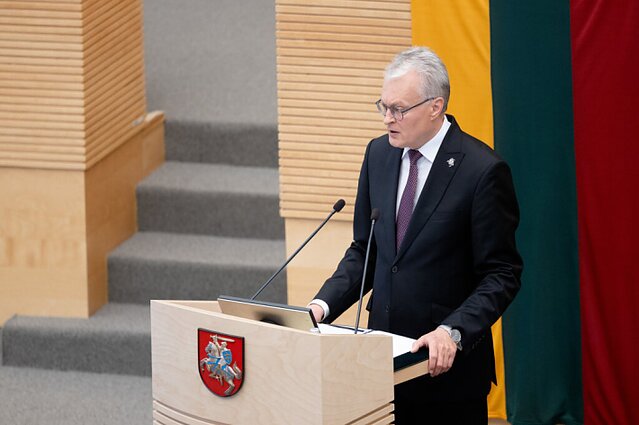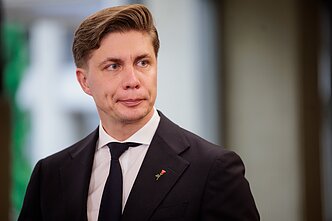


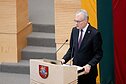



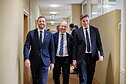
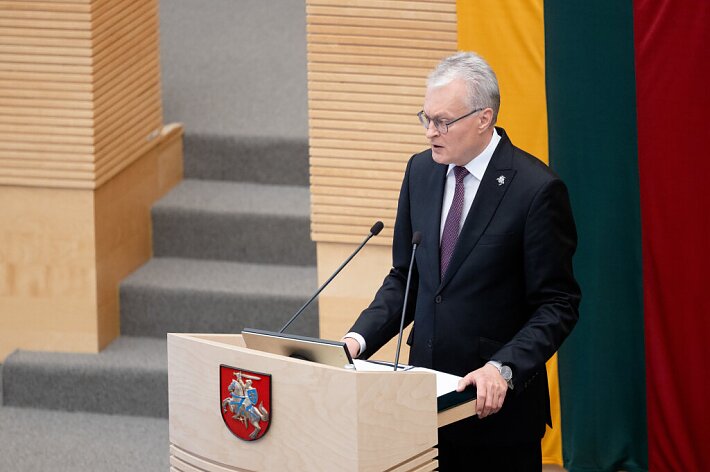
Lithuanian President Gitanas Nausėda is delivering his annual address at the Seimas on Tuesday.
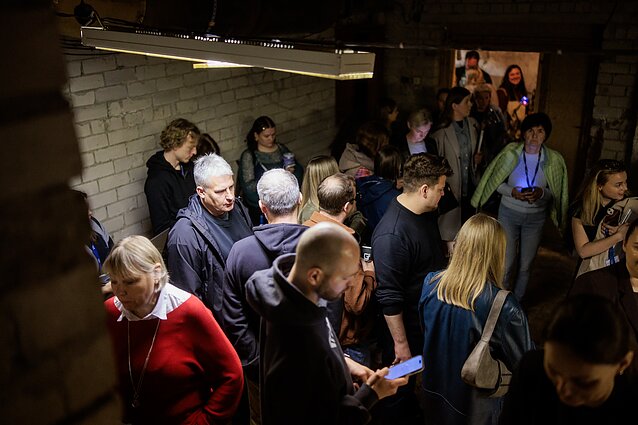
In the second annual address of his second term, Nausėda began by recalling the air raid alert that was issued in Lithuania less than a month ago.
Nausėda said that various institutions, from the Seimas to educational establishments and other public bodies, had effectively tested civil protection procedures, shelters and protective infrastructure in practice.
"We gained a clearer picture of which measures work and where improvements are needed. The air raid alert was soon lifted, but it left us with a clear understanding that we are moving ever more rapidly into a new and dangerous world, where peace can no longer be taken for granted," the president said.
According to Nausėda, Lithuanians must acknowledge that the country is changing rapidly and that society must change along with it.
He said the world is becoming less united and less peaceful, while narrow economic interests are playing an increasingly prominent role.
"We are living dangerously close to war. [...] Nevertheless, the impressive achievements of the Ukrainians, to which we also contribute through our support, do not bring peace of mind. We do not know whether we ourselves may become the target of hostile forces seeking to test NATO's unity and resolve," Nausėda said.
'Hybrid war has been underway for more than a decade'
"We are living in a period when direct military threats are becoming increasingly real and are already beginning to disrupt the peaceful lives of the Lithuanian people. [...] A hybrid war against Lithuania has been underway not just for years, but for more than a decade. Substantial resources are consistently devoted to it. No gestures of goodwill or concessions will change that,” Nausėda said.
"They hate us because we dare to be free and independent. They hate us because we cherish our freedom and make dignified use of its benefits. They hate us because we create our own prosperity – something that, without exception, autocratic regimes are incapable of doing," he added.
He pointed to continued irregular migration directed against Lithuania, as well as smuggling balloons, and acts of terrorism and sabotage.
Focus on the Centre of Registers data breach
Referring to the data theft from Lithuania's Centre of Registers, the president stressed that the public had learned about the incident far too late.
According to Nausėda, the breach posed an even greater threat to Lithuanian residents because of the slow response by state institutions.
"A thorough investigation into why this happened is necessary, if only to ensure that it does not happen again in the future," he said.
Monitoring defence spending
Nausėda welcomed Lithuania's defence budget, which amounts to 5.38% of GDP, and said he hoped investment in security would continue beyond 2030.
"All these efforts and investments are not, and cannot be, ends in themselves. I am personally overseeing the transparent and effective use of the largest defence budget in Lithuania's history," he said.
He also highlighted the expansion and development of military training areas, including in the controversy surrounding Kapčiamiestis.
The president said he was increasingly doubtful whether all politicians and members of parliament fully understood the seriousness of the situation and were "prepared to stand firmly at their posts in the fight for Lithuania and its security".
MPs from the Nemunas Dawn and some lawmakers from the Farmers and Greens group voted against the training grounds.
'NATO is not a paper tiger'
"I believe in NATO – it is not a paper tiger. I believe in Article 5 and in the determination of our allies to contribute to Lithuania's defence. But I believe even more that we will be strong enough to defend ourselves and prevail," Nausėda said.
He then outlined Lithuania's defence priorities.
"We need the full German armoured brigade in Lithuania by 2027. We need the appropriate infrastructure to host the United States and other allied troops.
"We need effective air defence, including protection against drones. We need more modern weapons and ammunition, with a long-term vision of producing as much as possible here in Lithuania.
"We need a national division and a highly trained reserve force. We need civil protection with an effective warning system and a well-developed network of shelters and protective structures. We need preparations for total resistance as a fundamental – and decisive – element of deterrence," the president said.

Praises relations with Poland, Germany and the US
Nausėda said he was particularly pleased with the current state of relations with Poland.
"We are working closely together, implementing joint infrastructure and military mobility projects, and regularly conducting bilateral military exercises. In January, I discussed with Polish President Karol Nawrocki the idea of a joint free economic zone in Lazdijai and Suwałki, which our governments have now begun to implement," he said.
The president added that Lithuania had never had closer ties with Germany, which in recent years has increasingly sought a leadership role in European security.
"Germany's leaders are demonstrating through concrete actions that they understand the future of Europe is being decided today in Ukraine and on the eastern flank of the European Union and NATO," he said.
Nausėda also stressed that the United States remained an indispensable ally for Lithuania and Europe as a whole.
According to the president, American engagement in the region is vital not only for military security but also for the development of energy infrastructure and the wider economy.
"I understand that the current rotation of US troops stationed in Lithuania raises additional questions. However, as President Donald Trump has repeatedly emphasised in letters to me, Washington values Lithuania's contribution to strengthening collective security and will take that into account when making decisions," he said.
Revisits the Paluckas affair
The president also warned against allowing Lithuania to be weakened from within.
"Unfortunately, scandals involving political corruption and illicit enrichment continue to recur, demonstrating that we as a state and society remain vulnerable. We are driven by greed and selfishness, and too willing to forget or trample on the common good.
"Last year, the Lithuanian prime minister failed the test of public scrutiny and was forced to resign. To this day, we have not heard coherent answers about business ties, transactions and the origins of wealth. It is only natural that law enforcement institutions continue to investigate the matter," he said, referring to former prime minister Gintautas Paluckas.
He also noted that this year charges had been brought in another case against former agriculture minister Kazys Starkevičius, who admitted guilt, and Prime Minister Saulius Skvernelis, who until recently also served as speaker of parliament.
"As a person, I found it genuinely difficult to believe. But as head of state, it is even more alarming to know that an entire institution, the State Plant Service, was effectively used for business extortion and activities that can only be described as organised crime," he added.

LRT reforms
The president said Lithuania had spent months arguing over a new governance model for LRT, with the debate at times taking on the characteristics of a tragicomedy.
"I was genuinely disappointed by the heated rhetoric and the accusations exchanged between opposing camps, whose sole aim seemed to be mobilising supporters at any cost.
"In the end, the legislative process, whatever its shortcomings, produced a result. The amendments were adopted. But will they fundamentally change anything? Will the public broadcaster now be more transparent and better prepared to use its significantly increased budget effectively and responsibly?
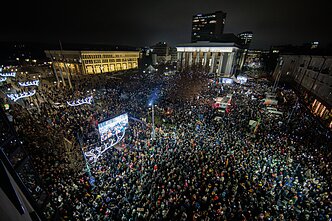
"To be honest, I do not know whether any of the major combatants feel victorious. But it seems to me that we have all lost, at least to some extent. Lithuania as a whole has lost. By showing one another the middle finger, we now trust each other even less. Even the most sacred principles of democracy, such as freedom of speech, seem somewhat tarnished and diminished. That is a significant loss for all of us," the president said in reference to the widespread protests against changes to LRT.
‘Lithuania must remain Lithuanian’
Speaking about migration, Nausėda criticised the centre-right government led by the Conservatives (TS-LKD) between 2020 and 2024.
"We saw how the previous governing coalition acted for four years while simultaneously admitting ever more economic migrants. Today, they have forgotten all that and accuse others of populism," Nausėda said.
He said that while Lithuania needed immigration to address labour shortages, it would be a serious mistake to believe that uncontrolled immigration could solve the country's demographic challenges.
"Whatever happens, Lithuania must remain Lithuanian. That is why I support a stricter migration policy and a temporary work permit system.
"I also call for greater encouragement of return migration by expanding Lithuanian-language education abroad and creating better conditions for young families with children to return.
"The easiest path is to complain that nothing can be done, that modern people simply want more comfort and fewer responsibilities," he said.

'Protecting Energy Ministry' from Nemunas Dawn
The president said he had spent the past year protecting the Energy Ministry from private interests.
"It cost me a great deal personally to protect the Energy Ministry and, with it, the state's core interests. I could not allow a political force accused even by its partners of holding anti-state views to take control of this ministry.
"I could not allow decades of work to build Lithuania's energy independence to be threatened by the dark shadows of private interests," he said, referring to the Nemunas Dawn party ousted from the government.
According to Nausėda, those efforts indirectly triggered other political processes, while changes within the governing coalition placed an additional burden on the cultural sector.
In exchange for not being given the Energy Ministry portfolio, Nemunas Dawn was eventually handed the control of the Culture Ministry, which sparked protests.
"I fully understand the disappointment and anger felt by Lithuania's cultural and civic communities. I understand that the difficult process of forming a government further divided society. As head of state, I feel responsible for that," he said.
However, he argued that the upheaval had encouraged many people to become more actively involved in public life and politics.
Confirms Mindaugas Sinkevičius will become PM
The president said that while the political crisis had eventually prompted greater civic engagement, it had taken too long.
"Too many red lines were crossed, too many drops added to the cup of patience, and too much attention was given to those who seek to divide society.
"But a decision has now been made, and it is a very important milestone for our state. The leader of the Social Democratic Party, Mindaugas Sinkevičius, has decided to lead the government. This position is not about approval ratings or basking in favourable media coverage. It is about a unique opportunity to make decisions that will shape Lithuania's long-term future," Nausėda said.
He said he intended to work constructively with all political forces to ensure Lithuania remained secure, strong and capable of enduring for generations to come.
"The people of Lithuania are incredibly hardworking and talented. In just a few decades, we have built a modern European state whose economic and social progress is viewed with admiration by many foreign leaders I have met.
"Our shared mission is to build a wall of deterrence that even the most hostile intentions cannot overcome. To counter lies with truth, hatred with light, and intrigue and demagoguery with work. I believe that mission is achievable," the president told parliament.

Newsletter
Every Friday morning.