








The European Parliament and EU member states have reached a deal on updated air passenger rights, in what is being described as one of the most significant reforms in the sector for more than a decade.
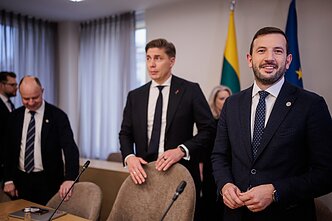
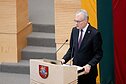
Virginijus Sinkevičius, the Lithuanian MEP who led the European Parliament's negotiating team, said the agreement had succeeded in protecting the most important passenger rights while also bringing greater clarity for travellers across the EU.
"Passengers must not become the price of compromise," Sinkevičius said. "There was considerable pressure during these negotiations to weaken the rights that exist today, but the European Parliament resisted that. We managed to preserve the core compensation guarantees, while also achieving new protections that matter to people in their everyday lives – from the right for families to sit together, to stronger safeguards for passengers with disabilities."
What will change for passengers?
Among the most significant new measures:
– Families seated together, free of charge. Airlines will no longer be permitted to separate families and charge extra for seats together. Children will be entitled to sit next to their parents at no additional cost.
– Stronger protections for passengers with disabilities. This includes the right to compensation in cases where a missed flight results from a failure to provide adequate assistance.
– Pushchairs and wheelchairs available at the aircraft door. Passengers will be able to keep their buggy or wheelchair with them until boarding and collect it immediately on arrival – addressing a long-standing frustration for travelling families and passengers with mobility needs.
– Clearer guidance after disruption. Following a cancellation or lengthy delay, passengers will automatically receive clear instructions on how to claim compensation, rather than having to navigate the process themselves.
– No charges for minor name corrections. Administrative fees for small errors in a passenger's name or booking details will be abolished.
Ban on "no-show" penalties. Airlines will no longer be able to invalidate a return ticket simply because a passenger did not use the outbound leg of their journey – a practice that has long drawn criticism from consumer groups.
– Stronger rights for diverted passengers. Protections will be reinforced for passengers whose flights are redirected to a different airport, and the rules on compensation in such cases will be more clearly defined.
Core compensation rules preserved
One of the Parliament's key priorities in the negotiations was to prevent any dilution of existing passenger rights.
Under EU rules that have been in place since 2004, passengers are entitled to compensation when flights are delayed by three hours or more. That threshold has been retained, as have the current compensation amounts of €250, €400 and €600, depending on the length of the flight.
"Millions of Europeans rely on these rights every year," Sinkevičius said. "Our aim was not to weaken those protections but to strengthen and clarify them. Passengers need to know their rights, and airlines need to understand their obligations clearly."
Codifying two decades of case law
The new agreement will also, for the first time, enshrine in legislation many of the passenger rights principles established by the Court of Justice of the European Union over the past two decades. Those rulings have shaped the practical interpretation of passenger rights in countless cases, but have never been formally written into EU law, meaning the rules have sometimes been applied inconsistently across member states.
By bringing that body of case law into the statute books, the reforms are intended to create greater legal certainty for both passengers and airlines throughout the EU.

Newsletter
Every Friday morning.