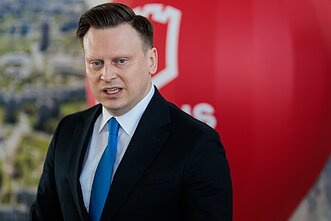













Lithuania is planning to close two more checkpoints on the border with Belarus, Interior Minister Agnė Bilotaitė said on Monday.
“The Interior Ministry will propose to close two additional checkpoints in Lavoriškės and Raigardas,” the minister told reporters in Warsaw on Monday.
According to her, the closure of two more checkpoints is proposed to reduce the scale of smuggling across the border and redirect officer capacity to the remaining border checkpoints.
Earlier this month, Lithuania closed two out of six checkpoints on the border with Belarus in Šumskas and Tverečius.
Bilotaitė is in Warsaw on Monday where the Baltic countries and Poland are negotiating a “regional solution” to completely close the border with Belarus.
Concerns about the security situation in the region have increased following the reports that some 4,500 Wagner mercenaries relocated to Belarus.
Criteria for border closure
“We agreed to respond in a united, decisive, and coordinated manner. And we also agreed on specific criteria for when we would take steps and make a decision to close the border,” Bilotaitė told reporters after the talks on possible coordinated action by the countries.

“And there are two criteria. The first one is an armed incident or incidents at the border of one of the states,” the minister said. “The incident would have to be such as to pose a serious threat to the national security of our countries.”
“The second criterion is an organised mass storming by irregular migrants of the border of one of the states,” she said.
The ministers agreed to promptly exchange information on such incidents and take decisions “at inter-governmental level”, according to Bilotaitė.
In Warsaw, the ministers also agreed on “certain exceptions” in the event of a complete closure of the borders with Belarus.
“We agreed that certain exceptions should be put in place, primarily regarding the humanitarian corridor, and that this mechanism should be the same for all the countries,” the minister said.
The Belarusian opposition has called on the region’s countries to keep open humanitarian corridors for people fleeing the Minsk regime’s repression.
Further reading

Newsletter
Every Friday morning.