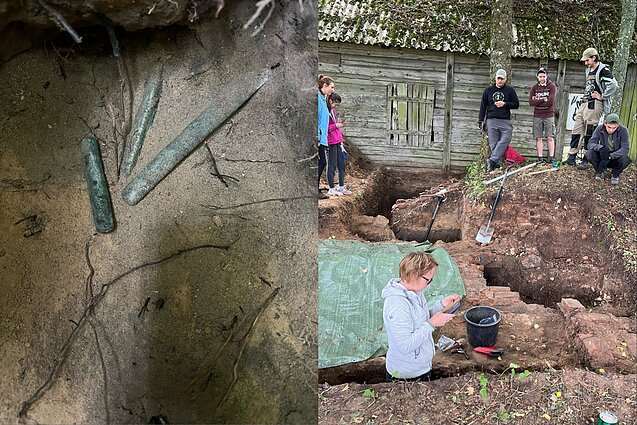










Researchers in Kernavė have discovered a treasure trove of silver rods – used as money in Lithuania until the 16th century – while digging in the remains of a decayed manor.
“Totally unexpectedly, while exploring the remains of the 19th-century Kernavė or Kriveikiškis manor, a treasure trove of 13th- and 14th-century Lithuanian long money has been found,” the Kernavė Archaeological Site Museum posted on its Facebook account on Friday.
According to the museum, a total of four rods were found.
Ilgieji – longs – are semicircular silver rods of standardised weight, used for monetary transactions. They were used throughout the region inhabited by the Baltic tribes from the 11th century until the appearance of the first coins in the second half of the 14th century.
According to Andrius Janonis, head of the Kernavė Archaeological Site Museum, the value of these tokens at the time could have been quite high.
“There are various estimates of the value, and there is no unanimous opinion as to how much it could have been worth. The value was quite high, you could buy a few sheep or a cow, which was a huge asset at the time,” he told BNS on Friday.
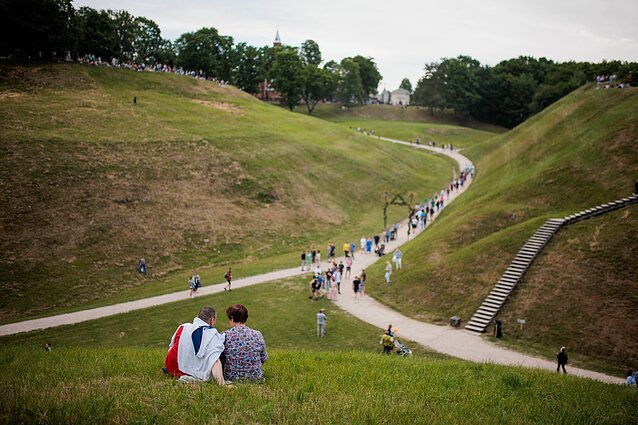
According to the museum, five intact silver rods and many more fragments had been previously found in Kernavė, the site of the medieval capital of the Grand Duchy of Lithuania some 30 kilometres to the north-west of Vilnius.
Asked whether the tokens would be researched, Janonis said it would depend on the situation.
“Usually a chemical analysis is done to find out the silver content,” he said.
The finds will eventually go on display in the Kernavė Archaeological Site Museum.

Newsletter
Every Friday morning.