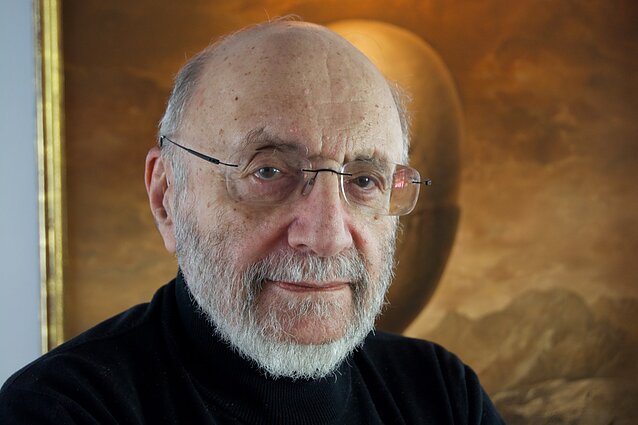




Samuel Bak was only nine years old when he organised his first exhibition in Vilna Ghetto. He and his mother were among the few Jews who survived the Holocaust. However, Bak does not remember Vilnius with resentment and has gifted over 100 of his paintings to the city.
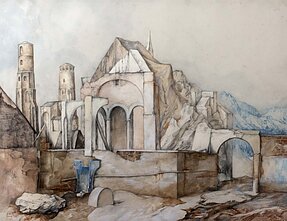
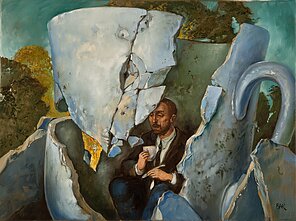
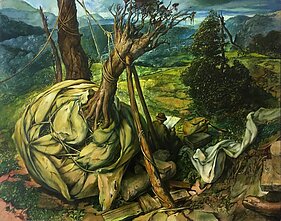
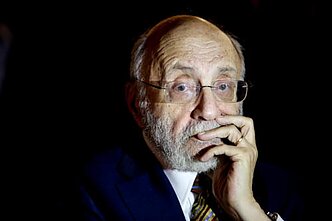
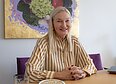
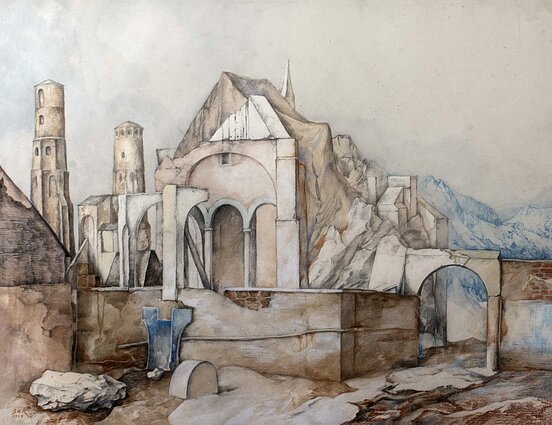
Samuel Bak, 89, is one of the best-known Litvak painters. In his works, the artist intertwines surrealist aesthetic and historical memory, while Vilnius, his hometown, is a recurring theme.
“My paintings are about trying to connect realities that used to exist, but which no longer exist,” the artist says.
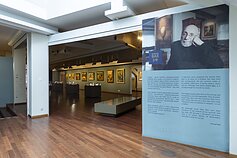
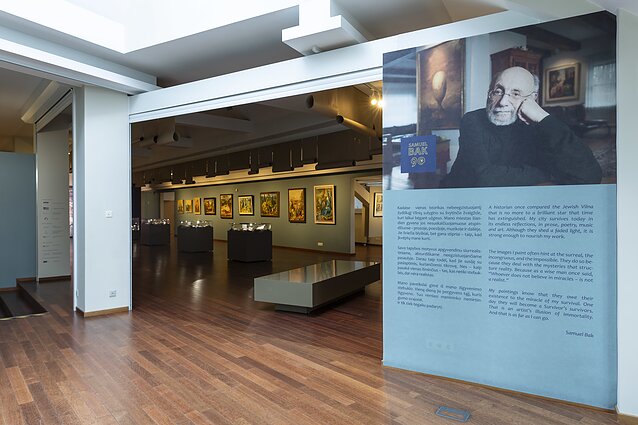
He currently lives in Boston, US, but feels a close connection to both Vilnius and the people of Lithuania. He has donated more than a hundred of his paintings to the Vilna Gaon Museum of Jewish History. The exhibition “The Art of Samuel Bak in Vilnius: a retrospective 1942-2023” is currently on display at the Samul Bak Museum.
Asked if he plans to return to Vilnius again, Bak says he is not travelling anymore.
“I happen to have the back of a 90-year-old man,” he jokes.
Childhood in Vilnius
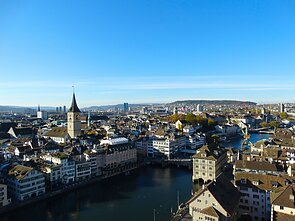
Before the war, Bak lived with his family on Vilnius Street in the Lithuanian capital. The painter recalls that when he lived in Vilnius, many places that were important to him were within walking distance, such as his grandparents’ house on Kaunas Street.
He admits, however, that he does not feel nostalgic because focusing on the past is not his favourite thing to do.
Bak’s first language was Polish. For a long time, he attended a Polish-speaking kindergarten, but his mother later decided to transfer him to a Yiddish-speaking one.
“Yiddish was not only spoken by religious Jews. Vilnius was also an important centre for secular Yiddish culture, from literature and newspapers to theatres – there were two of them. By the way, my museum is now in the building of one of those theatres,” the painter says.
However, like many Jews in Vilnius, his life changed when the Nazi German army marched into Vilnius in 1941. The Bak family initially hid in a Benedictine convent just outside their home.

During the Holocaust, Bak and his family had three rescuers: priests Juozas Stakauskas and Vladas Žemaitis and the nun Marija Mikulska, who hid the family in a Benedictine convent. Some of them provided food, while others warned of dangers. They also brought paper and pencils for little Samuel, who showed artistic talent.
“I admire these people. I’m not sure that I would have done the same under such circumstances. I really don’t know,” the painter says.
According to him, however, there was a distrust of those who offered help to the Jewish community during the Second World War.
“They used to take the money from the people they said they wanted to help and handed them over to the Germans. In all times and all countries, there are people who try to take advantage of each other,” Bak notes.
Convent and ghetto
Bak and his mother spent part of the German occupation in the convent. The painter recalls his time there with a smile.
“The nuns loved me – I became a true Catholic and knew all the prayers by heart. My mother was not at all opposed to my ‘conversion’, as she thought it was useful to know such things at a difficult time. And we weren’t very religious Jews,” Bak recalls.
The convent was later taken over by the Nazis, and the Bak family had to move to the Vilna Ghetto. At the age of nine, Samuel held his first exhibition inside the ghetto.
The return of the Soviets meant restrictions for Lithuanians but liberation for the Bak family.
“I used to walk alone in the dilapidated city of Vilnius, going to churches and praying. I listened to organ music and singing,” he says. The dilapidated, crumbling, war-torn Vilnius would later become a constant image in Bak’s paintings.
Although he learned all the Catholic prayers as a child, Bak does not consider himself to be a religious person: he professes neither Catholicism nor Judaism.
“At some point, I decided that if there is God, he is such a bad ‘boss’ that I don’t owe him anything. I’m a devout atheist. Not because I think there is God and I fear him but because I fear what a person can do to another person in the name of God,” he says.
Samuel and his mother left Vilnius in 1945, taking advantage of the fact that both of them had Polish citizenship before the war, and the Soviets allowed such people to leave. They soon left Poland for Germany, where they lived in a displaced person’s camp, before moving to Israel in 1948.

After the war, Samuel and his mother were among the few Jews who survived the Holocaust in Vilnius. His father was shot by the Germans in 1944.
Laboratory of humanity
The artist says he understands why Lithuanians find it difficult to come to terms with the experience of the Holocaust and the participation of some of their compatriots in it.
“The memory of the Holocaust was erased in Soviet Lithuania. And now the younger generation is beginning to question their collective identity and seek out the stories of the people who lived in Lithuania before them,” Bak says.
According to him, people living in Lithuania now should not feel guilty for what happened during the Second World War, but if some deny the Holocaust, he finds their position unacceptable.
“The Holocaust was perhaps the most extreme laboratory of humanity, where the best and the worst qualities of human beings came out. The Holocaust was perpetrated by a state that was highly educated and achieved a great deal in science, philosophy, and art. And this state decided to create a killing industry. After all, it was not so easy to kill 6 million Jews in Europe – it took an incredible intellectual effort,” the artist explains.

Newsletter
Every Friday morning.