












NATO’s new defence plans for the Baltic countries look promising, members of Lithuania’s parliamentary Committee on National Security and Defence (NSGK) said on Wednesday.
Their comments came after Lithuania's Chief of Defence Lieutenant General Valdemaras Rupšys presented the plans to the committee at a closed meeting.
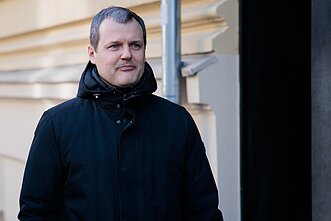
“These are next generation plans with a realistic assignment of forces to come within a certain timeframe, when certain indicators light up showing they need to come. This is new, this is unique,” Laurynas Kasčiūnas, the committee’s chairman, told reporters after the meeting.
“There is a lot of good news there. This is a fact,” the conservative MP said, adding that he could not speak publicly about specifics.

Saulius Skvernelis, a member of the NSGK, said that “the plans look very optimistic”.
“There is a change of philosophy; [...] the plans are about reaction, defence and deterrence from the very first moment,” the MP said.
“Apparently, the biggest challenge will be to fill those plans with content, that is, with weapons and human resources,” he added.
The committee’s members said they expected the new defence plans to be approved at NATO’s summit in Vilnius in mid-July.
The alliance has worked out new defence plans covering the Baltic states and Poland, and has presented them to member states’ representatives.
In a reflection of NATO’s changing strategy, the plans basically provide for defence from the first days of a potential conflict. Previously, the approach was that the Baltic countries should try to hold off a hypothetical Russian offensive until allied reinforcements can arrive to help them.
Rupšys has said that the new plans are fully in line with Lithuania’s expectations.
NATO Secretary General Jens Stoltenberg has said that the plans for the Baltic countries will be “more detailed and concrete” than the existing ones. However, they will remain classified.

Speed is key
Speed of response is a key component of NATO’s new regional defence plans, Lithuania’s Chief of Defence Lieutenant General Valdemaras Rupšys said after presenting them to the MPs.
“The speed of response [...] is a very important factor and it is seen as one of the essential components of this plan,” he told reporters on Wednesday.
The new plans “respond to today’s threats”, according to him, and are sufficient to deter and be ready for defence.
In his words, the capabilities attributed to the Baltic states in the plans are “designed to meet the threats”.
“These are the threats as they are today, and our allies are pooling and generating these capabilities to deter, and to defend when necessary,” the chief of defence said.
“If these threats grow bigger, so will the capabilities. Our allies, our NATO coalition members, have made a clear decision to develop and have the appropriate capabilities, and I have no doubt that we will have that,” he said.
Once the regional plans are in place, the next step will be to develop tactical plans and capabilities to implement them, according to Rupšys.
A division that Lithuania is planning to create in its armed forces is part of the plans, he said.

Newsletter
Every Friday morning.