













Reports about the health of Belarus’ Alexander Lukashenko have sparked speculations: what will happen to the country if its strongman leader leaves the picture and does the Belarusian opposition have a plan?
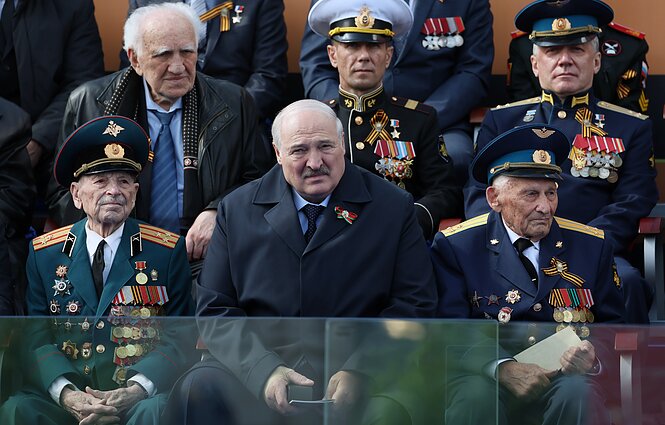
The last public sighting of Alexander Lukashenko was on May 9 in Moscow. However, his very brief presence at the Victory Day parade still raised many speculations.
Lukashenko watched the parade and laid flowers at a memorial just a few hundred metres away. Lukashenko spent lunch with Russian President Vladimir Putin and several other leaders, and observers pointed out that Lukashenko looked infirm.
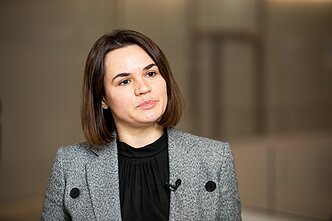
Pavel Latushka, one of the Belarusian opposition leaders, announced that Lukashenko had contracted a serious viral infection. Belarusian opposition leader Sviatlana Tsikhanouskaya, who operates from exile in Vilnius, says preparations are in order.
“The moment Lukashenko is gone, chaos will break out within the regime,” she tells LRT TV. “A power struggle may break out. I do not know whether Russia will intervene again, but it will certainly not be enough to put another leader in charge of the country.”

According to her, popular support will be crucial for any successor and what Belarusians want above all is a free and fair election.
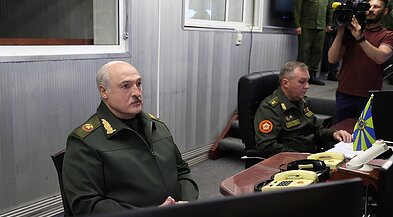
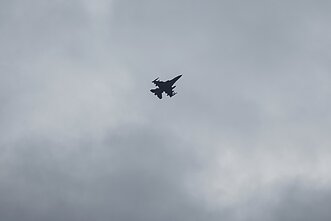
A fresh wave of speculation about Lukashenko’s health arose after he missed the Day of the National Emblem and Flag, which he normally attends. However, on Monday, the state news agency published photos and footage of Lukashenko visiting the air force headquarters, purportedly from earlier on the same day.
However, this caused a stir among Belarusian opposition, many of whom operate from abroad.
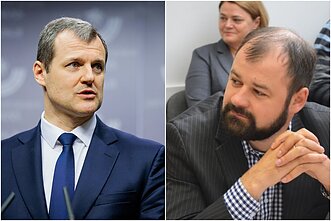
Alexander Dabravolski, an adviser to Tsikhanouskaya, says that if Lukashenko were to suddenly pass away or become incapacitated, the opposition would invoke one of six action plans, entitled “Vacancy”.
“We need to make contact with those who are ready to fight in Belarus, we need to make contact with those who are trying to bring about change, with politicians,” he says. “Basically, we have a ‘plan for victory’, but we don’t know how it would work. Clearly, we need to think about new elections, how to ensure a more or less stable economy and protect ourselves from any revanchism.”
According to Vilnius-based political analyst Vytis Jurkonis, it is not only the Belarusian opposition that needs to prepare, but also the country’s neighbours in the EU.

Crucially, he says, one must not assume that change will follow automatically once Lukashenko is gone.
“We need to think more about what we are doing. How are we preparing? How are the democrats preparing for Belarus?” says Jurkonis. “My big concern is that, very likely, neither the democrats nor the international community are prepared for such an event.”
The ‘Lukashenko regime’ is much more than just the man himself, says Jurkonis. He is supported by power structures and businesses. Ultimately, he is backed by the Russian government.
“Lukashenko is their number one partner these days. If he were out, I have no doubt that there is a plan B and C,” he says.

“But the problem is that the other side, the international community, there is hardly any plan. And even though we used to say after 2020 that Belarus must have a free and fair election, it appears that many have already forgotten this position, because new problems have arisen.”
Lithuanian MEP Juozas Olekas says the Belarusian people are oppressed by the regime but want change, so the Belarusian democrats must be supported by the West when the moment for change comes.
“The Belarusian cause is held quite high on the agenda [of the European Parliament,” he says. “Last week we adopted the 11th resolution calling on various European institutions and expressing the position of the European Parliament that we must increase pressure on the current Belarusian regime, its leader, his immediate environment, and help as much as possible the democratic forces in Belarus.”

Newsletter
Every Friday morning.