
















The Nordic country sets an example that Lithuania seeks to emulate.
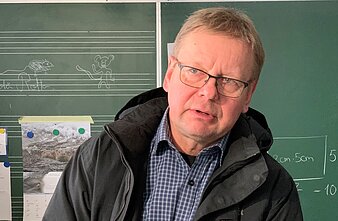
“One of Finland’s strengths is, in my opinion, the responsibility of society itself towards children, young people, and their well-being. We must understand that the situation of children in the country shows not so much the good or bad situation of those children’s families, but above all the maturity of society and the general, let’s call it, state of health,” says Timo Harrikari, Research Professor at the Finnish Institute for Health and Welfare. He is convinced that Finland has succeeded in becoming a child welfare state only because of the consensus among the public that children are most important in the country.
Result of the civil war – children’s homes
Almost a decade ago, during the reform of institutional care in Lithuania, which sought to phase out large children’s homes, the Nordic countries were identified as a prime example and inspiration. One such country is Finland. There are also state-owned children’s homes here, but their size and principle of operation are what Lithuania aims to emulate.
Finland also wants to minimise the number of state-owned childcare institutions, but there are doubts about whether it would be possible to completely give them up. Why? Experts claim that the answer must be sought in the history of how children’s homes emerged.

In 1918, there was a civil war in Finland, and society was divided in half. After the war, there were orphans and children whose parents had been imprisoned. These children were raised by the winning side to be properly re-educated and raised under a different ideology. There was a lot of criticism from the losing side.
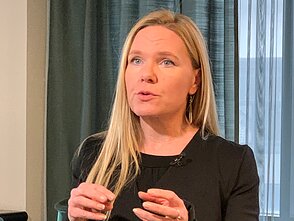
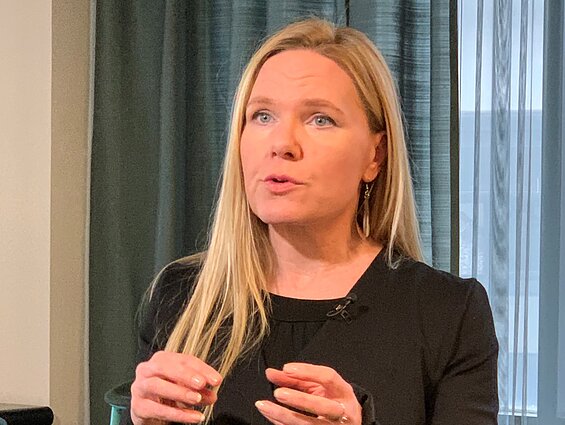
“They would say, yes, we lost the war, but we don't want to lose our children as well. Thus, as a compromise, a decision was taken to establish neutral state institutions to care for the children. Since then, there have been quite a few state guardianship institutions in Finland and this process of deinstitutionalisation has always been very difficult. This is the case so far because many families want their child to grow up in state care, if necessary, rather than being transferred to another family. This way they hope that the child’s relationship with their biological parents will be preserved,” says Elina Pekkarinen, the Finnish Ombudswoman for Children.
Therefore, institutional care in Finland continues to operate today. The LRT team visited one of the children’s homes almost 100 km from the capital city of Helsinki.
Two reasons for coming to a children’s home
A total of 14 children live in the Lemmilä Children’s Home. But in two separate buildings, because in Finland more than seven children cannot live under one roof in public care institutions. The institutions themselves are more reminiscent of real homes than state institutions. Each child has their own room, a common leisure space and a kitchen. School is nearby. In the same territory, there are a gym and wood workshops, where children can engage in various woodworking activities, as well as an off-road motocross bike garage — the children’s home is located on the edge of a forest.
The law defines not only the number of kids that can live in one home but also the number of adults required to work in the institution. Every day, three adults work in the children’s home visited by LRT, and at least one stays overnight. The director says there are usually teenaged boys of 13 or 14 living there. They stay about two or three years.
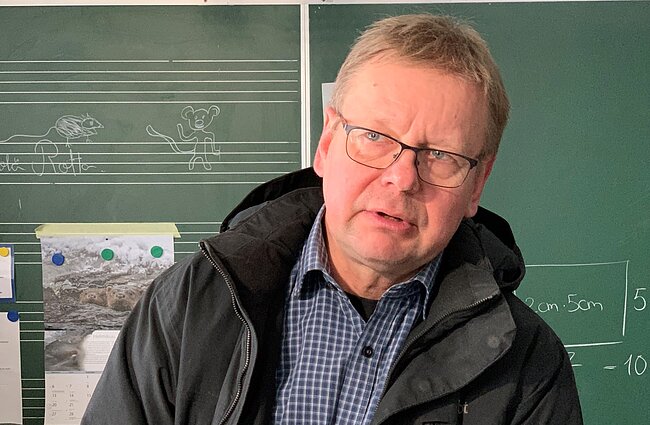
“All the children living here have issues. Some do not attend school, while others have addictions, are prone to aggression, or have mental health issues. Children come to our homes more or less traumatised, from a life of certain chaos. Here they have a routine: go to school, clean the home, engage in extracurricular activities, and always go to bed early and on time. We notice that children are calmer and more confident once they leave the home,” says Matti Seppälä, Director of Lemmilä Children’s Home.
The reasons why children find themselves in a children’s home can differ. In Finland, there are virtually no orphans left without care. If it so happens that a child loses both parents, they are taken care of by close family friends. In exceptional cases, the child is adopted. But this is also a fairly fast process in Finland, because there are always families waiting to adopt.
There are also cases when parents leave their children. Thus, there are two main reasons why children end up in institutional care: parental neglect or violence against children; ond the children’s own behavioural issues.
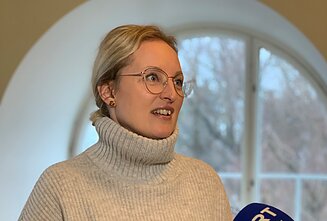
“I believe that in Finland we have a relatively low threshold as to when we respond to difficulties in families. Parents may have problems with addiction. I have to say, quite often parents have mental health issues, experience poverty, and lack of control in the family environment, have no knowledge of how to raise a child,” says Elina Pekkarinen, Ombudswoman for Children.
In these situations, according to the ombudswoman, the family is first given so-called open custody. These are services provided by the state to a family experiencing difficulties. They include social workers assisting the family, assistance to the child at school, day centres. In Finland, pregnant women are required to visit mother and child clinics. According to Julia Kuokkanen, Senior Adviser at the Central Union for Child Welfare, the system is designed to help parents from the very first days to avoid problems in the future.
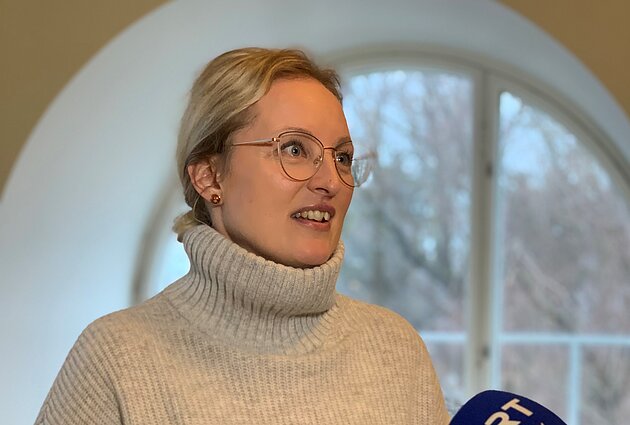
“For example, if a mother raising a child is tired, she can get help from a housekeeper or a person who comes to make food. During that time, the mother can rest. We also have support families that can take a child, for example, for a weekend and allow parents to rest,” says Kuokkanen.
Focus on non-institutional care
The Finnish ombudswoman for children says that if a child must be taken away from the family, institutional care is the last choice.
“We have families. Regular families ready to be foster parents. These families can raise up to four children, including their own biological ones. Thus, if a family already has three children, only one more child can be accommodated in their home. We also have so-called professional family homes. But they are becoming increasingly rare these days because there must be at least one parent with a social or health education in this house,” says Elina Pekkarinen, the Finnish Ombudswoman for Children.
She also mentions a well-developed so-called on-call foster care system in the country.

“In accordance with this model, the child is promptly taken from the family if necessary. Social workers then work intensively with the parents to assess whether the child can return. If it is decided that the child is not in danger in the family – they are returned, sometimes even within a few days. And the family continues to receive help,” says Pekkarinen.
Finnish law requires the return of children to the family. Every year the cases are reviewed, and the child can be sent back to live with the parents. If it so happens that in the state care home the child stays until they turn 18, this means that they are not returned to their parents. The young person is given further state care until the age of 25. Throughout this time, social workers remain in contact with the young adult, the state covers their studies, provides accommodation, and gives funds for starting their independent life.
Reason for Finland’s success
Timo Harrikari, Research Professor at the Finnish Institute for Health and Welfare, says that child welfare is a priority area in Finland. And most importantly, it cares about everyone equally.
“One of the strengths of Finland is, in my opinion, the responsibility of society itself towards children, young people and their well-being. It must be understood that the situation of children in the country shows not so much the good or bad situation of those children’s families, but above all the maturity of society and the general state of health, if we can call it that,” says Professor Harrikari.

The professor stresses that an efficient system needs to have highly qualified specialists. And as many as are needed. According to him, in Finland, social workers, like teachers, are a prestigious profession.
“When we ask the public who they trust most when it comes to the protection of children’s rights, they answer social workers, child welfare professionals. The state also invests heavily in their preparation. If we look at the rules on the well-being of a child, only social workers with appropriate education can work in this area, people who can take care of any issue related to the child. In addition to a master’s degree, it is also necessary to obtain a license for this sort of work,” emphasises Harrikari.
However, the ombudswoman for children says she also sees gaps in the system. One of them, according to Pekkarinen, is that sometimes response to some situations can be too fast. Another problem, according to the expert’s assessment, is even more complex: “We are replacing support for mental health, dependency, and protection against poverty with a child welfare system. The child welfare system has become a kind of solution to other problems, although it should also focus on them. I am concerned about this in our system.”
The ombudswoman emphasises that comprehensive solutions are needed to ensure a child’s well-being. First, a good education system for every child. Second, the state’s concern is that no family raising children should do so in poverty. And third, motivated and well-paid social workers who, if necessary, help children and their parents. It takes time to change, experts say. They remind us that the Finns have been building their welfare state for a long time.
The article was produced in collaboration with Transitions as part of a programme to support Solutions Journalism. This did not affect the content of the article.

Newsletter
Every Friday morning.