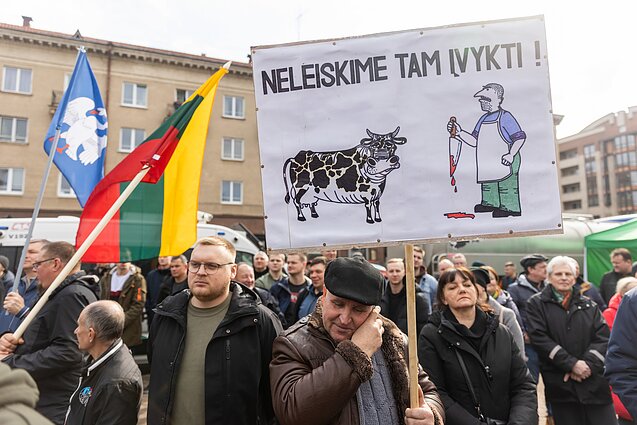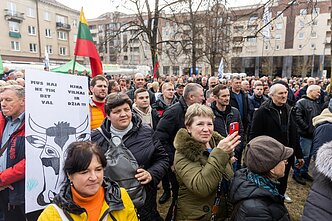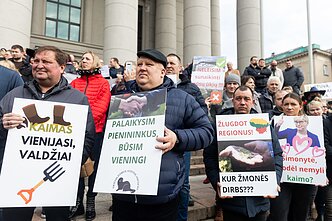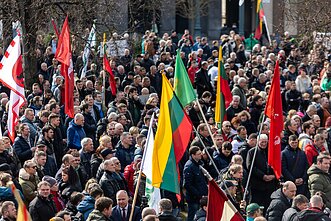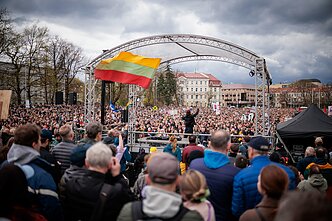















Around 1,000 dairy farmers staged a protest outside the Lithuanian parliament, Seimas, in Vilnius, demanding state support amid low raw milk prices.
Dairy farmers have asked aid of 40 million euros, but the government has refused. The protesters on Thursday demanded the resignation of Agriculture Minister Kęstutis Navickas
“Minister, don’t ruin agriculture, go to sleep,” one of the posters read.
Jonas Vilionis, head of the Lithuanian Milk Producers’ Association and one of the organisers of the action, told other protesters that Navickas “has not solved a single issue in favour of farmers”.
“We need to get a price that does not drive us to bankruptcy. We cannot survive on today’s prices. We have to fight for each other and not wait for someone to come and do it for us,” he said at the rally.
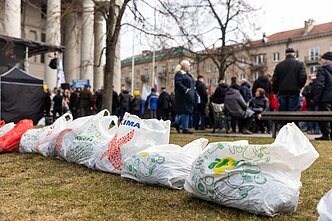
The action involved manure packaged in plastic bags with logos of big supermarket chains.
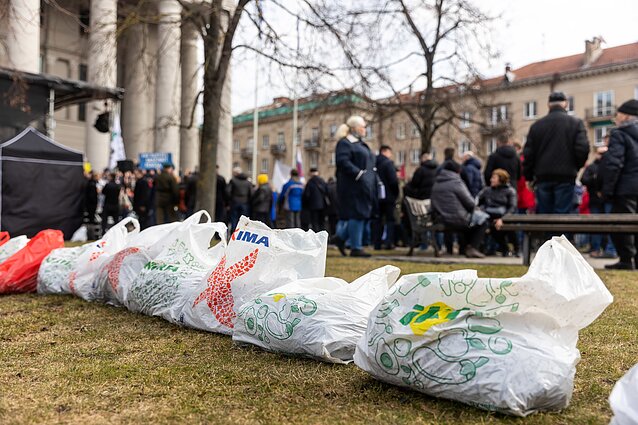
Vilionis told BNS that the bags of manure symbolise the disconnect between the government and the countryside “that feeds the city”.
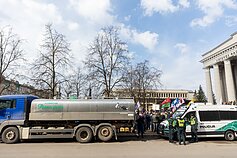
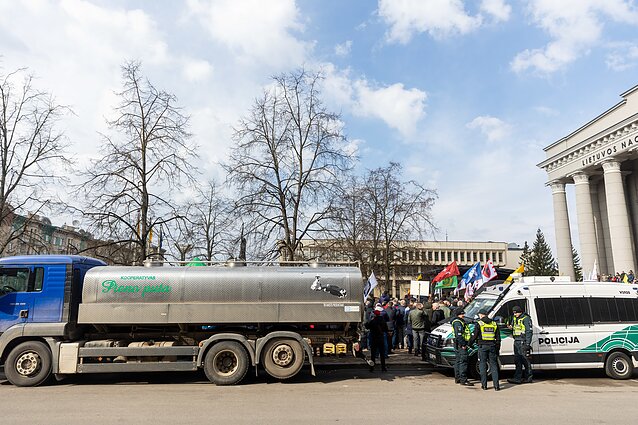
Protesters were also giving away free milk from two tankers.
“It’s better to give it [milk] away, to do good, because we won’t get anything for it either here or when we supply it to processors. We can’t produce anything ourselves because we only have dairy cows,” said the representatives of Berčiūnai, the company that distributed the milk.
During the rally, dairy farmers’ delegations are meeting with representatives of President Gitanas Nausėda, Prime Minister Ingrida Šimonytė, and Parliament Speaker Viktorija Čmilytė-Nielsen.
In May, the Ministry of Agriculture promised dairy farmers 8 million euros in support from the state budget.
Minister Navickas said on Monday that Lithuania had asked the European Commission to grant the country’s struggling dairy producers 18.6 million euros per quarter until prices stabilised. The support needs the approval of all EU ministers and will take about two weeks.
The Ministry of Agriculture has also announced that it is initiating amendments to the Milk Law to improve the situation of farmers and their bargaining position with processors, to give more flexibility in setting prices and to introduce more transparency in negotiations.


Newsletter
Every Friday morning.