






Investigative journalists have uncovered a possible scheme involving Lithuania for circumventing the EU sanctions for Belarusian fertilisers.
In cooperation with the Belarusian Investigative Center (BIC), Atvira Klaipeda and Kas Vyksta Kaune, Siena.lt has uncovered that Belarusian fertilisers are still being transported by lorries and trains and are crossing the Lithuanian border due to a sanction loophole,
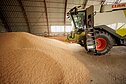
Traced back to its only producer in Belarus, Grodno Azot in Grodno, fertilisers continue to move to the Klaipėda-based Birių Kroviniu Terminalas (Bulk Cargo Terminal, BKT) that is partly owned by Belarusian state-owned company Belaruskali. Just like Grodno Azot, Belaruskali is also subject to the existing EU sanctions.
As the existing EU sanctions apply to Grodno Azot and not to the fertiliser, other non-sanctioned Belarusian companies are named as its suppliers in official documents.

Sanctions mechanism to blame?
Every attempt to circumvent the existing sanctions must be assessed, Lithuanian Foreign Vice Minister Jovita Neliupšienė said on Tuesday.
"There will always be those who will try to circumvent, who will try to abuse the system, even using legal and illegal documents. Each specific situation needs to be assessed," she told LRT RADIO.
"Border control is primarily carried out by our customs authorities, and that control mechanism, together with other institutions, must be very clear and very strict. Since neither Europe nor Lithuania had as many sanctions as it has now, clearly, there's a huge flow and huge pressure on officers to check and control everything," the vice minister said.
The EU sanctions should contain as few exceptions as possible, Neliupšienė added.

"As the sanctions are so broad, every time we have a new sanction package, be it for Russia or Belarus, we always say we need as few exceptions as possible. Any exceptions always create additional loopholes and opportunities to circumvent one or the other sanctions and sanction rules," Neliupšienė said. "If fertilisers are sanctioned, then all fertilisers should be sanctioned."
Transport and Communications Minister Marius Skuodis said it was “an open question” why the information emerged from journalists and not the special services.
“Every day, public authorities and companies prevent all sorts of ways to circumvent sanctions,” he wrote on Facebook. “As history shows, there will continue to be ways [to dodge sanctions] in the future. It is a daily battle of who will finally overcome who.”
New schemes every day
The Belarusian government is constantly working on schemes to circumvent sanctions, Lithuanian Transport Minister Marius Skuodis said on Tuesday commenting on the investigation.

“Belarusian KGB officers are tasked with devising schemes to generate revenue for the regime, and they do so from morning till night. Every day, our institutions discover a new scheme to circumvent the sanctions,” Skuodis told reporters in Vilnius. “Foreign companies are involved in these schemes and, unfortunately, so are Lithuanian companies.”
“I certainly do not rule out that there will be more of these schemes because they are being created every day,” the minister said.
The annual rail freight flow from Belarus, which stood at 17 million tons before the Ukraine war, fell to under 4 million tons last year, Skuodis noted.
“Before the war, we had a trade flow with Belarus, and the flow has remained relatively small, but still, as we see with fertilisers, as we see with timber, every time someone tries to drive a wedge,” he said.

Implementing sanctions ‘difficult’
Darius Žvironas, head of Lithuania’s Customs Department, commented that there are technical reasons why implementing sanctions on Belarusian freight is difficult.
“It’s much easier to identify goods when they are named, when their codes are known. It’s more complicated when sanctions apply to an economic entity, not to a specific commodity, as their list is quite extensive both in the Russian Federation and in Belarus,” he told a press conference on Tuesday.
He said businesses often use intermediaries from their own or other countries to circumvent sanctions, which makes it more difficult to identify them.
“This is a continuous process, and we cannot say that we will immediately prevent all possible variants since new schemes and new ways are constantly emerging,” Žvironas said.

Newsletter
Every Friday morning.