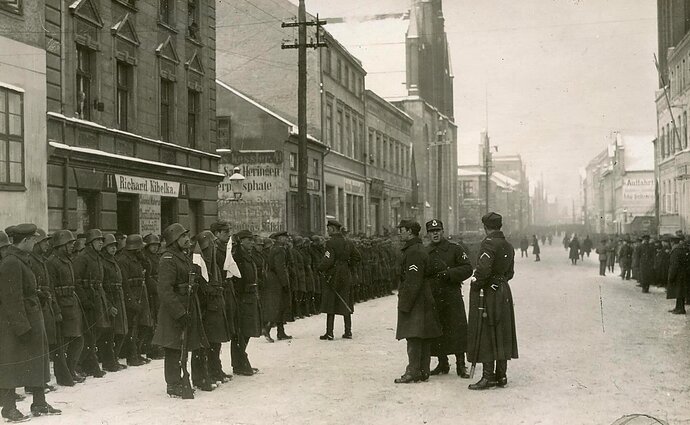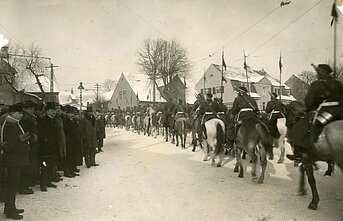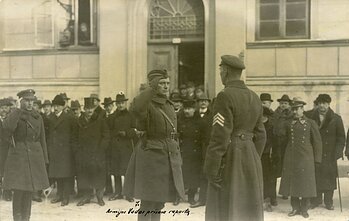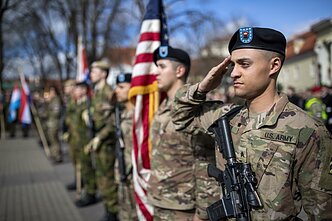
















On Sunday, Klaipėda commemorated the centenary of the region’s incorporation into Lithuania.
Speaking at the event to commemorate the centenary of the region’s incorporation into Lithuania, Lithuanian President Gitanas Nausėda stressed that the event honoured the men and women “who a hundred years ago stood up to fight for the future of their homeland and its prosperity”.
“With the love for Lithuania and their homeland burning in their hearts [...], they bravely stepped forward to unite Lithuania Minor with the rest of the country. Not only experienced soldiers but also riflemen, students, as well as residents, resolved to make the old dream come true and to open a gate to the sea and the world for Lithuania,” the president said.
By sacrificing their lives, “these Lithuanian heroes brought us closer to this reunification of historical significance, a historical event without which we could not imagine a modern State of Lithuania today”, Nausėda added.
Lithuania was under French rule with allied support from 1920 after the First World War. Although the issue of the port city was raised during international negotiations, Lithuania failed to secure a favourable decision.
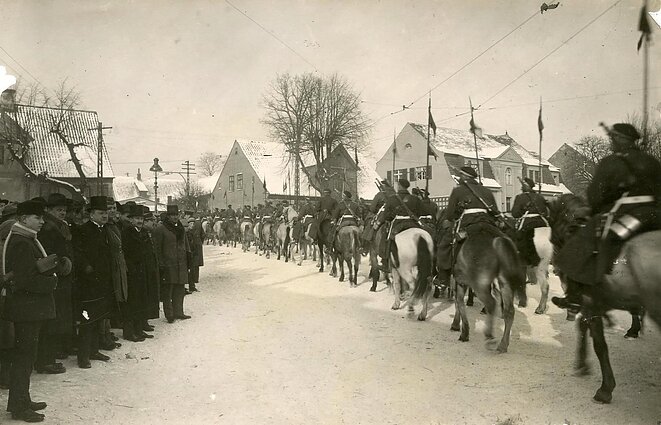
In January 1923, an armed uprising broke out in Klaipėda when around 1,100 Lithuanian volunteers launched a military operation on the night of January 10 to retake the port city. The well-planned operation succeeded on the night of January 15, 1923.
After a ceasefire was forcibly brokered, the Conference of Ambassadors of the Principal Allied and Associated Powers decided on February 16, 1923, to annex Klaipėda to Lithuania.
To mark the anniversary of these events, the Seimas of Lithuania has proclaimed 2023 the Year of the Klaipėda Region.
According to Vasilijus Safronovas, a historian at Klaipėda University, Klaipėda was crucial for Lithuanian statehood.
“We need to talk about the significance of this region and its incorporation into Lithuania. We wouldn’t have any seaside today, and we wouldn’t have a port with all its added value for the economy. We would have less diversity in the state. If it weren’t for 1923, we probably wouldn’t be here. It would be either Germany or Russia,” Safranovas told BNS.

Newsletter
Every Friday morning.