






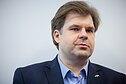


Alexander Khoroshavtsev fled Kaliningrad together with his brother who has a Lithuanian passport. According to Alexander, there are many more people in Russia’s Baltic exclave with Lithuanian roots who are trying to escape mobilisation.
Speaking to LRT RADIO, Khoroshavtsev said his brother, who obtained Lithuanian citizenship in 2006, helped him escape. At the time, Khoroshavtsev himself was a minor and could not apply for citizenship.
Later, when Vilnius tightened the procedure for obtaining dual citizenship, Khoroshavtsev simply dropped his plans for a Lithuanian passport.
Read more: Lithuanian border guards stop 153 Russians over first week of Russian travel ban
When Russian President Vladimir Putin announced a partial mobilisation last week, Khoroshavtsev acted immediately.
“The same day the mobilisation was announced, my brother and I decided to go to Lithuania. By 17:00 we were already at the border,” says Khoroshavtsev.
He was sure that both he and his brother would have been called up.
“My brother [...] has a military specialisation and has served in the army. He would have been taken immediately. And I am a category B conscript, I would have been drafted in the second wave,” says Khoroshavtsev. “Now I read the news and I see that all the restrictions have been removed and that virtually everybody is mobilised. So my brother and I would have been taken away already.”

When stopped at the border and asked where he was going, he replied that he was going to submit his citizenship papers in Vilnius. He was told that people like him were not allowed to cross the border.
His brother, who was sitting next to him, got the border guards to allow them through after showing his Lithuanian passport.
“I would not have been able to enter Lithuania under any circumstances, because I had a simple Schengen C visa, and I couldn't enter the country with it,” says Khoroshavtsev.
The Kaliningrad authorities claim that they have not closed the borders even to men of conscript age.
Khoroshavtsev says he has ties to Lithuania. His grandparents lived there during the Soviet era, but later moved to Kaliningrad. Now his aunt and his grandmother's five sisters live in the Šiauliai region in northern Lithuania.
According to Khoroshavtsev, there are many people in Kaliningrad who have Lithuanian roots but are unable to escape. Some of them have dual Russian and Lithuanian citizenship, just like his brother, but not all of them are so lucky.
“I contacted them. How do they feel now? And how should they feel? Either they will soon be mobilised or they will go into hiding, or they will do something else. It is difficult for them to do anything now,” says Khoroshavtsev.

Asked what he thinks Lithuania should do, Khoroshavtsev says the country could be more loyal to its diaspora, for example, by giving them refugee status.
Khoroshavtsev himself has already filled in an application for access to the Russian consulate in Lithuania since arriving in Vilnius.
“I intend to renounce my Russian citizenship and apply for a Lithuanian one because I have the right to do so. I have a letter from the migration service confirming that I can do so,” he says.
“I am going to look for a job and I am going to invite my wife and my small child, who stayed behind in Kaliningrad, to come here. I may stay in Lithuania for a long time, but I will certainly not return to Russia,” Khoroshavtsev adds.

Newsletter
Every Friday morning.