













The Lithuanian Armed Forces is undergoing significant upgrades. Construction of a new military campus has started near Vilnius, and two more will soon be launched in Šilalė and Šiauliai. Will that be enough?
New ammunition depots are also being built. In addition to that, the ministry is planning to buy new weapons and expects the military budget, which has risen to 1.5 billion euros this year, to increase slightly next year. Former military commanders say that the armed forces need a defence spending of at least 2.5 percent of GDP.
Soldiers of the Vaidotas Battalion have been getting used to temporary living conditions for almost a month. As the number of allied troops deployed in Lithuania increased, they had to move from Rukla to temporary container houses in Marijampolė.
“Someone had to do it. Others may think we got the short end of the straw, but I think the opposite, that we were lucky,” soldier Petras Poškus tells LRT TV.
It may be a bit further from the training ground, but nobody is complaining about the conditions.
“The rooms and their sleeping quarters are tidy and the conditions are exactly the same as in any other unit of the Lithuanian Armed Forces,” says Poškus.
The houses are heated and air-conditioned. Two hundred and fifty soldiers are currently housed there, but soon the number will swell to 500.
“Living in a container camp is a normal practice of both Lithuanian and NATO troops,” says Col. Lt. Irmantas Petaraitis.
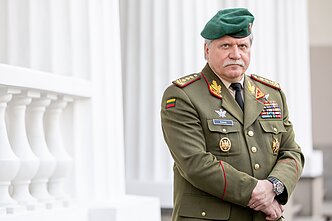
Lithuania’s military commander Lt. Gen. Valdemaras Rupšys, however, disagrees. And some of the soldiers are forced to live in unsanitary conditions.
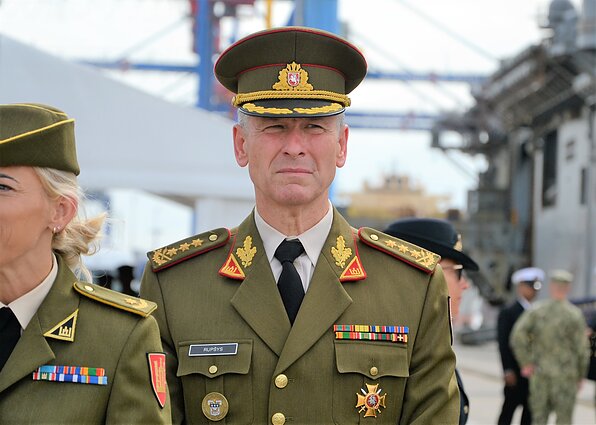
“Living conditions are one of the basic conditions that the soldiers feel needed by their state,” Rupšys insists.
Soldiers of the Vaidotas Battalion say they do not feel undermotivated. However, they will have to move again in about a year and a half.
New barracks near Vilnius
The symbolic capsule for the new military town for the Vaidotas Battalion is buried in Rokantiškės, about 10 kilometres from central Vilnius.
Defence Minister Arvydas Anušauskas says that the growth of military infrastructure is only one of the aspects of growing armed forces.
The new military campus will be the first one near Vilnius. Former army commanders agree that this was needed.
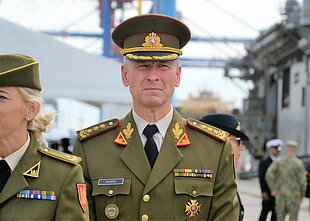
“Almost all major Lithuanian cities have one battalion or military unit,” says Jonas Vytautas Žukas, a former commander of the Lithuanian Armed Forces (2014-2019).

The would-be military town is also only several dozen kilometres from Belarus.
“This is not the place from which we will fight. This is more about reaction time. The second thing, I won’t hide it, is the recruitment issue, because having a unit in the Vilnius region and near Vilnius is much better in terms of personnel,” according to Rupšys.
Growing costs
In addition to Rokantiškės, two other, slightly smaller, military towns are planned in Šilalė and Šiauliai. The cost of all of them is close to 170 million euros. But it is already clear that staying within budget may be impossible.
The company that will build and maintain the facilities does not disclose how much the construction will cost.
“Sometimes in life it happens that commercial projects become more of a social responsibility. This seems to be the case here,” says Sigita Survilaitė-Mekionienė, CEO of Darnu Group.
Public-private partnership was chosen for the construction of the new barracks. Private businesses will build the campuses and maintain them for more than twelve years.

“It may be a bit more expensive, but you don’t have to pay the whole price at once and you don’t have to take on all the maintenance of the grounds and buildings,” says Žukas, a former military commander.
As the budget grows, so does the number of buildings. One of them is the ammunition depot in Alytus. There will be nearly 40 of them.
“If someone tried to sabotage it, the explosives would be detonated inside,” explains Defence Minister Anušauskas.
Add to that a five-year, 1.5-million-euro project to demine the Rūdninkai training ground and prepare it for exercises. There are about one and a half hundred infrastructure projects.
Investing in new armaments
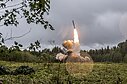
This year’s increased defence budget envisions to spend 250 million euros on new weapons: anti-tank, salvo fire systems, combat drones, ammunition. Purchases are also being adjusted in reaction to developments in Ukraine.
“We will buy anti-tank missiles, as well as a wide range of mines against armoured vehicles and infantry,” says Deputy Defence Minister Vilius Semeška.
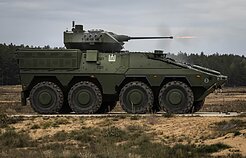
There are also plans to buy new Boxer IFVs, although there are problems with the existing ones, such as the integration of a German platform and an Israeli-made turret.

“The integration processes are quite complex, there are electronics everywhere, the turret is controlled remotely, via computers,” says Semeška.
The problems are being solved. The deputy minister says that the scenario of failure is not on the table – and that it is not rocket science.
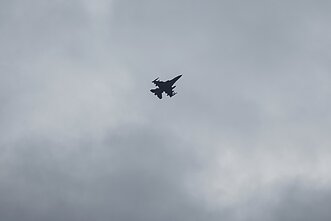
In cooperation with NATO allies, Lithuania is also planning to beef up its air defence. Former military commanders admit that air defence has been a topic of discussion for decades.
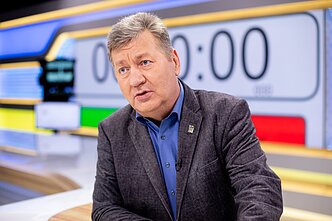
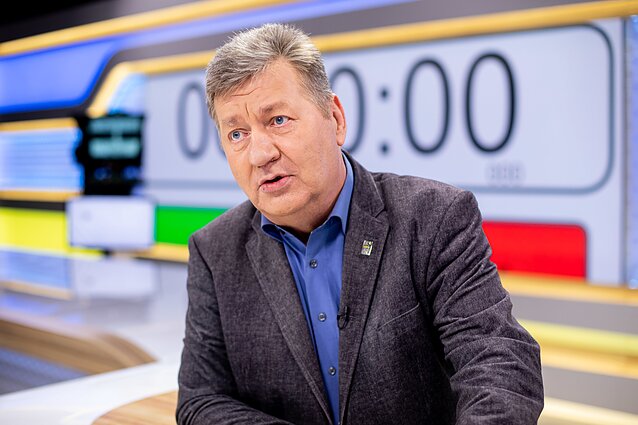
“Acquisitions of more serious systems have been going on for a long time. This is because some politicians feel that they are very big experts,” says Valdas Tutkus, former commander of the Armed Forces (2004-2009).
Waiting for partner troops
Not only will the number of weapons increase, but also the number of soldiers. The first troops from the promised German brigade should arrive in September.
There are currently about 1,500 German troops in Lithuania, but the country will have to wait before a full brigade is deployed here. Neither Lithuania nor Germany is ready for this.
“The perception of the level of preparedness of the German army and the level of their armaments has forced German politicians to allocate huge amounts of money when the threat became evident,” says Tutkus.
It was announced that the brigade could be moved to Lithuania within two years, but unofficial indications are that it will take much longer. Until then, only joint exercises are planned.

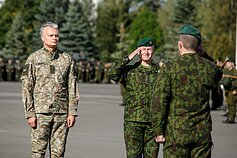
“The forward headquarters has to be here, the stocks have to be here, the weapons have to be here, and the other personnel come, train and then replace them. I don’t see anything wrong with that,” says former commander Žukas.
Commenting on threats emanating from Russia and the war in Ukraine, Žukas says that it is not only the weapons that are important, but also communication between institutions.
“No real and concrete plans on how we will act in an emergency have ever been drawn up,” he says.
What has been achieved is a commitment by politicians not to cut defence spending.
“[The agreement to spend 2.5 percent of GDP] is the minimum, I think, that could not be lower if we want our armed force to be an armed force,” says Tutkus.
The Defence Ministry expects the budget to go up by several hundred million next year due to GDP growth.

Newsletter
Every Friday morning.