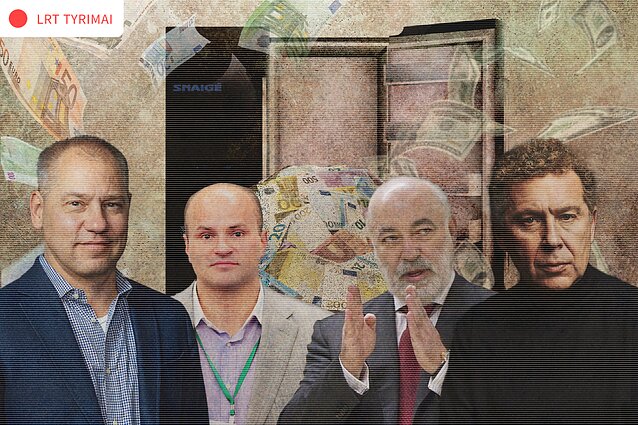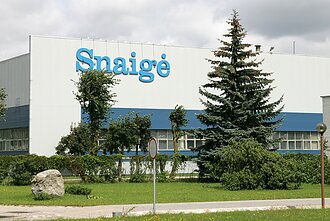






Snaigė has always been one of the flagship brands of Lithuanian manufacturing. But after being taken over by Russian firms linked to Moscow oligarchs, it has been run to the ground, stripped of funds and used as a lifeline for sanctions-hit businesses in Moscow, LRT Investigation Team reports.
Summary:
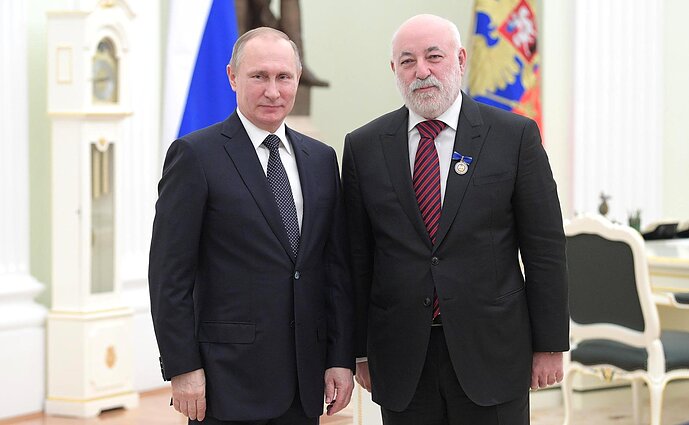
– Although the main shareholder of the Alytus refrigerator factory was thought to be a Russian businessman Alexey Kovalchuk, data gathered by LRT show that a Russian investment fund created with money from Russian oligarchs Viktor Vekselberg and Alexander Mamut has also invested in Snaigė.
– Vekselberg is sanctioned by the US, Canada, Australia, Japan, Great Britain and Ukraine, but not by the European Union. Mamut is not under sanctions.
– The Russian Retail Growth Fund, an investment fund registered in the Cayman Islands, holds a 43-percent share of Snaigė. The fund is managed by Oleg Tsarkov, a trustee of the oligarchs, who previously worked for the defunct Troika Dialog bank.
– The other two current shareholders of Snaigė, Konstantin Kovalchuk and Alexandra Litvinenko, are linked through their businesses in Russia to InterProgressBank and its shareholders Alexey Krapivin, the family of Boris and Yelena Usherovich, and Valery Markelov. These figures are linked to the 1520 group, known for the Russian Railways billion embezzlement and laundering scandal.
– Evidence suggests that the Russian shareholders used Snaigė as a loan bank when they acquired it a decade ago. Lending to Russian businesses was part of the share purchase deal.
– Of the more than 11 million euros lent to the Russian shareholders, only 2 million euros were recovered by Snaigė. The loans were allegedly made because Russian businesses faced financial difficulties after the annexation of Crimea.
– While Snaigė was lending to companies linked to Kovalchuk, the Russian businessman was carrying out grandiose construction projects in Moscow. In 2017, he was arrested and charged with large-scale fraud. The trials are still ongoing.
– Vladislav Sviblov, a Russian billionaire who owns gold mines in Russia, was also on the board of Snaigė from 2013 to 2017. He is a business partner of Kovalchuk.
Snaigė has been a bank for Russian shareholders for the past decade, rescuing Russian businessman Alexey Kovalchuk from debt.
Kovalchuk, who owed over 200 million euros to Russian banks and defrauded hundreds of people, went into hiding in Monaco, was later tried for fraud in Russia, and was replaced by new players in the offshore structures that run Snaigė.
Data gathered by LRT shows that the Russian Retail Growth Fund, which manages Snaigė through Cyprus, is linked to the oligarchs Mamut and Vekselberg. The new shareholder of Snaigė, Litvinenko, is linked to InterProgressBank, a Russian bank once owned by Vladimir Antonov. He is also the former shareholder of Lithuania’s bankrupt bank Snoras, whose owners are hiding from law enforcement in Russia.
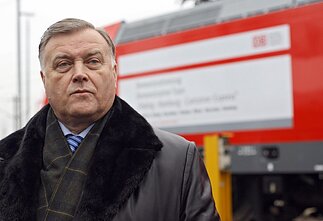
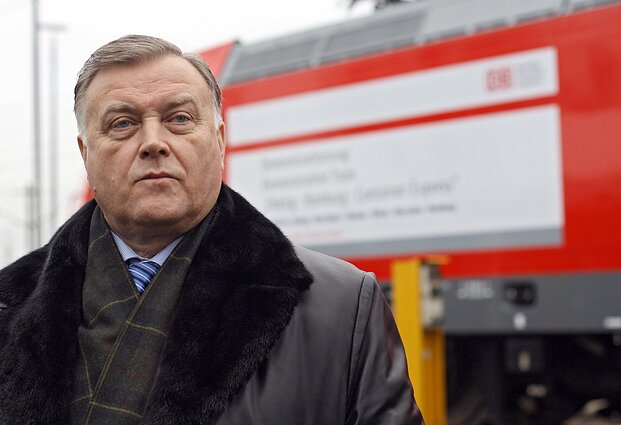
The new shareholders, who bought the bank from him, were involved in one of the biggest corruption scandals in Russia – the embezzlement and laundering of money from Russian Railways under Vladimir Yakunin, a close friend of Vladimir Putin.
This story is about the Russian elite who invested in the purchase of a Lithuanian factory. They put forth the money on the condition that the investment would be repaid in loans, of which they have so far repaid only one-fifth.
"They are not on the list of sanctioned persons, they do not belong to political or power structures. They condemn the war in Ukraine, which is why the company has helped the city to set up temporary accommodation centres for refugees and is doing its utmost to help them," Saigė’s representatives say of their shareholders.
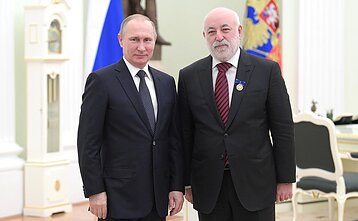
Vekselberg has been sanctioned by the US since 2018 when he was among the seven oligarchs accused of "supporting and financing President Vladimir Putin's drive to undermine Western democracies". The oligarch has also been sanctioned by the UK, Australia, Canada, Japan and Ukraine since Russia went to war in Ukraine, but has escaped EU sanctions.
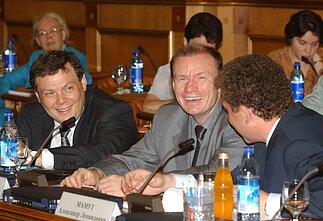
Mamut has escaped sanctions despite being considered a pro-Putin businessman who has been influential in the creation of media censorship in Russia.
"Since we are a Russian capital company, any [state] support is probably not available to us, because everybody says simply: look at the shareholders," Mindaugas Sologubas, the current head of Snaigė, told LRT about the difficult financial situation at the Alytus factory.
Snaigė representatives sought help not only in Alytus but also in Vilnius. The Mayor of Alytus, Nerijus Cesiulis, accompanied them to the Ministry of Economy and Innovation, but the meetings were unsuccessful.
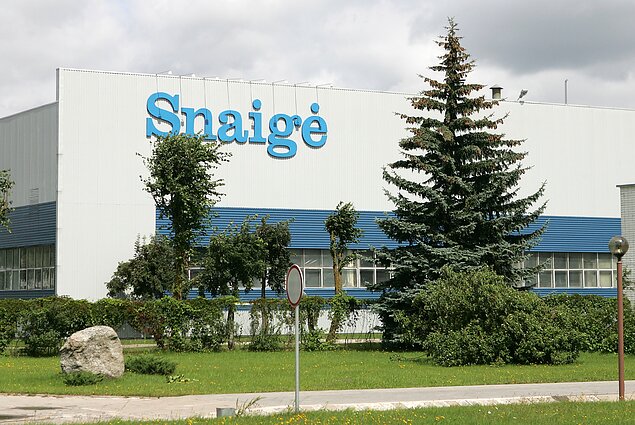
"Yes, we had meetings, meetings initiated by Snaigė with the Mayor of Alytus. They asked for additional state attention and support for their company", explained Vincas Jurgutis, Deputy Minister of Economy and Innovation.
However, INVEGA, a public financial institution, refused to provide Snaigė with funding.
Snaigė representatives have previously explained that the pandemic, the increase in raw material prices and the war in Ukraine – where the Snaigė Ukraine plant was located before the war – contributed to the difficult financial situation.
However, according to data collected by LRT, this is only partly true. A decade ago, Russian businessmen who bought more than 91 percent of Snaigė's shares had a plan to turn the Alytus plant into their own loan bank.
"This was essentially part of the purchase deal. If I remember correctly, there was a change in the refinancing of the group. The Polair group acquired Snaigė, the Polair group moved its financing to Europe," Sologubas, the head of Snaigė, confirmed.
In 2011, four American and Finnish investment funds that held shares in Snaigė decided to sell it to the Russian – KJK Fund SICAV-SIF, Amber Trust SCA SICAF-SIF, Firebird Republics Fund and Firebird Avrora Fund.
Prior to that, a majority stake was held by a Lithuanian capital firm, Hermis Capital, which is now bankrupt.
Snaigė shares were bought back for a total of 16.4 million euros in 2011–2012. The Alytus plant, which attracted Russian investors, immediately started lending to them – loans with interest had risen to almost 11.3 million euros, of which only 2.3 million euros had been repaid.
Alexey Kovalchuk, a businessman who largely owned the Russian refrigeration equipment manufacturer Polair, tried to save his businesses from bankruptcy through Snaigė, but without success.
After hiding out in Monaco, he was arrested in 2017 and tried for large-scale fraud. Soon after, the group of shareholders controlling Snaigė changed.
However, according to data collected by LRT, Kovalchuk was only one of the investors in Snaigė from the very beginning.
Behind him were far wealthier and more influential individuals in Russia – oligarchs Viktor Vekselberg and Alexander Mamut and their confidants, as well as Vladislav Sviblov, the owner of various gold mines.
Currently, Snaigė is managed by the Russian Retail Growth Fund, which was established with the money of Russian oligarchs Mamut and Vekselberg. They channelled the funds via Sekenora Holdings Limited in Cyprus. The fund is managed by the oligarchs' trustee Oleg Tsarkov, a former employee of Troika Dialog, a bank notorious for money laundering.

The other two shareholders are Kovalchuk's retired father, Konstantin Kovalchuk, who worked most of his life in the Russian customs, and a Russian citizen, Alexandra Litvinenko, who is linked to Russia's InterProgressBank.
Russia's Polair is no longer linked to Snaigė, having been sold by its Russian shareholders a few years ago.
Snaigė – a gateway to Western markets
"I was alone at the time, I withdrew all the money I had, put my liver, kidneys and so on on hold. [...] But I believed in this story: such a wonderful factory can’t stop functioning", is how Kovalchuk told the Russian publication Ekspert in 2010 about his decision to buy shares in Polair for 15 million dollars. The deal took place in 2003.
Before that, Kovalchuk was, as he publicly said, a non-ferrous metals trader.
After acquiring Polair, a manufacturer of commercial refrigeration equipment, Kovalchuk plunged into other businesses. Together with his friend and business partner Sviblov, who today owns gold mines in Russia, Kovalchuk founded RED Development in 2006 (Kovalchuk owned 75 percent of the company and Sviblov 25 percent).
This company's real estate projects in Moscow attracted Kovalchuk to the business. Kovalchuk was eventually at the centre of bankruptcies and was arrested in 2017 for large-scale fraud.
However, more on that later.
Let's go back to 2006. The business partner of Polair's shareholder Kovalchuk, Sviblov, was at the time the vice-president of Rosbuilding, an investment company involved in the takeover of real estate, shops and industrial companies.
He was recruited there immediately after his studies by Sergei Gordeyev, a Russian billionaire. At Rosbuilding, Sviblov was responsible for direct investments and asset restructuring.
At the same time, Kovalchuk was in Europe looking for partners to help Russia's Polair enter the European market. He was also looking for investors to take over the business.
In 2008, the Russian Retail Growth Fund (RRGF), an investment fund set up with money from oligarchs Vekselberg and Mamut, acquired a 30 percent stake in Polair. The fund, which has raised 300 million euros, is now the largest investor in the Russian retail market.
RRGF is managed by Oleg Tsarkov, former head of the investment banking division of Troika Dialog, the same bank notorious for money laundering schemes. Vekselberg invested 60 million euros in RRGF, while the fund buys Polair shares for 40 million US dollars.
Oligarch trustees on the board
After Russian investors acquired Snaigė, the management of the Alytus-based company changed in 2012. Kovalchuk became the board’s chairman, while Mikhail Stukalo also joined the board. He is a partner of the aforementioned Tsarkov.
As a member of the board, he works for Svarog Capital Advisors. This is the former Renova Capital Advisors, which managed another investment fund, Renova Capital, set up by Vekselberg in 2003.
Renova invested 165 million US dollars in this fund, which was managed by the oligarch Vekselberg. The billionaire decided to invest in private equity and employ Tsarkov, a former banker of Troika Dialog. Renova Capital was later renamed Svarog Capital Advisors.
Stukalo, a former member of the board of Snaigė, worked for Troika Dialog, as did Tsarkov. During his time as a member of the board, he was also involved in the management of the Russian retailer Holiday Classic (Vekselberg's Renova acquired a 23 percent stake in the chain in 2006).
In 2015, Stukalo was replaced by Tsarkov, who has remained on the board of Sneigė until now.
"Tsarkov is the fund manager, who is basically the final beneficiary of the contracts submitted to us," said Snaigė's director, Sologubas, adding that he was not aware of the shareholders of the fund managing the Alytus plant.
Sviblov, a business partner and friend of Kovalchuk, was added to the board of Snaigė in 2013. At that time, he was working for the Russian development and construction company PIK (First Mortgage Company), which had been acquired by Gordeev and Mamut from the business structures of billionaire Suleiman Kerimov.
From 2014 to 2016, Sviblov served as vice president of investments at PIK. He was on the board of Sneigė until May 2017.
By that time, Sviblov had also founded Ecopolis Corporation (a complex of factories in Russia for the recycling and disposal of electronic waste). He left Snaigė after starting to invest in mining projects in Russia, Kazakhstan and South America.
Rescuing Russian shareholders after Crimea
Sekenora Holdings Limited in Cyprus discloses in its financial statements that it had invested 10.4 million euros in its subsidiary, Snaigė.
However, the figures show that the Russian shareholders did not invest in the Alytus refrigerator manufacturer themselves, but used Snaigė's money to cover their debts.
As soon as Kovalchuk took over the management of Snaigė, the Alytus company opened its purse to the shareholder's Russian business.
At the end of 2012, one year after the sale of the shares, Snaigė had granted a loan of more than 2 million euros to Russia’s Polair.
In 2013, the Lithuanian company's loans to Polair already amounted to 6.8 million euros.
In 2014, it also granted a loan of 1.5 million euros to a related Russian company, Zavod Sovitlprodmash, a plant of the now bankrupt Polair group in Volzhsk.
In the same year, a 181,000-euro loan was also granted to Vaidana, a related company controlled by Russian shareholders.
Snaigė's financial statements explain that in 2014, the Russian economy deteriorated "due to geopolitical tensions, sanctions and the fall in global energy commodity prices". The sanctions refer to those imposed following Russia's annexation of Crimea.
Polair's debts with the Russian bank Petrokomerc already amounted to 11.8 million euros in 2014. At that time, Snaigė signed a surety agreement with the bank, under which it undertook to settle Polair's loans.
According to the company's financial statements, by 2018, Snaigė had already granted 9.8 million eruos in loans to its shareholders. In 2019, the debt with interest had risen to 11.4 million euros.
Subsequently, the Lithuanian Investors' Association issued a press release stating that Snaigė had booked the depreciation of the loan up to 190,000 eruos.
In 2018, the Bank of Lithuania also reacted to the distribution of loans to Russian shareholders by fining Snaigė 207,000 euros for violating the Securities Law and for failing to take into account the interests of the company itself and minority shareholders.
Last year, according to the Bank of Lithuania, Snaigė's outstanding loans amounted to 8.4 million euros.
Millions in debt, bankruptcies and money laundering allegations
The data collected shows that a year after the Snaigė share deal, Kovalchuk had borrowed more than 207 million euros (at the exchange rate at the time) from Russian banks through his affiliates.
For example, Polair itself announced in 2013 that it had successfully completed the refinancing of its loan portfolio of almost 2.5 billion roubles (some 58.7 million euros at the exchange rate at the time). The loans were provided by Russian banks UniCredit Bank, Petrokomerc Bank, and Promsvyazbank.
The loans were also guaranteed by Snaigė.
Kovalchuk and his partner Sviblov borrowed a further 148.5 million eruos from Absolut Bank (3.2 billion roubles) and Promsvyazbank (3.12 billion roubles) through RED Development.
Founded in 2006, the company was already one of the leading developers in Moscow in terms of apartment supply in 2014.
RED Development has started building luxury apartment projects, such as Loft Garden, Loft Club, Loft Post, Loft Park, Loft Time and the Apple Tower business centre. However, the construction of some complexes has been frozen indefinitely.
RED Development explained that the financial problems were caused by the collapse of the rouble at the end of 2014.
Since 2015, the name of Polair's shareholder has been in the limelight due to financial machinations in Moscow. Moscow residents who had bought unbuilt apartments from Kovalchuk's business rose up in protest.
RED Development is now facing criminal proceedings. The company is accused of fraud for illegally selling lofts in the Loft Post project, while Kovalchuk is accused of large-scale fraud. The businessman was in hiding in Monaco for some time.
He was detained in June 2017 and later placed under house arrest. The trials are still ongoing.

Changes in the shareholders of Snaigė
Sekenora Holdings Limited, which manages Snaigė from Cyprus, was registered in the summer of 2017. At that time, its sole shareholder was Bevorano Holdings Limited, which was managed by a Lithuanian company Vaidana. Its ultimate shareholders were Hymana Holdings Limited.
In 2019, Konstantin Kovalchuk, the father of Alexey Kovalchuk, took over 43 percent of the shares from Bevorano Holdings Limited, while Russian Retail Growth Fund, a Cayman Islands-based company, took over 57 percent.
Konstantin, 75, has worked in the structures of the Russian Federal Customs Service and until 1998 was the head of the Indirect Tax Department of the Russian State Customs Committee.
He has headed a number of companies connected to his son.
In the same year, in 2019, the shares were re-allocated. Alexandra Litvinenko joined the shareholders with 28 percent of the shares. Kovalchuk's shareholding was reduced to 28 percent, and that of the Russian Retail Growth Fund to 43 percent.
Litvinenko, who joined the shareholders of Snaigė, is a 38-year-old Russian citizen. According to data available to LRT, Kovalchuk's father Konstantin has insured a car belonging to Litvinenko.
She is also connected to Kovalchuk through his business in Russia. Since July this year, Ms Litvinenko has held an 8.4 percent stake in the Russian company FE-Stroi. Until then, Konstantin Kovalchuk, Alexey’s father, was the co-owner of the company.
The other shareholders of FE-Stroi are Avikon Trading House ( Kovalchuk is presented as an adviser to Avikon) and the largest shareholder is the Russian bank InterProgressBank.
The latter is a Russian commercial bank, which has featured in the story of the embezzlement and laundering of hundreds of billions of dollars by Russian Railways in connection with Vladimir Yakunin, a close friend of Putin and the former head of the railways.
In 2006, the bank was owned by Vladimir Antonov (a former shareholder of the bankrupt Lithuanian bank Snoras) and later sold to German Gorbuntsov, a former banker in Russia. His business partners were Boris Usherovich, Valery Markelov and Andrei Krapivin.
The companies associated with Usherovich, Markelov and Alexey Krapivin, the son of the late Andrei Krapivin, belonged to the 1520 Group. They were the largest contractors of Russian Railways.
In 2018, the business publication Forbes reported that the 1520 Group's contracts with Russian Railways amounted to 218.2 billion roubles (3.5 billion euros at the then exchange rate).
The group includes more than 50 companies and has been involved in the modernisation of the Trans-Siberian and Baikal-Amur highways and the reconstruction of the Moscow transport hub.
In 2014, the Reuters news agency obtained data on the bank accounts of a large number of companies. Investigations by journalists revealed that some of these companies had not carried out the agreed work. In addition, some of the money was syphoned off to offshore accounts, some ended up in banks and the rest went to the companies that had carried out contracts for Russian Railways.
Usherovich and Markelov are accused of paying bribes to Dmitry Zakharchenko, an already convicted Russian anti-corruption official.
In 2016, shortly after the arrest of Zakharchenko, a former official of the Economic Security and Anti-Corruption Bureau of the Russian Interior Ministry, Usherovich fled to Israel (where he is a citizen) and recently applied for asylum in the UK. He is now on the international wanted list.
Markelov has been sentenced to eight years in prison. Both Markelov and Usherovich are accused of giving extremely large bribes to Zakharchenko, who has become a symbol of Russian corruption.
According to 2021 commercial registers, the main shareholders of InterProgressBank were Alexey Krapivin (son of Andrei Krapivin, who died in 2015 under mysterious circumstances), Valery Markelov, and Boris Usherovich's wife Yelena, and their daughters Maria and Sophia.
Snaigė could not answer who Litvinenko was.
"I just have information that part of the shares was transferred. She is never actively involved in the business, so I cannot answer who she is," said Sologubas.
Questions were also put to Tsarkov, a member of the board of Snaigė, as well as to the other company's shareholders.

Newsletter
Every Friday morning.