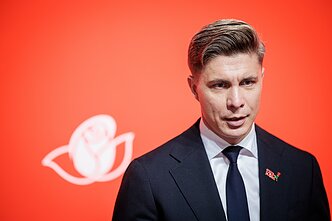













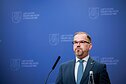

Lithuania's minimum monthly wage “should increase between 15 and 19 percent” next year, Mykolas Majauskas, chairman of the parliamentary Committee on Budget and Finance, said on Tuesday.
"Accordingly, the government should calculate how much the non-taxable personal income threshold should increase so as to somewhat ease the burden on businesses, because a minimum wage increase, first of all, places a burden on small and medium-sized businesses," Majauskas told the Žinių Radijas radio station.
"The minimum wage should be increased according to a pre-agreed formula so that it depends on objective economic parameters, rather than on the goodwill of politicians," he added.
Meanwhile, pensions and the salaries of public servants should be raised by 10 percent.
The committee's chairman believes that salaries have to increase by at least 10 percent to partially offset the loss of purchasing power due to inflation soaring to 20 percent.

According to Majauskas, the public sector currently employs some 300,000 people who are paid around 1,500 euros monthly before tax.
This year, Lithuania's minimum monthly wage stands at 730 euros before tax or 550 euros after tax.
The Bank of Lithuania in July suggested raising the minimum wage by 18.9 percent, or 138 euros, to 868 euros next year.
The central bank said, however, that it would support more cautious moves, such as delaying decisions on the minimum pay or raising it in stages, due to the high level of economic uncertainty.
The Tripartite Council, which brings together the government, employers and trade unions, has already started discussions on a minimum wage increase, but the final decision will have to be made by the cabinet.
Read more: Pandemic subsidies are not culprits of inflation in Baltics – interview

Newsletter
Every Friday morning.