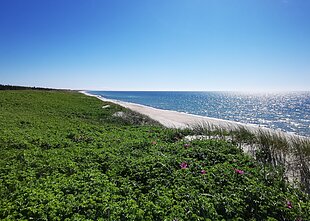















Walking 30 kilometres through dunes and forests, sweltering heat, and a sea eagle keeping company – this is what a normal working day for the Curonian Spit dune guards looks like.
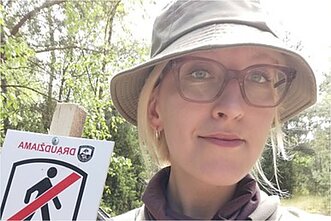
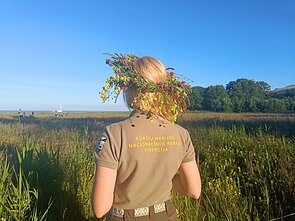
Kristina Gruodytė moved from the capital Vilnius to the Curonian Spit for this job. She says she does not regret her decision because she feels her work as a dune guard is meaningful.
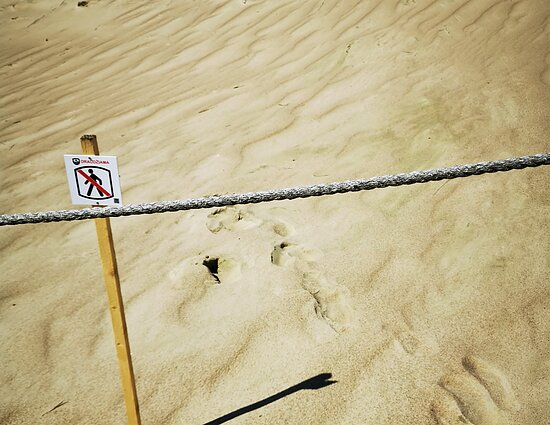
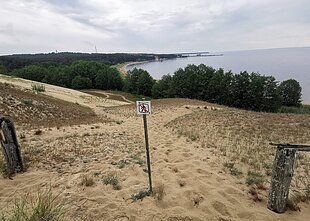
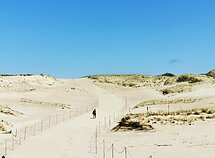
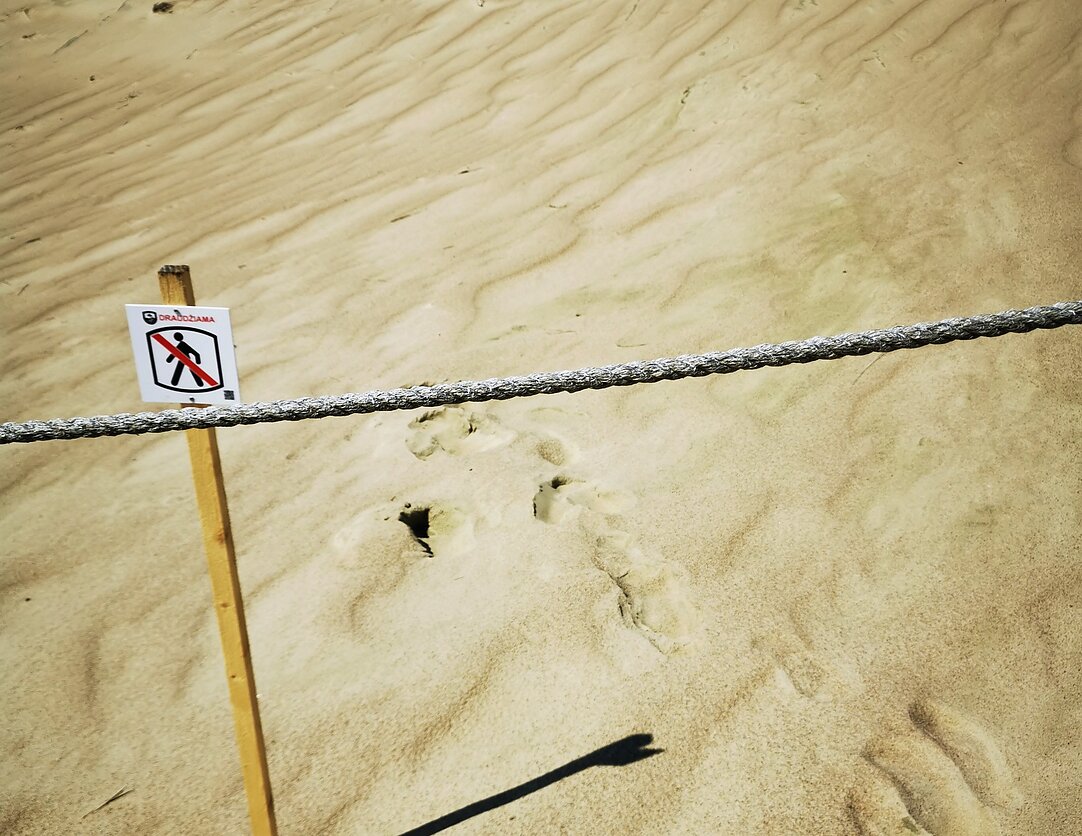
Even now, many people still step behind the protective fences for a selfie or run down the Parnidis Dune, without even thinking about the damage to the UNESCO-protected sight. The guards are tasked with preventing such activity.
“Dune guard is the most exotic job in Lithuania. Foreigners call them dune rangers,” Gruodytė says.
She left a job in an international company for this position: “As summer approached, I felt that after the quarantines and all the things going on in the world, I wanted to change the place while there was a chance to try something new.”
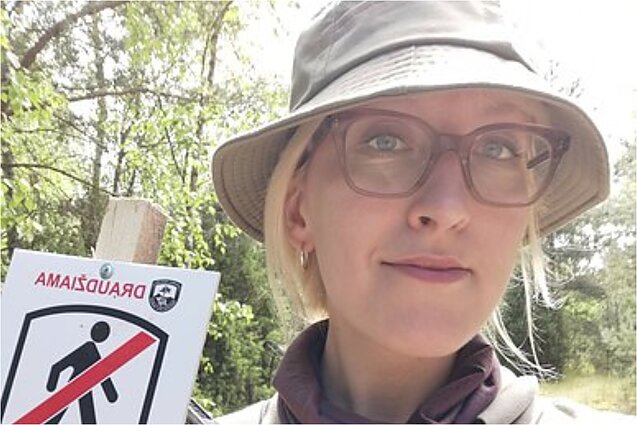
According to the woman, the rangers are not well paid but are provided with accommodation in Neringa, while the job itself is rewarding.
“To live in Neringa for a few months and be paid for what you love to do – walking, interacting with people, and educating them – seemed worth it,” Gruodytė says.
Damage to nature
The Curonian Spit guards spend their working days in the heavily visited protected sites – the Nagliai Nature Reserve or the Parnidis Dune. They interact with tourists and answer their questions on the appropriate behaviour in the Curonian Spit National Park.
According to Gruodytė, there are still many holidaymakers who disregard the no-walking signs in certain areas.
“The plants that help to keep the sand where it needs to be are being threaded down,” Gruodytė explains. “When you slide down or climb up the slope of the Parnidis Dune, almost a tonne of sand is moved, and something is irreparably changed.”
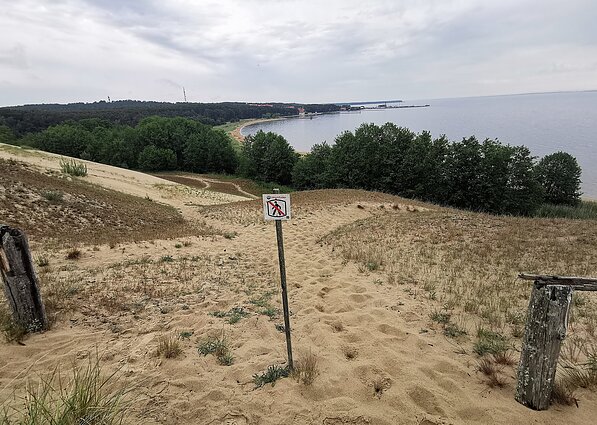
“Certain species of animals live in these places, and it is important that we preserve them, that we do not go where we are asked not to go. That’s what the job is about – whistling to someone, giving them an explanation,” she adds.
The ranger says that many offenders make excuses that they are alone and cannot possibly make much damage.
“But how many people are caught in a day, in a season? There are hundreds, thousands of them who think that they are the only ones, while the sand, the plants, the animals become unbalanced,” she explains.
According to Gruodytė, she has met many kind people who care about nature during the first month on the job. However, there are also many of those whose behaviour shows that guards will always be needed.
“In Nida, around the Parnidis Dune, when you start work in the morning, you find bottles, plastic cups, etc around the bench, even though the garbage bins are not so far away,” the dune guard shares.
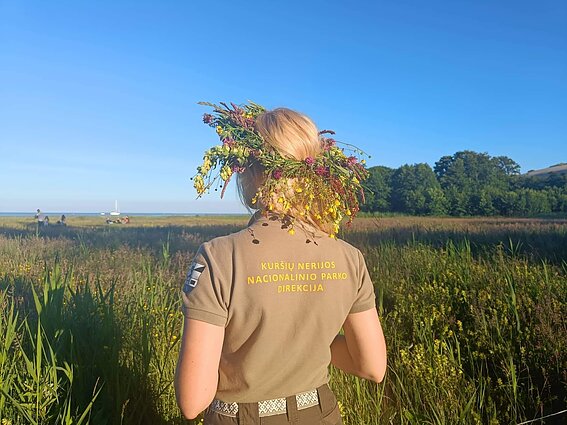
Battle with heat
One of the major benefits of being a dune guard is spending days in the fresh air, while exercising at the same time. Gruodytė estimates that she walks an average of 25-30 kilometres a day.
However, by spending all day outdoors, the rangers have to also find ways to protect themselves from the heat.
“It sometimes feels like it is 50 degrees among the dunes,” the woman says.
She battles the heat by drinking hot tea to minimize the difference between the body and air temperature. Gruodytė says she learned this trick while living in Istanbul 10 years ago.
Moreover, guards cover large areas daily, and whenever they get close to the sea, they go into the water to cool off.
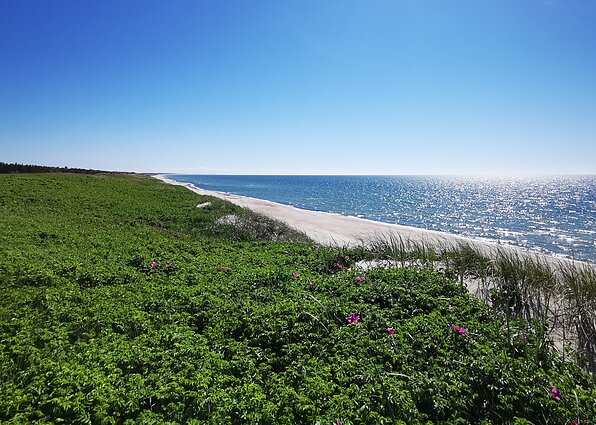
According to the woman, the job as a ranger also helps to find a new connection with nature.
“There is a beautiful pair of sea eagles on the Nagliai Cognitive Trail. When I start working there, I see one of those eagles in a very precise spot most of the time. It is always sitting, waiting, and watching. I say that the eagle is my shift mate,” the dune ranger says.
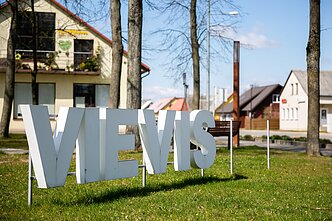
For some time now, both locals and some visitors have been noticing that the Curonian Spit is changing. In particular, Nida, which used to be an oasis of tranquillity, is becoming noisier.
“I think we should be more protective of this area. If you really want to have a night out with all kinds of entertainment, you can go somewhere else, and here, you can enjoy things that are naturally here, without the extra rubbish and noise,” Gruobytė says.

Newsletter
Every Friday morning.