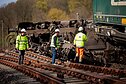


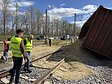












Lithuania is the only country able to transport rail freight between Russia and its Kaliningrad exclave. This is because of the so-called Russian railway track that was never dismantled in the country.
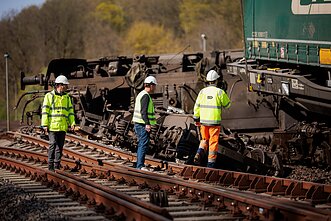
The rail transit from Russia to its exclave through Poland, which also borders Kaliningrad, is not possible because of different railway tracks. Poland has the standard or the European railway track of 1435 millimetres. Meanwhile, Lithuania and Kaliningrad are connected by the Russian railway track of 1520 millimetres.
Most of the railway tracks in Lithuania are of the latter kind, which is the legacy of the times of the Russian Empire and the Soviet Union. Similar tracks exist in Russia and Belarus.
Economic benefits
According to the Transport and Communications Ministry, there are no plans to dismantle and replace the Russian railway track in Lithuania.
It also noted that projects developing the European railway track in the country are underway. One of them is Rail Baltica, which will link the Baltic states with a European-gauge railway running from Helsinki to Warsaw.

Following last week’s release of the European Commission’s guidelines allowing the rail transit of sanctioned goods via Lithuania for Kaliningrad’s needs, Gintaras Bagdonas, a former Lithuanian military intelligence chief, has told the 15min.lt news website that Lithuania would be safer if it dismantled the Russian railway track.
Lithuanian Prime Minister Ingrida Šimonytė, however, said her government is not considering dismantling this track.
“I understand that everyone has got agitated because of the transport of sanctioned goods, but I’d suggest not to forget that there is also a treaty between the Republic of Lithuania, the European Union, and the Russian Federation on the facilitated transit of citizens,” she told reporters on Monday.
“I understand that hotheads have all sorts of proposals, such as turning off the pipes or cutting off the rail tracks, but this is certainly not an issue for the government to consider,” the prime minister added.

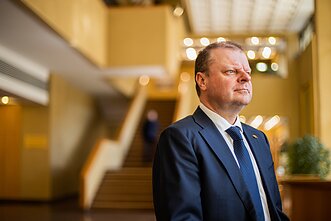
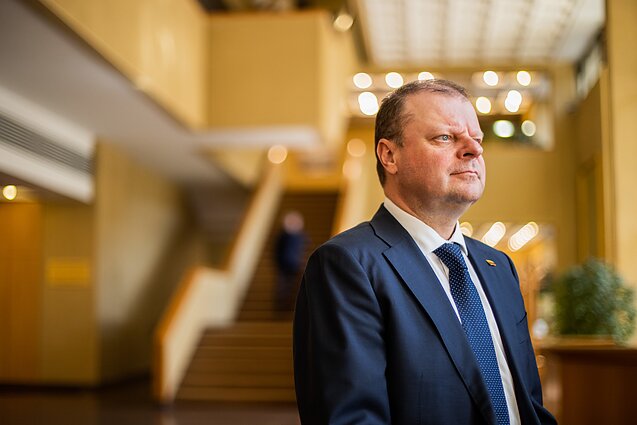
Former Prime Minister Saulius Skvernelis also said his government did not consider replacing the Russian railway track because of its economic benefits.
“There was certainly no such intention. Let’s understand that in the transport sector, every advantage is an opportunity. In this case, with two types of tracks – the European and the Russian – our competitiveness and opportunities are only greater,” he told LRT.lt.
“If we consider the purely economic interests of the state, the advantage is that it is possible to diversify the destinations of transportation, which Poland doesn’t have. Lithuania used to earn quite a lot from transit, so that was an advantage. That is why we never even considered the option of dismantling the [Russian] railway track,” he added.
Asked whether his government considered any possible threats related to the Kaliningrad transit, Skvernelis said there was no such concern before Russia invaded Ukraine.
“Everything was sorted out, military cargo could not be transported by rail to Kaliningrad, so it did not pose any threat or danger. And if passengers were transported, there were strict regulations, and it did not pose any threat,” the former prime minister said.
Future prospects
According to Skvernelis, Lithuania should not dismantle the Russian rail track even given the current geopolitical situation. His views are echoed by former Transport Minister Rimantas Sinkevičius, who held the post between 2012-2016.
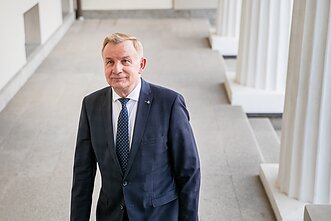
“I don’t know if it would make sense to replace everything with the European track,” he said. “Today, the geopolitical situation has changed, the Russian gauge is not very relevant for us as a country. But who can say how things will turn in 20 or 30 years?”
In Sinkevičius’ words, it is not difficult to dismantle the Russian track, but Lithuania needs to think about future prospects.
“Maybe in the long run, as Russia becomes more democratic, which is to be expected, [relations will improve], and the rail track will not interfere with trade relations,” he said.

Blind eye
Political analyst Marius Laurinavičius criticises the politicians’ approach regarding the Russian rail track. According to him, Lithuania has blindly aligned itself with Russia in various sectors, even though it has always known what kind of a country it is and what dangers it could pose.
“The blind eye was turned not only to transit and railways but also to relations with Russia in general,” he said.
“Even now, Russia has started threatening to cut us off from the BRELL ring [the Baltic states’ common electricity system with Belarus and Russia]. So why have we not disconnected ourselves already? We have certainly done more than Europe, we are independent, and we do not import energy resources. But why did we pay Russia for energy resources at all?” Laurinavičius added.

Newsletter
Every Friday morning.