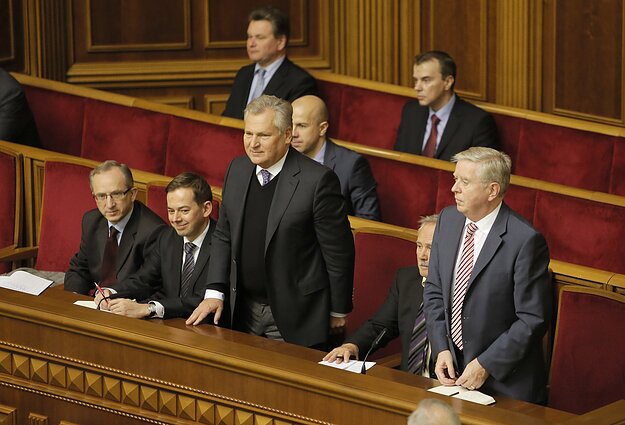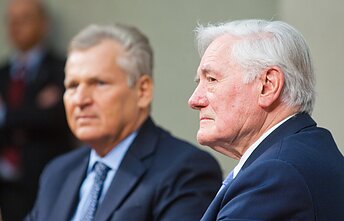



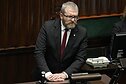


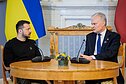



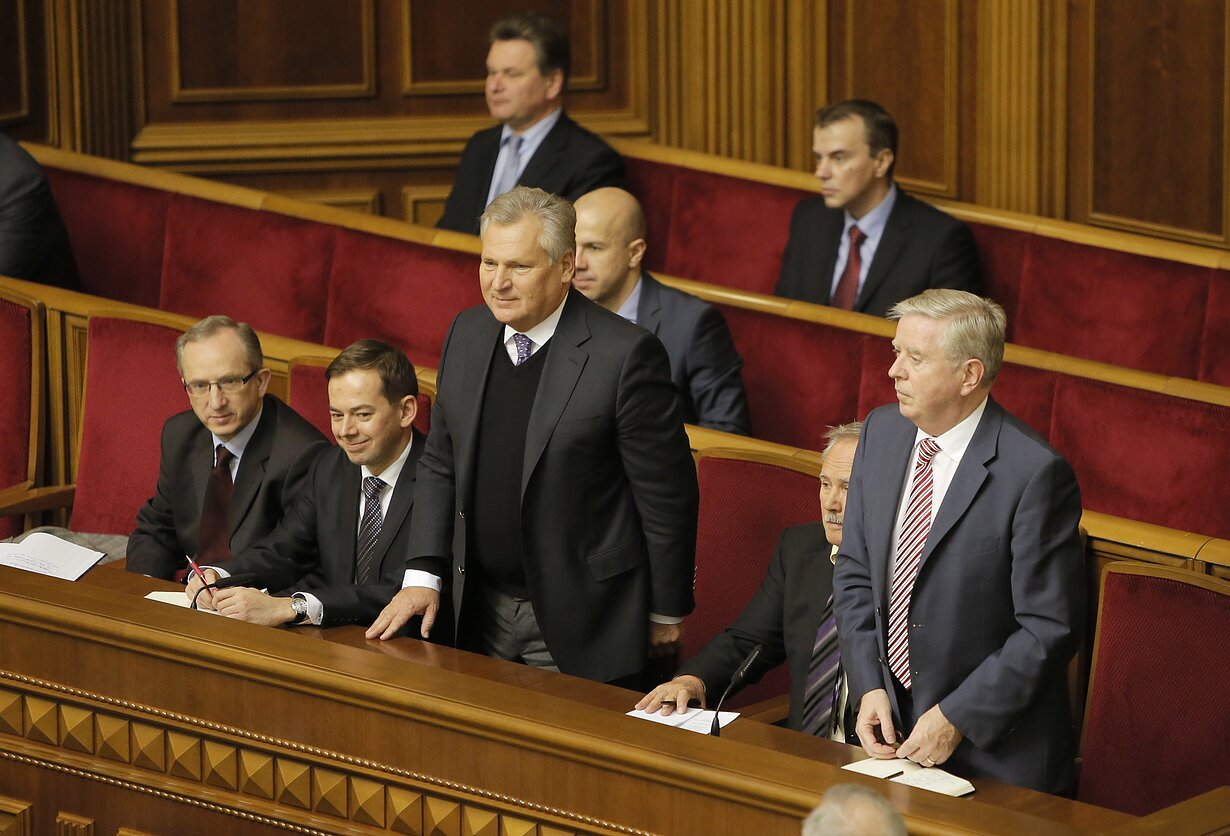
The then presidents of Lithuania and Poland, Valdas Adamkus and Aleksander Kwaśniewski, were among the first European leaders to travel to Kyiv after the Orange Revolution of 2004. This was a turning point in Russian-Ukrainian relations, Kwaśniewski tells LRT.
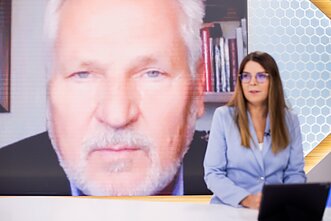
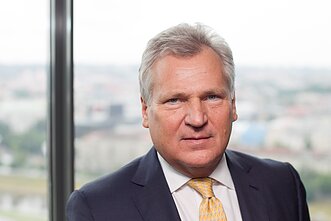
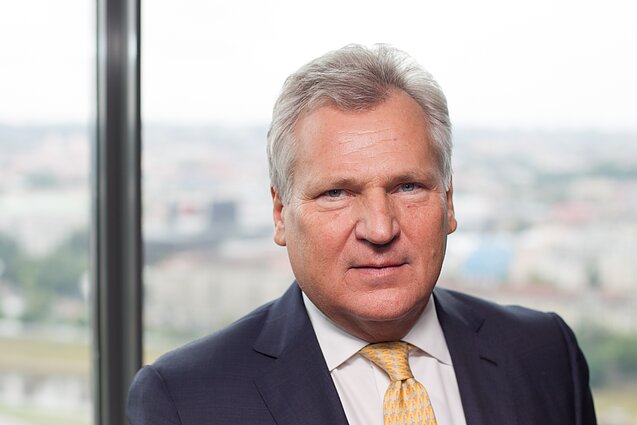
Kwaśniewski was Poland’s president from 1995 to 2005. In an interview with LRT, he discusses Western response to the Ukraine war, why alternative security arrangements to NATO would be “a dangerous waste of time”, and the state of Polish-Lithuanian relations.
Even before the world was shocked by Russia’s invasion of Ukraine in February, you were in Vilnius in 2014, before Moscow’s annexation of Crimea, and said: “The Ukraine problem can be a serious problem for the whole region and for Europe today, tomorrow and in the years to come.” Did you foresee this bloody war back then?
No, I did not foresee a bloody war. I had hope that [Russian President Vladimir] Putin would not take this criminal step, but I had no doubt that his aim for many years now has been keeping Ukraine under Russian influence. He is a man who is obsessed with the restoration of a great Russia, and he wants to go down in history as someone who is like Peter the Great or Catherine the Great or Stalin, someone who has built up Russia's territorial power and its position in the world. And Ukraine is simply essential for such a project.
That is why, over the years, we have seen aggressive moves by Putin – it was the annexation of Crimea in 2014, it was economic pressure before that, it was preventing Ukraine from signing an Association Agreement with the European Union in 2013. This was a very large number of hostile, unfriendly actions towards Ukraine.
I thought that military action was theoretically possible, but I hoped that Putin had the pragmatism not to make such a historic mistake. However, he did so on February 24, brutally attacking Ukraine without any reason. And today, he is continuing this war, which is directed not only against the Ukrainian armed forces, but also against the civilian population.
A few days ago, I visited Kyiv, Bucha, Borodianka, Hostomel and I saw it with my own eyes. Today, it is not military facilities that are being attacked by Putin; it is civilians who are being attacked, there is a desire to frighten them, to partially destroy them. So we are not just dealing with war, we are dealing with war crimes. And I certainly did not see this coming. To be honest, Putin has exceeded even my most pessimistic forecasts.
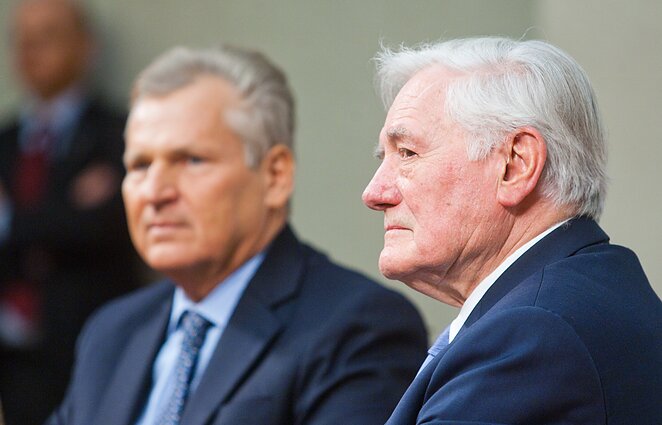
A decade earlier, when you and Lithuanian President Valdas Adamkus went to Kyiv following the so-called Orange Revolution, many experts say that this was a turning point in Russia-Ukraine relations. This is when Putin realised that Ukraine could slip out of his hands. Did you realise back then that this was the moment that could define European history?
This is a very important question, but before answering it, I will take the opportunity to express my respect and friendship to President Adamkus. He played an extremely constructive and useful role in our negotiations in late 2004.
To return to your question, of course, that is when the real dispute between Russia and Ukraine, and within Ukraine, became clear – what the Orange Revolution was about. People took to the streets 13 years after independence, carrying those orange symbols and demanding fair elections. And the presidential elections were rigged, no doubt about it. Putin supported the candidate, [Viktor] Yanukovych, who massively cheated. We, as the Western world – myself, President Adamkus, [former EU diplomacy chief] Javier Solana – stood on the side of those people who defended democracy, who defended their dignity.
And that is when this conflict really came to the fore. It was the first signal to Putin that Ukraine is on its own path, that Ukraine really wants to be a democratic state, that Ukraine is rejecting all those Soviet customs, Soviet lies. And for Putin, it was a big threat, not least because Ukraine is a big country that was previously in the Soviet Union, so the question for many Russians might have been: if the Ukrainians can be a democracy and build a democracy, why can’t we do that?
And I think that this was one of the important moments that shaped Putin’s thinking, but only shaped it in the worst way. Putin did not come to the conclusion that, since Ukraine can be more democratic, why can’t Russia be democratic? He has concluded that Russia will not be democratic, so we cannot allow Ukraine to become a democracy at any cost. And he has been working in that direction for many years.
Therefore, I agree that the Orange Revolution and 2004 can be seen as crucial from the perspective of the Russian-Ukrainian relations, but it had the greatest impact on the way Putin thought about Ukraine.
Tensions in our region have been further heightened by the EU sanctions on Kaliningrad transit. The influential publication Politico recently published an article entitled The Most Dangerous Place on Earth, referring specifically to the Suwałki corridor. Do you think that Putin would dare to attack NATO, and would it happen here on the Polish-Lithuanian border?
It is certainly possible. If he were to attack one of the NATO countries, Lithuania, Latvia, Estonia and Poland are certainly the first possible targets. The Suwałki corridor could be the pretext of choice, falsely presented by Putin’s propaganda.
Read more: Lithuania and Kaliningrad – updates
However, I would like to reassure us all – we are, after all, members of NATO. We are even tighter today than we were a week ago because of the NATO summit in Madrid. I have a special sentiment for Madrid, because in 1999 we, the Czech Republic and Hungary were admitted to NATO in that city, also during a NATO Summit.
NATO comes out of this summit stronger because it has clearly abandoned those naive notions that Russia can be dealt with, because NATO rightly recognises that Russia is the biggest threat. In addition, we will soon have new NATO members that are very valuable and important, Sweden and Finland. This means extending the border between Russia and NATO by 1,300 km. The eastern flank of NATO will be further strengthened, so we will have more instruments and more troops here in Latvia, Lithuania, Estonia, and Poland.
I think that these are all signals that should make it clear to Putin: do not take any aggressive action against these countries, because you will be responsible for triggering the Third World War. […]
Will they understand that? I think that some people will. Whether Putin understands the reality today so that he does not take any irresponsible decisions, I do not know. As I said earlier, I did not believe that Putin could go beyond pragmatism and attack Ukraine. But he did. I have hope today that Putin has enough pragmatism not to attack one of the NATO countries, but whether he will not do that, I do not know.
Western Europe and Eastern Europe have different ideas of what victory in the Ukraine war means. The countries of our region talk about the complete collapse of the Putin regime, while Western European leaders want to “save Putin’s face” “not to humiliate Russia”. Do you think that the countries of our region should think about new security alliances or is NATO still enough?
NATO is enough. NATO should be enough for now, because thinking about new alliances means that we are starting to build something from scratch. And we are in a situation today where we need to strengthen NATO first, strengthen the European Union and use these organisations to win.
Therefore, I am absolutely in favour of action to strengthen NATO, to strengthen the unity of the European Union, and I think that countries such as Lithuania, Estonia, or Poland have a key role to play here, so that we do not look for other solutions, which could be a dangerous waste of time at the moment.
We have nothing better today than NATO, we have nothing better than the European Union, and I think that at this stage, this has to be accepted, period.
As for these different reactions or attitudes to the war, in a sense, this has to be understood, we are more sensitive because we are close to Ukraine. Moreover, we know Russia better because of the historical circumstances, we have experienced first-hand what the Soviet Union was, we know what Russian, Soviet, again Russian propaganda looks like, we know how brazen it is, how it lies and so on.
However, for many people who are far away from Russia or Ukraine, somewhere in Spain, Portugal or Italy, it is not so obvious. But this war has meant that, in fact, support for Ukraine is much greater today than it was three months ago, and the rejection and condemnation of the Russian aggression are also greater than it was the case at the outbreak of the war. This is significant.
I understand that there are countries in Europe that have a much more favourable view of Russia, because of history, because of interests, because of the kind of anti-Americanism that existed in those countries, and I am talking about France and Germany.
However, it must also be made clear today that Chancellor [Olaf] Scholz, President [Emmanuel] Macron have been deceived many times by Putin, who is not telling them the truth, who has used absolutely false arguments, and he has lost his position there too. […]
Putin’s Russia of today cannot be a partner, cannot be perceived as we are, and we in the West simply have to stop being naive in relations with Russia. And I am talking most of all about France, Germany and the US – I remember well all the “resets” that they were proposing.
Eight years ago, when you were in Vilnius, you said that relations between Lithuania and Poland were of great importance for our entire region. How do you assess our bilateral relations today?
First of all, I was right then, because it is true that our relations have significance for the whole region. I think that this relationship is close today, and it needs to be close because of the Russian threat in particular, because of the need to support Ukraine.
Our relations have had different moments, and I have sometimes complained that the Lithuanian-Polish relationship is not what it should be. […]
I think that Polish-Lithuanian relations are good, we should actively strengthen them, and at the same time I return to the point I made at the time: the better the relations between Lithuania and Poland, the better it is for the whole region, and the louder our voice is heard in Europe and in the world, especially when there is no disagreement between Lithuania and Poland, and the more our voice is listened to.

Newsletter
Every Friday morning.