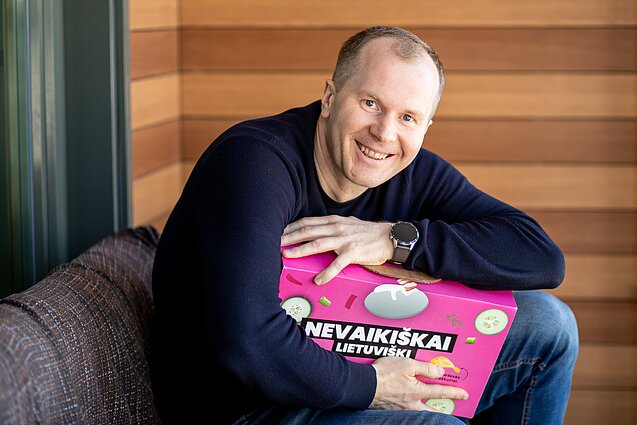
















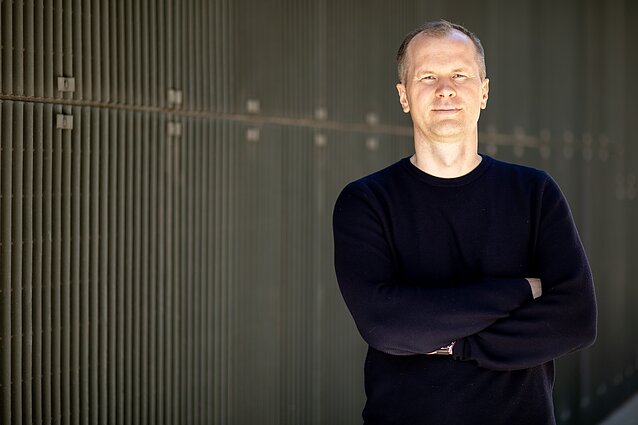
Lithuanians are a nation of potato fans, says Žilvinas Kulvinskis, one of the founders of the Lithuanian crisps producer Chazz. Still, the start-up’s path to success has not been easy. The Lithuanian-made chips in the flavours of cold beetroot soup and cepelinai have now won over the hearts of Lithuanians and foreigners alike.
Kulvinskis could talk about potatoes for hours on end, discussing their varieties, texture, and taste. But when he decided to quit his stable job a few months ago and fully concentrate on the crisps business, he heard it all.
“Some of my colleagues already knew about the brand and wished me well, but there were others who wondered: What, you are going to make crisps in Lithuania?” Kulvinskis recalls.
He had been developing the idea for five years. “Many, perhaps, who work for others think of having something of their own. I was no exception. It’s true that I have never been a crisp eater, but I do have some people at home who like them – and that’s what keeps the initial enthusiasm going,” says Kulvinskis.
Bringing crisps back to Lithuania
The idea for making crisps came gradually when Kulvinskis began to consider what to do. “At first, we thought of importing something we had never seen or tasted before, and we looked for ideas at international food exhibitions. We saw that there were no organic potato chips and other vegetable chips in Lithuania – but the niche probably seemed too small for big producers with their huge capacities.”
The only company that used to produce crisps in Lithuania moved to Poland. “Even though the vegetables grown by our farmers are perfectly suited for this purpose,” he says.
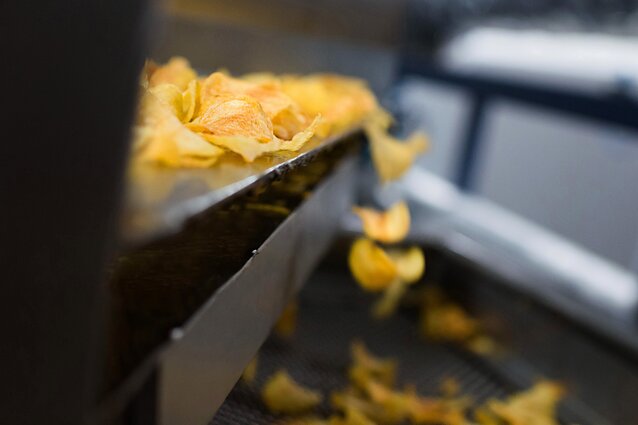
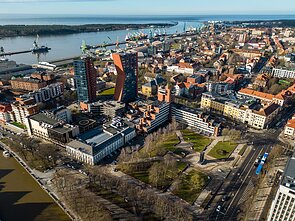
The team thus decided to open a crisp factory in Trakai, a town some 20 kilometres from Vilnius, and make a uniquely Lithuanian product from vegetables grown by local farmers.
They drew up a business plan, secured funding, sorted out what they were going to produce, set up a start-up and set out with the idea of exporting the product.
But it wasn’t all that simple – it took more than three years before the first crisp got to be baked.
“If someone asked me if I’d go into the production business again, I would think twice. Probably, it is much easier to create a mobile application or a digital product – if it works, you can expect returns in a year or even sooner, if not, you let go and start with a new idea. In the manufacturing business, nothing happens that quickly. But there is a different kind of glamour – building a tangible product from scratch, something you can see people enjoying,” says the entrepreneur.

Exporting to 23 countries
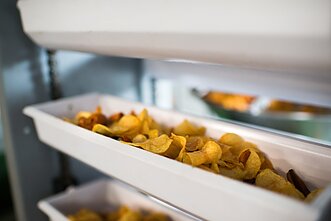
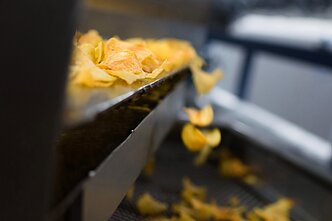
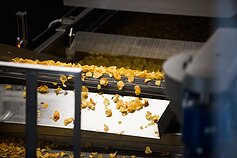
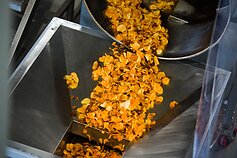
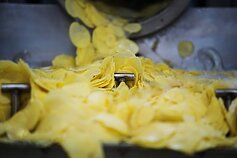
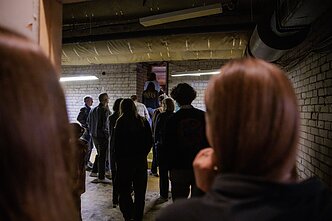
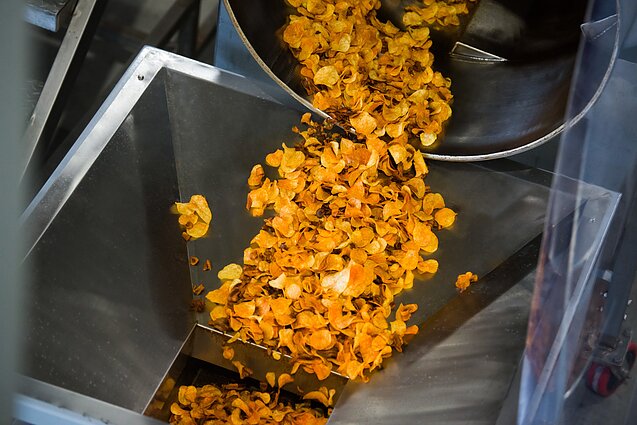
Visitors to the factory are often surprised to see a modern crisps production line, Kulvinskis smiles. “It's not a big one – we are relatively small, more of a craft producer. The big producers produce tens of tonnes of crisps per hour, while we produce a hundred times less,” he explains.
Finding workers was not a big challenge, he says, as young people are eager to work, especially in the office. “We have a lot of young people working for us, we give them a lot of freedom to create and do things, which motivates them a lot, and it also allows our communication to remain sharper and more youthful,” he says.
Since 2019, Lithuanian crisps have been sent to 23 countries around the world, including Greece, Israel, the United Arab Emirates and Malta.
“From the start, we realised that the product was not a mass product, so we concentrated on exports. This is what led to such a wide geography,” says Kulvinskis.
Šaltibarščiai and cepelinai-flavoured crisps
Just as the Lithuanian business was taking off, the global coronavirus pandemic hit. With a quarantine in place and a slowdown in exports, Kulvinskis’ business had two choices: “Either stop production or grow in Lithuania.”
“The quarantine could have been disastrous for us. At first it seemed so. But we found a way into the hearts of Lithuanians and decided to start e-commerce. We used social networks and suddenly we were hitting it off – people started buying crisps by the box.”
“We received lots of photos and even videos of children enjoying the delivery, a puppy or a cat climbing into a box of crisps. We saw which flavours were liked and which were liked less,” he says.

During one creative session, the team came up with an idea to pay tribute to traditional Lithuanian delicacies. “Maybe let's make crisps that taste like cepelinai or šaltibarščiai, the cold beetroot soup?” came the suggestion.
“The new flavours were also a way to say that we are the only Lithuanian crisps maker,” says Kulvinskis. “We are a small producer, so we can afford such experiments.”
More than six months later, the idea was realised and compliments started pouring in from all over the world. “Lithuanian communities all over the world started writing to us, telling us that they were tasting Lithuanian crisps during the Ethnic Flavours of the World Days, and people said they were taking these crisps as souvenirs. Lithuanian dishes are a real taste of nostalgia for compatriots living abroad,” smiles Kulvinskis.
The firm has also attracted the attention of foreign producers. Kulvinskis says that they still sometimes have to explain which side of the globe Lithuania is on.
“At the beginning of the year, at the world’s largest snack exhibition in Cologne, we heard compliments from foreign producers that Lithuanians in general are very innovative producers, are constantly looking for new flavours, have a fresh approach to the production market and delight with quality. There were also many people taking photos of our stand, including the producers of the famous Swiss chocolate. They said they were looking for inspiration for packaging,” he says.
He is most delighted that Lithuanians themselves are true patriots. “I think that’s what drives a lot of producers forward. Maybe we are not yet like the Finns, who look at all the labels and only buy products from their own country, but we are moving fast in that direction,” he says.
Lithuanians eat crisps like Americans
Although potatoes are a near-sacred vegetable for Lithuanians, they are not as avid crisp eaters as, for example, the British, according to Kulvinskis. Local eating habits are similar to those of the Americans, however, with young people particularly fond of the snack.
Asked if he allows his own children to eat crisps, he nods. On one condition, however. “We have a simple rule in our house – you can eat whatever you want, but you have to have eaten proper meal first because no snack should be substitute for meals. I have noticed that after a full dinner, my children almost never ask for crisps, and if they do, they don’t eat much,” says Kulvinskis.
Can a three-year-old Lithuanian crisps factory be called a successful business? Not yet, Kulvinskis smiles, but maybe it will be one within another year.
“When we became a visible and well-known start-up, others started asking for our support. The truth is that to grow, we still need the support of our fellow countrymen,” he concludes.

Newsletter
Every Friday morning.