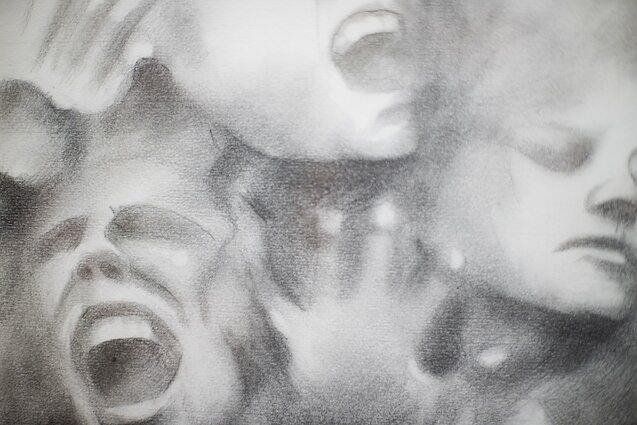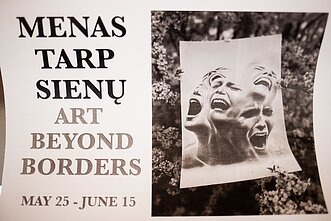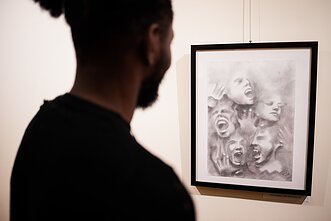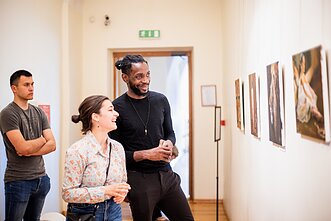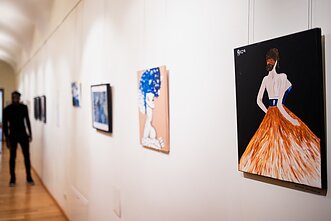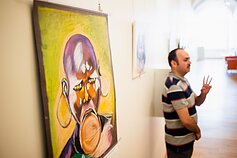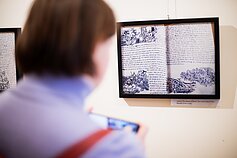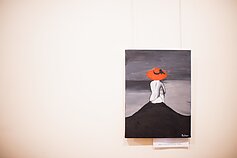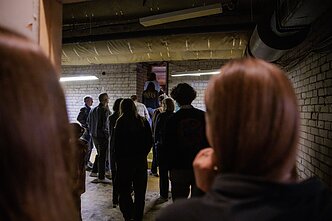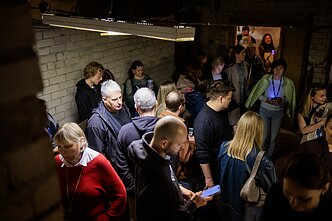
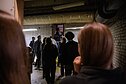



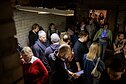



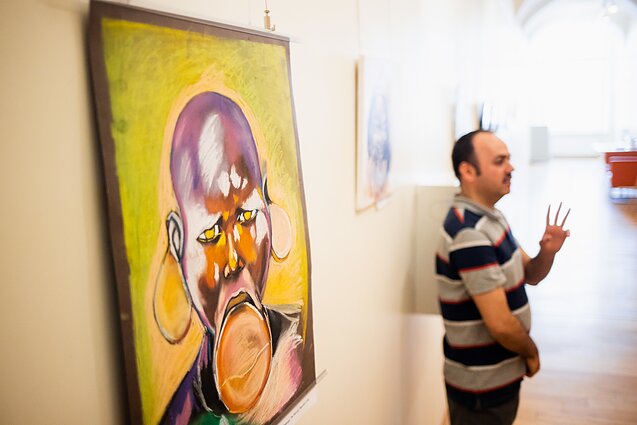
On May 25, an exhibition of works by migrants opened at the library of Vilnius University. Organised by the NGO Sienos Grupė (Border Group), it seeks to raise awareness of conditions faced by asylum seekers who have spent multiple months in detention in Lithuania.
Muthuke Ara, a pseudonym, was one of the thousands of people who crossed into Lithuania from Belarus last summer. Since then, he’s been confined to the Pabradė migrant camp.
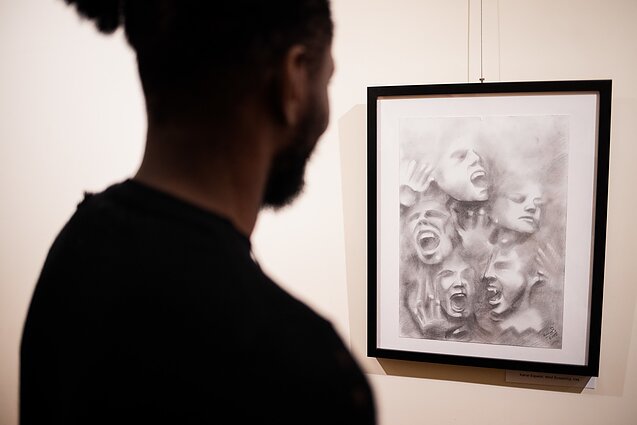
“When I want to paint, it’s usually to get out of the world and be in my own bubble. In the camp, it’s very difficult. When I paint, I have troubled thoughts and this is what I want to get out [by using] these paintings,” he said.
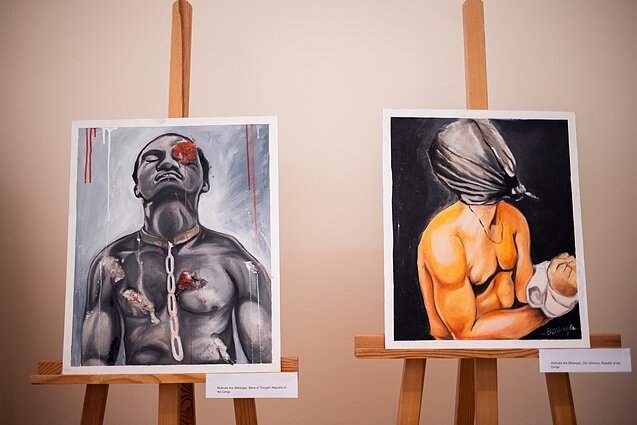
His work depicts images of a body in pain and distress – a motif that is also found in the paintings of other authors at the exhibition.
“This is a very strong message of how it is in the camps. I was painting and drawing differently before. After [I am released], I don’t want to draw like this again,” Ara added.
Last year, Lithuania, Latvia, and Poland saw thousands of people, mostly from Africa and the Middle East, enter the country irregularly from Belarus. Officials in Brussels and Vilnius say the Minsk regime launched its “hybrid attack” in response to EU sanctions over repressions against the Belarusian opposition.
But the same people have now spent more than half a year in detention. For organisers of the exhibition, art is a way of making sure they are not forgotten.
“Art is a way for us to form a bridge with these people,” Marija Rakickaja, a volunteer with the Sienos Grupė and the organiser of the exhibition, told several dozen people gathered at the opening.
“It is a way for them to survive, to send us a message about themselves, which allows us to find out more about them, about the person that is behind this term “migrant” that we always see in the media,” she said.
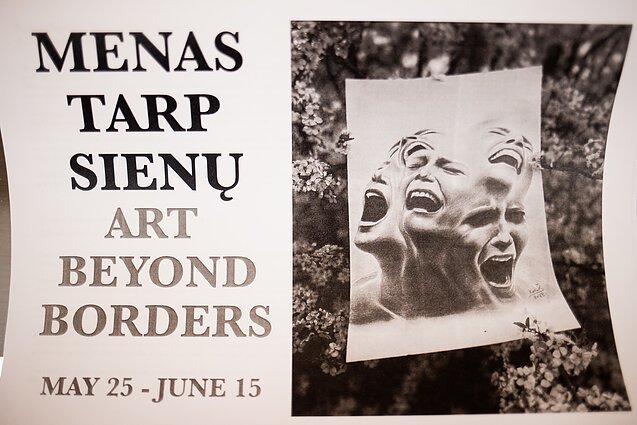
Later, speaking to LRT.lt, Rakickaja said the aim was to “involve the society more”.
“Art is a very good tool for the people themselves to survive their routine, to transmit their message because they have no ways to do it,” she said. “We don’t speak much about these people, how they live, what they face, who they are, and what they feel. And art is this universal thing to send a message to the society that these are people with their own experiences, wishes, and dreams.”
Ara, the artist from Congo, was flanked by one of two plain-clothed officers from the State Border Guard Service (VSAT). They escorted him from the Pabradė Foreigners’ Registration Centre (URC).
“We are very happy that one of our authors was allowed to take part in this exhibition,” said Rakickaja.
Among those helping to provide painting supplies to the migrants is Ewa Wołkanowska-Kołodziej, another activist with the Sienos Grupė.
“The migrants and we [the NGO] call the migrant centres “prisons”,” she said. “The most difficult thing is that the people do not know when they will be released.”
Lithuania may now allow its courts to extend the detention period to 18 months.
“The people are waiting, many have depression, they are committing self-harm,” according to Wołkanowska-Kołodziej.
In its May 6 report, Doctors Without Borders (MSF) called on the Lithuanian government to end the detention of some 2,500 people. MSF said it had witnessed “abuse, violence, and mental health distress among detainees”.
The country’s authorities do provide the opportunity for people to choose voluntary return to their country of origin and are offering pay-outs of up to 1,000 euros. For those seeking to remain in Europe, however, the prospects of gaining asylum are slim.
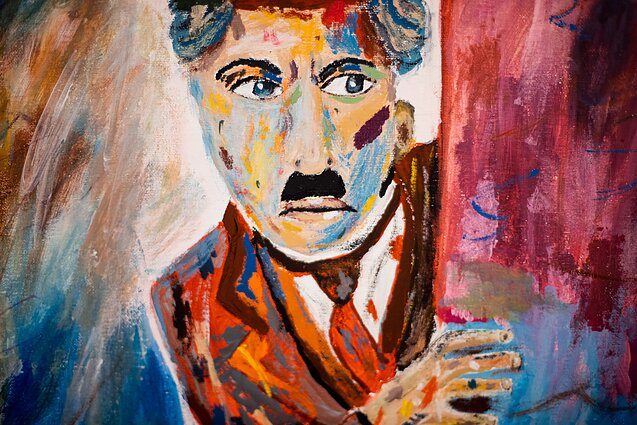
“One guy at the Kybartai [migrant centre] said he would lose his mind, but he wakes up, has breakfast, and spends six hours working – painting,” said Wołkanowska-Kołodziej. “Because he said people liked what he did, people write to him, asking to buy [his artwork], the VSAT also like it.”
Officials have previously slammed Sienos Grupė volunteers, who focus their efforts on the border and in the migrant centres, for allegedly working against the state. The activists have also been investigated for migrant smuggling, but the case was later dropped.
“My friends and I feel like we are doing this for Lithuania,” said Wołkanowska-Kołodziej. “Our responsibility as citizens is that we are helping people not die in our forests.”
Since last year, Belarusian authorities have been encouraging people from the Middle East and Africa to make their way to Minsk and then channelling them toward EU borders. Belarusian officers would then prevent those pushed back by Lithuanian or Polish border guards from returning. This has left the migrants trapped in forests along the border, with fatalities reported in Poland and Belarus.
“We see that people are unable to request asylum legally because the Belarusian side does not allow them to reach [the official border checkpoints],” according to Wołkanowska-Kołodziej. “It’s a fiction that someone can request asylum legally.”
Lithuanian officials maintain that people can lodge asylum claims at the official border crossing points, as well as in its diplomatic representations.
“We see that people are often beaten up by the Belarusians, are bitten by dogs, and we have also noticed recently sexual violence against women on the Belarusian side,” Wołkanowska-Kołodziej said.
“Now, only people who are forced by Belarus are going to Lithuania. Because normal people know that Lithuania puts people who ask for asylum in jail. They say anywhere but Lithuania.”
The exhibition welcomes visitors at the Library of Vilnius University, 3 Universiteto Street.

Newsletter
Every Friday morning.