















As available housing for Ukrainian refugees, supplied by volunteers, in Lithuania’s main cities is running out, municipalities are calling on the central government to consider compensation mechanisms. Transport operators have also approached the government about covering free transportation for Ukrainians.
Ukrainian Aliona arrived in Lithuania with her daughter and her dog after driving for six days. She ended up in Vilnius without any prior plan: volunteers at the border simply offered her a ride to the capital city. Aliona does not even know where she will go from the refugee registration centre.
“Vilnius is the capital, there are more opportunities here, and I came with my teenaged daughter. I know Klaipėda is a wonderful city and I know there are other cities, but I haven’t made up my mind yet... The only place I’m willing to travel is if they say the war is over and I can go back to Ukraine,” she tells LRT TV. Her immediate plans are to look for a job and a home.
Strong Together (Stiprūs Kartu), an organisation that is helping Ukrainian refugees to find accommodation in Lithuania, currently has enough housing for 10,000 people. The number of people wanting to move in is currently half that. But the reserve is fast dwindling, volunteers warn.

“This is especially true for Lithuania's major cities, Vilnius and Klaipėda. So far, there are still some [housing left], but there is a lot of concern,” says Giedrius Galdikas, communications coordinator at Strong Together.
Volunteers advise that people willing to offer accommodation to refugees should consider whether they could host them for at least three months.
Need for compensations
Municipal authorities say that the issue of compensation may soon be raised, if hosts are to be expected to accommodate more refugees and for longer periods of time.
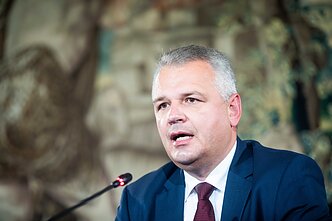
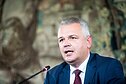
“Are we treating this aid as a donation, as a gift? How long can it be appealed for, a month, two, three?” says Mindaugas Sinkevičius, president of the Association of Municipalities. “Should we ask that the government look for a compensation mechanism for people willing to help?” The compensation, he adds, could be a fixed amount of money.

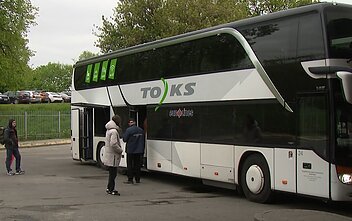
Some bus companies are also providing free transportation to Ukrainian citizens – all they have to do is present a passport.
“The agreement is that when we arrive at a bus station, we take you and drive you to Klaipėda, Šiauliai, Panevėžys for free. But it is not the case that a person with a Ukrainian passport can go anywhere for free,” says Linas Skardžiukas, the head of UAB Kautra.
Some carriers transport people from Ukraine for free. The Lithuanian Passenger Transport Association is asking the government to consider compensations.
Possibilities to work
Meanwhile, Prime Minister Ingrida Šimonytė has suggested that Ukrainians can soon start earning their own money – both for housing and transport.
“It seems to me that the most important thing now is to help people settle in, and then the mechanisms and support will start to work,” she said.
According to the Migration Department, almost 14,000 Ukrainians have arrived in Lithuania since the start of the war.

Newsletter
Every Friday morning.