








Several Lithuanian supermarket chains have announced they will stop stocking Russian products, a reaction to Moscow’s invasion of Ukraine. Industry representatives say they would be hard-pressed if they had to give up raw materials from Russia.
Norfa is one of the supermarket chains in Lithuania that decided to give up importing Russian products.
“We have not yet decided how to approach it, but life is forcing us to give up [Russian products],” Dainius Dundulis, the head of Norfa, told LRT.lt on Thursday. “We don’t stock many Russian products. We have more Ukrainians ones. There’s a lot of uncertainty about that too.”
According to Dundulis, Norfa already stopped importing Belarusian goods after Minsk hijacked a Vilnius-bound Ryanair flight in order to arrest a Belarusian dissident last May.
Some shoppers have enquired about the removed Belarusian products and Norfa expects that some will miss Russian goods too.

Maxima, Lithuania’s biggest supermarket chain, is also giving up Russian and Belarusian products, according to the company’s communications chief Ernesta Dapkienė.
“We made a decision today to take goods made in Russia and Belarus off our shelves and suspend further orders from suppliers in these countries,” she told LRT.lt on Thursday.
Alcohol accounts for the bulk of Russian products sold by Maxima, according to Dapkienė.
Two other chains, Lidl and Iki, told LRT.lt that they did not import any Russian or Belarusian products.
Looking for alternative suppliers
The Lithuanian Confederation of Industrialists (LPK) says that Lithuania has not been exporting much to Russia since 2014. However, many Lithuanian manufacturers are dependent on Russian imports of fossil fuels, metals, and timber.
“Looking ahead, businesses should diversify their risks and look for alternatives,” Vidmantas Janulevičius, the president of the LKP, told LRT.lt.

“Finding alternatives to energy resources will be difficult,” he added. “But they [businesses] will search and perhaps they can buy fossil fuels from other countries. There’s willingness to talk with Asian countries, the Middle East in order to have alternatives.”
Businesses would be particularly hard-pressed if they were cut off from Russian gas, according to Janulevičius. This could happen, if Russia were disconnected from the SWIFT global interbank payments system.
SEB Bank economist Tadas Povilauskas says that exports of Lithuanian-made goods to Russia were rather small, about 370 million euros or 1.7 percent of the total.
However, giving up Russian imports would be a challenge. “If we include energy imports, they totalled 4.6 billion euros in 2021 or 12 percent of our total imports,” he said. “If there are disturbances or restrictions, we will feel it.”
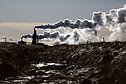
Orlen Lietuva, an oil refinery in northern Lithuania, would be hit hard, for example, as it mostly processes Russian oil.

However, cutting other imports – timber, metals, fertilisers - would be painful in the short term as well, according to Povilauskas. “The markets for these raw materials have been tight recently. If imports from Russia disappeared, it would be difficult to find new partners immediately,” he said.
However, according to Andrius Romanovskis, the president of the Lithuanian Business Confederation, cutting all ties with Russia and Belarus is something that Lithuanian companies should do.
“This is unprecedented in the last 50 years of European history,” he told LRT.lt, referring to Russia’s invasion of Ukraine. “It is evident that one should do business only in a safe environment, safe country, functioning state. Russia is now turning itself into a pariah state. Clearly, we should not, we can’t, and it’s dangerous to have anything to do with such countries.”

Newsletter
Every Friday morning.