













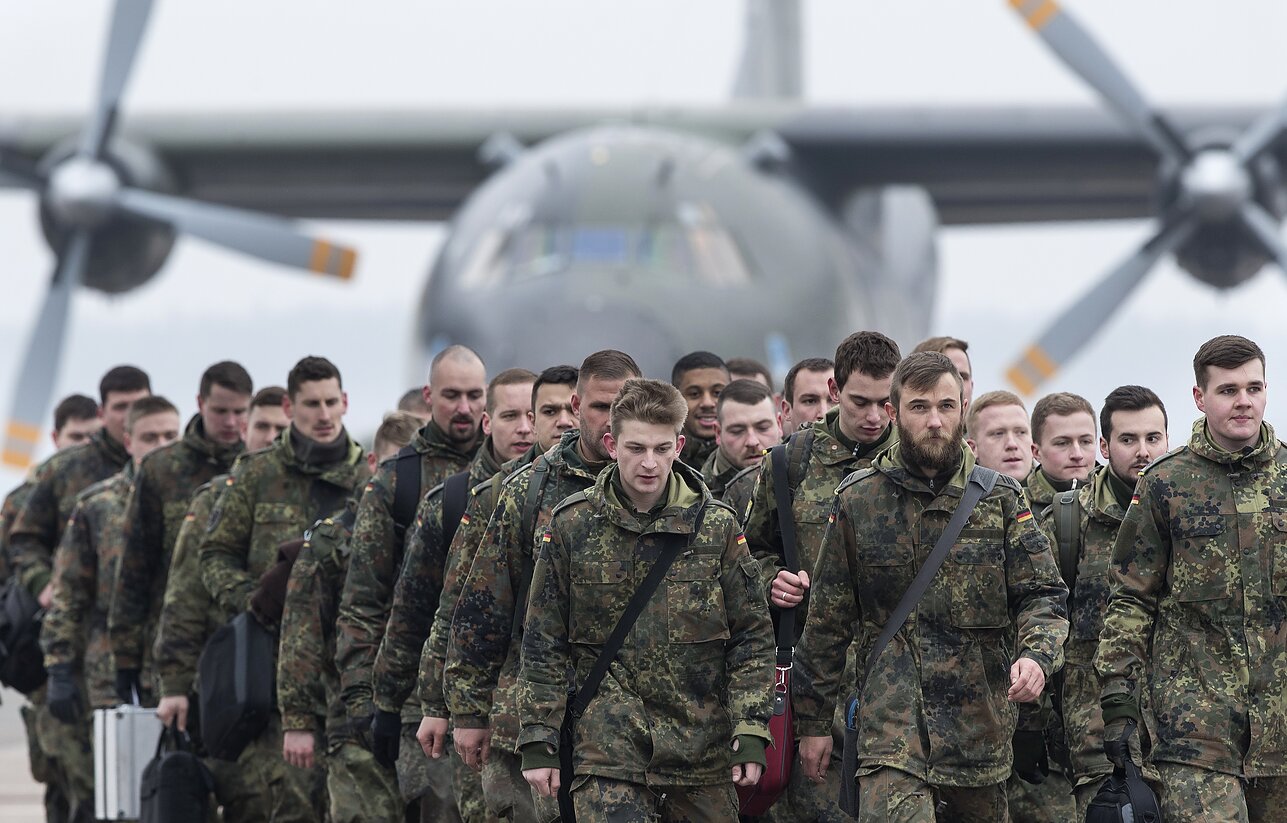
Germany's decision to send more troops to NATO's multinational battalion in Lithuania is a positive and important step, Defence Minister Arvydas Anušauskas said on Monday evening, adding that other allies are expected to follow suit.
German Defence Minister Christine Lambrecht said earlier on Monday that her country would send up to 350 more soldiers to Lithuania to help strengthen NATO's eastern flank.
The United Kingdom also said on Monday that it would send 350 additional troops to Poland.
“Germany has announced its intention to reinforce the enhanced Forward Presence Battle Group with additional capabilities, which it both needs and lacks,” he told BNS. “For our part, we are satisfied with this decision.”
“This is an important sign. Germany, like other NATO countries, is sending its reinforcement because the security situation in the region is very tense,” he said. “Our concern about our security is not diminishing, so Germany's move is quite positive.”
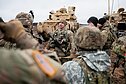
German troops make up half of the 1,200-strong battle group stationed in Rukla, central Lithuania. Belgium, the Czech Republic, Luxembourg, the Netherlands and Norway have also contributed troops to the German-led unit.

According to Anušauskas, Germany's decision “doesn't come as a surprise,” because each country participating in the battle group has pre-planned the size of the reinforcements it can send if needed.
The minister confirmed that other countries are also planning to boost their troop deployment on a smaller scale, adding that Lithuania is ready to receive them.

“The Netherlands is planning to reinforce the battalion's battlegroup as well. I believe there will be news about other allies in the near future, too," he said.
NATO deployed the battle group to Lithuania exactly five years ago in response to Russian aggression in Ukraine and its military activity in the region.
Over 15,000 troops from nine NATO countries have trained with the battle group, rotating every six months, and around 6,000 military vehicles have come to Lithuania since the start of the deployment in 2017.

Newsletter
Every Friday morning.