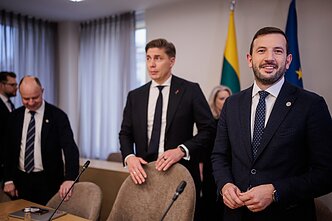




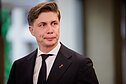



Russia's military buildup on its border with Ukraine is a threat to the entire region, but attempts to recreate zones of influence will not be tolerated, Lithuanian President Gitanas Nausėda said in Ukraine on Monday.
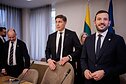
"Our threats and security are common. I believe that we will make every effort to mobilize our allies, form coalitions and convince hesitant states," Nausėda said after meeting with his Polish and Ukrainian counterparts, Andrzej Duda and Volodymyr Zelensky.
According to the Lithuanian president, the EU's message to Russia is clear: "In the event of aggression against Ukraine, the consequences will be severe, and an attempt to draw red lines and re-establish zones of influence is unacceptable and will not be tolerated."
Each country is free to decide its own future, Nausėda said.
"No one has a veto over the choices made by sovereign, independent and democratic states," he added.
Russia has amassed around 100,000 troops on its border with Ukraine in recent weeks.

NATO has warned Moscow that it would face large-scale "strategic and economic" consequences in case of an invasion. Russia rejects such concerns and says its moves are aimed at preventing Ukraine from joining NATO.
Moscow last week published its security proposals addressed to NATO and the US, demanding that the alliance should not admit any new members or establish military bases in ex-Soviet countries.
The proposals came in the wake of Russia's demand that NATO withdraw its commitment to admit Georgia and Ukraine in the future.
Duda said that Russia has no right to issue ultimatums and should withdraw its troops from Ukraine's borders.
"Speaking about who should make at least a step back here, it has to be done by Russia, which has for 13 years been carrying out aggressive acts and wants to bring back imperialist policies," he said.

According to the Polish president, Western countries must take "preventive measures and firmly demand a withdrawal".
Zelensky underlined that the EU and NATO response to Russia should be preventive, rather than follow an invasion of Ukraine.
"What will be left after the attack is carried out? That's the question," the Ukrainian leader said. "Thinking that the Russian president is going to back down. Well, I don't think we should believe in that".
"There have to be very powerful preventive steps and sanctions so that he does not even think of moving these weapons or increasing his military power," he added.

Newsletter
Every Friday morning.