














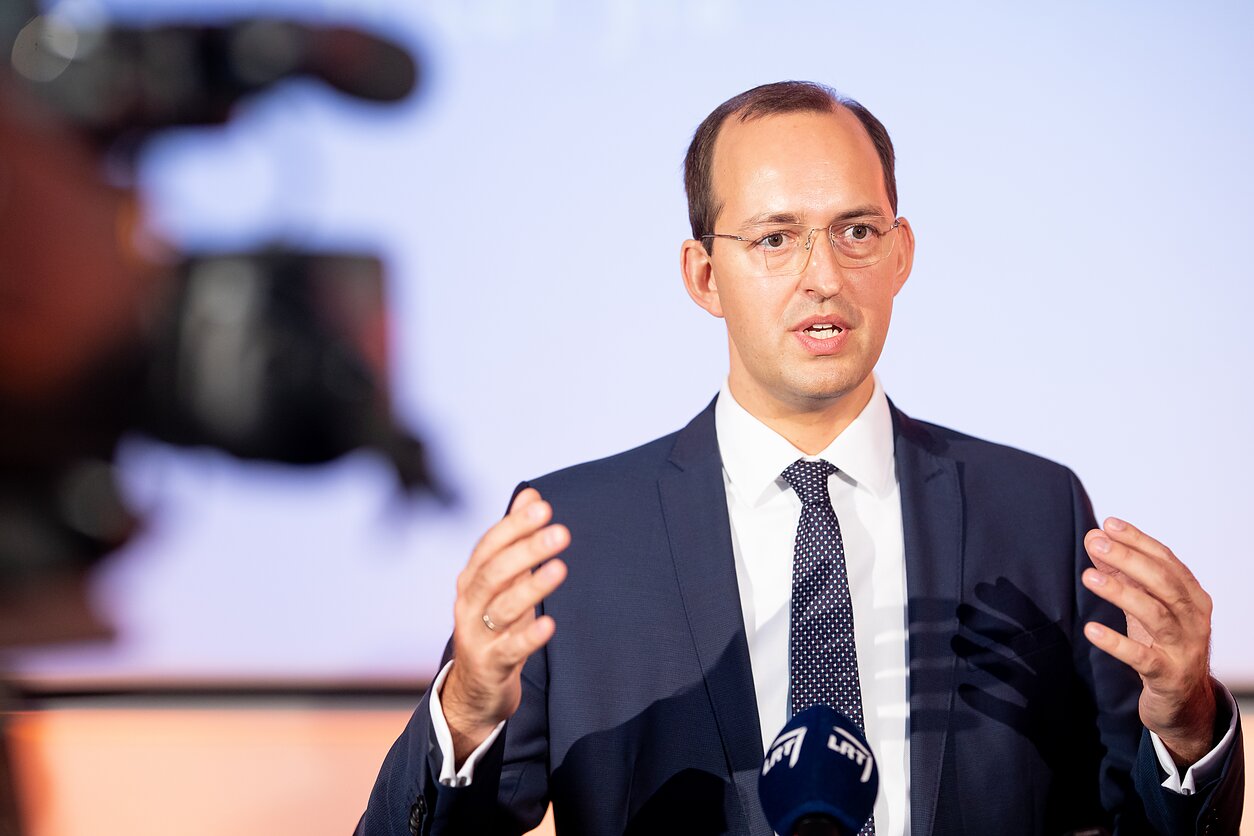
The Lithuanian government will inform the public once it has found a solution on how to halt Belaruskali potash fertiliser shipments across the country, Transport Minister Marius Skuodis said on Wednesday.
“In this situation, there are a lot of people to blame and a lot of unanswered problems and questions,” Skuodis told reporters.
“From the amendments to the contract that should have been submitted to the institutions responsible for national security to the advance payments that were accepted – these are the questions that we will answer,” he said.
The minister said that there “are a number of solutions” for how to stop the transit of Belaruskali fertilisers.
“I don't want to name them prematurely or give any dates so as not to repeat mistakes,” he said. “Once we agree and are confident about the decisions that depend on us, then we'll communicate them very clearly.”
Read more: Lithuanian government crisis – how did it get here?

Last week, Skuodis and Foreign Minister Gabrielius Landsbergis handed in their resignation letters after it turned out that Belaruskali product shipments via Lithuania did not stop once US sanctions on Belarus' potash giant came into force on December 8.
Late on Tuesday, Prime Minister Ingrida Šimonytė announced that she would not accept the ministers' resignations.
Earlier on Tuesday, the management board of Lietuvos Geležinkeliai (Lithuanian Railways, LTG) announced that the company's CEO Mantas Bartuška would step down after a “transition period” in order to de-escalate the situation.
Skuodis said on Wednesday that he did not know how long Bartuška's transition period would last.
“This is up to the board,” he said. “The board will comment on their decisions when they make them.”

Newsletter
Every Friday morning.