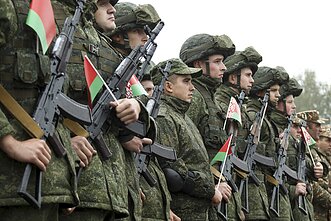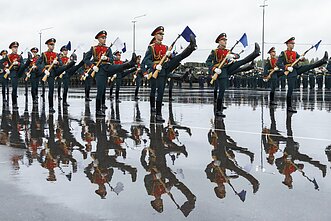

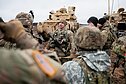










Lithuania is sending several observers to Zapad 2021, the military drills organised by Moscow and Minsk in Belarus, Lithuania’s Defense Minister Arvydas Anušauskas says.
“Two or three people should be there from our country next week, in fact during the last days of the active phase of the war games. They will represent Lithuania and will observe the military exercise,” he told BNS on Friday.
He pointed out, however, that “the observers, same as politicians [...] who are not related directly with the management of the armed forces, attend only demonstration stages, they are shown the official scenarios”.
“Meanwhile, we have to collect all information using other sources, intelligence, in order to see the actual picture,” Anušauskas explained.
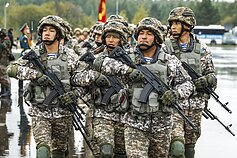
On Friday, Russian and Belarusian troops launched the active phase of vast military exercises Zapad 2021.
According to the Russian defence ministry, the week-long active phase of the drills would take place at nine sites in Russia and five sites in Belarus.
Read more: Large-scale military drills on Baltic borders stoke anxieties in Vilnius and Warsaw

The large-scale joint drills retained “a certain level of aggressiveness”, the Lithuanian minister said, adding that Lithuania is ready for various scenarios. He assured, however, that there were no grounds to expect a potential attack.
“Despite the large scale of the exercise and tensions in the region, which always accompany such drills, we on our part have worked out plans, scenarios, responses to any turns in the course of events. However, there are currently no grounds to suspect that there might be any conventional attack against NATO countries under the cover of the military exercise,” Anušauskas said.
Russia's Western Military District reported earlier that the exercises would involve approximately 200,000 personnel, more than 80 planes and helicopters, and up to 760 units of military equipment.
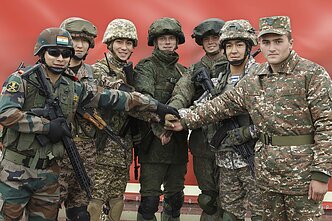
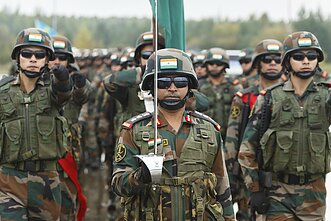
Military personnel from Armenia, India, Kazakhstan, Kyrgyzstan, Mongolia, Pakistan and Sri Lanka are also due to participate.
In Belarus, the drills would involve about 13,000 troops, including approximately 2,500 troops from Russia, Minsk institutions reported.

Newsletter
Every Friday morning.