














Just like today, Lithuania in the 16th century was a refuge for Russians fleeing persecution. With geopolitical fights of today obscuring the past ties, what is the cultural legacy of the Russian language in Lithuania? Denis Kišinevskij reports.
The article originally appeared in Russian on LRT Novosti.
Modern researchers have not come to a consensus on what to call the language spoken in the Grand Duchy of Lithuania. The terms differ depending on country, with Lithuanians referring to it as Russian or Ruthenian, Ukrainians – Old Ukrainian, Belarusians – Old Belarusian, and Polish people calling it prosta(ja) mova (про́ста мова in Cyrillic), meaning simple talk, simple Ruthenian.
Today, the history of the Grand Duchy is being taught extensively in schools and universities. However, the Slavic elements of the Duchy and its population are often left out.
“We see the old history of Lithuania as a kind of tale of kings, where Birutė and Kęstutis ride on horseback by the banks of the River Dubysa and sing in Lithuanian,” says historian Alfredas Bumblauskas. “In what language was the administration of the Grand Duchy of Lithuania organised? In Old Belarusian. And no one spoke a word of Lithuanian.”
According to him, many of the most prominent figures of the Lithuanian nobility, such as the Sapieha, Tyszkiewicz, Valovich, Chodkiewicz families, either came from Kievan Rus or followed the traditions of that region.
Even Grand Duke Gediminas eventually started to call himself “the king of Lithuanians and Russians”. The territory of the Grand Duchy of Lithuania, having expanded to the cities of Polotsk, Hrodna, Berestia, Vitebsk, Minsk, Turov, Pinsk and others, included more of the Russian lands than the original Lithuanian.

To power through the royalty
It is unclear when exactly the Old Russian language took root in the territory of present-day Lithuania, but it could be linked to Eastern Christianity. Many of the Lithuanian nobility were Orthodox Christians, and, with the Duchy expanding to the east and south, Old Russian became the dominant language.
It was understood by most of the population and used to communicate with the neighbouring Poles.
“The Russian mova went through four stages in its development in the Grand Duchy of Lithuania and the Kingdom of Poland,” writes Professor Sergey Temchin, the leading researcher at the Institute of the Lithuanian Language. “The religious factor played its role only in the first and third stages.”
The first stage was associated with the adoption of the Old Russian language – in a version which was already partly Polonized – among ethnic Lithuanians even before their official adoption of Catholicism in 1387.
It became so prominent that even Latin, to which the Duchy switched following its conversion to Catholicism, could not entirely replace it.
From the middle of the 14th century, Old Russian was used by the Grand Duchy of Lithuania in international affairs – for example, in the treaty with the Polish King Casimir III in 1352 and 1366.
According to Temchin, Old Russian became even more prominent due to its convenience for communication with East Slavic regions that belonged to the Duchy, as well as with West Slavic countries.
“There is nothing surprising about the fact that the Lithuanian nobility, having fallen under the spell of the Russian Orthodox culture and faith, accepted Orthodoxy and even became its ascetics,” says Andrei Fomin, historian and co-author of the book Russians in the History and Culture of Lithuania.
One of the examples, according to him, could be prince Rimantas, son of Grand Duke Traidenis. After becoming an Orthodox monk, Rimantas founded the very first Orthodox monastery in the Grand Duchy. He later underwent canonisation and became Saint Eliseus Lavrishevski.
Charitina of Lithuania, who may have been related to 13th-century King Mindaugas, became a nun in Novgorod, then an abbess of the Church of Saint Peter and Saint Paul, and was later canonised as well.
The eldest son of King Mindaugas, Voyshelk, was also an Orthodox monk. Such cases paved the way for Old Russian to prominence.
The country of Russian books
The first printed book in the Russian language was published in Vilnius, some 25 years before the very first printed book appeared in Lithuanian, the Simple Words of Catechism by Martynas Mažvydas. The latter was published in Prussian Königsberg (present-day Kaliningrad).
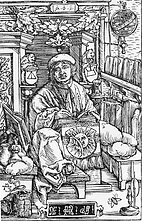
The 16th century was the heyday of Russian writing and culture. The famous scholar Francysk Skaryna was the first to print books in Lithuania. In 1522, he opened the first printing house in Vilnius and published The Little Travel Book, followed by Apostol in 1525.
Skaryna devoted his books to the “people of the Russian language”. His books were decorated with bright drawings and engravings so that his “Russian brothers could better understand what was written”. Skaryna loved Lithuania and considered serving the land to be his noble duty.
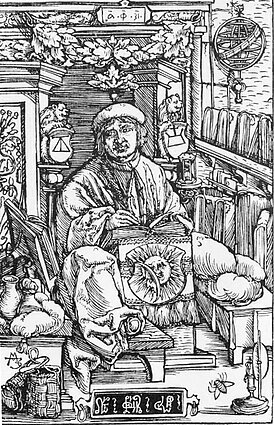
Symon Budny, a book printer who lived from 1530 to 1593 and taught in Vilnius, continued Skaryna's legacy. He founded a printing house in 1562 and published Catechism, in which he urged readers to love and appreciate the “glorious Slavic language”.
Another printer Wasyl Ciapiński, regarded as one of the earlier initiators of book printing in Belarusian, worked in Vilnius. In 1580, he published the Moscow Gospel in Russian.
An island of freedom
Recently, many publicists, scientists, opposition representatives, journalists, writers have emigrated from Russia to Europe and the United States due to oppression from the regime.
Similar developments were happening in the 16th century.
Famous book printers Ivan Fyodorov and Pyotr Mstislavets founded a printing house in Moscow and built a printing press. In 1564, Ivan Fedorov published his first book, The Apostol. However, their work was soon disrupted by Tsar Ivan the Terrible, who burned down the printing house.
They then fled to Vilnius in 1566, where they were welcomed by Grand Duke Sigismund II Augustus.
“In the 16th century, Lithuania became the centre of book printing in the Russian language. In Lithuanian printing houses, 385 books were published in Russian . Out of these, 185 different books were published in Vilnius,” says Fomin.

Lithuania at the origins of Russian literature
Meletius Smotrytsky (1577–1633) was famous for his works not only in Lithuania, but also in other countries. The future cleric originally studied at the school of Prince Ostrogski, and later at Vilnius University, then became the abbot of the Vilnius monastery of the Holy Spirit. In 1619, he published the first-ever Slavonic Grammar with Correct Syntax in Vievis.
For 200 years since its publication, Smotrytsky's book was the standard grammar book that schoolchildren who lived in the territories of modern Lithuania, Russia, Ukraine, and Belarus would study from.
The first Russian poet Symeon Polotsky, who lived in 1629-1680, also studied from Smotrytsky’s grammar book. He was born in Polotsk, studied in Kyiv, and then at Vilnius University.
Having worked in Vilnius for some time after graduation, he returned to Polotsk. In 1664, at the invitation of Tsar Alexei Mikhailovich, Polotsky moved to Moscow, where he served as an educator and mentor of the tsar's children. Among his pupils was the future Emperor Peter I.
Through the years and distance
After the third partition of the Polish-Lithuanian Commonwealth in 1795, most of the Lithuanian lands were taken by the Russian Empire, and the Ruthenian language at that time had already given way to Polish.
What happened to the Russian language further, when Lithuania was undergoing its revival as a nation and declared independence?
“The Russian language we speak today, that is, the established Russian language, settled in the territory of modern Lithuania relatively late: at the end of the 18th century,” says Pavel Lavrinets, head of the Department of Russian Philology at Vilnius University.

“Despite the fact that, seemingly, no great literary works in Russian were published in this territory, the language was still spoken and written in,” he adds.
The famous Lithuanian-born writer Yury Yurkun wrote in Russian a wonderful novel, Swedish Gloves. It is a nostalgic work, in which the author writes a lot about Vilnius, the city of his childhood. However, he was no longer there when he wrote this novel.”
Complex history
According to Lavrinets, the famous poet Sasha Chorny ended up in Lithuania after the 1917 revolution as well. Some of his famous works were also written here.
Lavrinets points out that among those who were born and raised in Lithuania, yet wrote in Russian, an example could be Grigory Kanovich, one of best-known writers of Lithuanian-Jewish literature in Russian. He worked in Vilnius and currently lives in Israel.
Today, the attitude towards the modern Russian language is complicated due to the policy of Russification during the Tsarist era and, later, the Soviet occupation. However, the language has never been alien to Lithuania, or – more recently – Europe.
“About six million Russians live in the countries of the European community and there are obviously even more Russian-speakers,” said Lavrinets, adding that it's important to study the Russian language in Lithuania from the social, cultural, and historical perspectives despite the stigma that the language carries. “In modern Lithuania, everything is worthy of study, research and respect – everything that is relevant today.“

Newsletter
Every Friday morning.