









This year, the world celebrates the 100th anniversary of Andrei Sakharov, a prominent Russian scientist, public figure, and human rights activist. Lithuanian poet and dissident Tomas Venclova compares his work to the likes of Mahatma Gandhi or Martin Luther King.
Andrei Sakharov was born on May 21, 1921. He was awarded the Nobel Peace Prize in 1975.
A developer of thermonuclear weapons, he was at the same time an active campaigner for disarmament. He also campaigned for free speech in the Soviet Union and opposed compulsory treatment in psychiatric hospitals.
After he condemned the Soviet invasion of Afghanistan, Sakharov had all of his awards taken away, and, in 1980, he was exiled from Moscow together with his wife Elena Bonner. Only in 1986 was he allowed to return by the Soviet reformist leader Mikhail Gorbachev.
“He was our hope for a new future, but when he died, there was a feeling that we were burying our hopes,” said the journalist and photographer Yuri Rost.
Sakharov’s work also greatly inspired Lithuanian intellectuals engaged in dissident movements. In 1976, Viktoras Petkus, together with Tomas Venclova and other activists, founded the Lithuanian Helsinki Group, a dissident organisation that wrote reports on human rights violations in the Soviet Union.

Sakharov visited Vilnius to take part in the trial of his Muscovite friend, fellow human rights activist Sergei Kovalev. The latter was arrested in 1974 for supporting Lithuanian dissidents and sentenced to ten years in prison.
As Tomas Venclova notes, it was at that exact time that Sakharov was supposed to accept the Nobel Peace Prize in Oslo. Since he was forbidden to travel abroad, his wife Elena Bonner went to Norway to accept the award on his behalf.
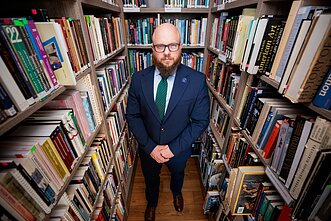
Venclova, a Lithuanian poet, scholar, and one of the founders of the Lithuanian Helsinki Group, spoke to LRT.lt on the occasion of Sakharov’s upcoming 100th anniversary.
This year, we celebrate the 100th anniversary of Andrei Sakharov. What does this date mean to you?
A significant shift in the history of the twentieth century is associated with the name of Andrei Sakharov: the collapse of the totalitarian regime in the USSR. It was then that the Soviet empire collapsed and Eastern Europe, including Lithuania, was liberated. Modern Russia calls this a “geopolitical catastrophe”.

In fact, it was a huge victory for mankind and all the people of the USSR, including Russians themselves. There were many factors behind the victory, not least the dissident movement. Andrei Sakharov was its central figure. It was he who proved, in our area, that pushing for human rights with peaceful, non-violent means is the best way to overcome slavery. Largely due to this the Soviet regime collapsed without war or excessive bloodshed. This is Sakharov’s historical merit that cannot be forgotten.
I knew Andrei Dmitrievich very little, but he had been an influence on my worldview for decades, and still is. The only short encounter I had with him remains one of the key memories of my life.
Sakharov is one of the creators of the hydrogen bomb. He then immediately took it upon himself to protect humanity from his own invention. Are there any other similar examples of fearlessness and humanism in history?
Andrei Sakharov was a prominent physicist and worked on developing weapons capable of destroying civilization. He, like many scientists since Einstein, understood the danger of nuclear war early on, and supported agreements that made it less likely. However, he saw that, more than that, only democratic reforms and a humane, responsible system of government throughout the world can completely eliminate the threat to humanity.
Therefore, he spoke out, at great personal risk, for a change in the USSR, for an end to political repression, for the openness and truth. There are similar cases.

I would say that Sakharov was similar in his goals to Thomas Jefferson or Abraham Lincoln, and in his methods to Mahatma Gandhi, Martin Luther King, Nelson Mandela. In some ways it was more difficult for him, but, like them, he achieved his goal, albeit not everywhere, but to a very large extent.
This year marks the 30th anniversary of the opening of Sakharov Square in Vilnius. Located outside central Vilnius, near the Press House, this inconspicuous place is in great desolation today. You approached Vilnius Municipality with a request to install a memorial plaque on Sakharov’ house on Tauro Street, but the request was denied. Do you think Vilnius is forgetting the ‘citizen academician’?
Sakharov came to Vilnius in December 1975 to participate in the trial of his friend Sergei Kovalev, who was arrested for helping Lithuanian dissidents. Andrei Dmitrievich was not allowed into the courtroom, but his arrival had a huge resonance, since he was to be awarded the Nobel Peace Prize in Oslo.
Communication with Sakharov greatly revitalized the Lithuanian movement for freedom and taught the Lithuanians a lot. This was an important milestone in the history of the country and the city. However, the way it is marked on the map of Vilnius, I would say, is purely formal: there is the Sakharov Square, but it is just a wasteland with a lonely bench where few people look.

Meanwhile, it is well-known where Andrei Dmitrievich stayed, and this place is in the center of the city, where tourist routes pass. I believe it is our moral and historical duty to celebrate it. I hope the issue will be resolved, especially since there are well-known public figures who support us.
You have highlighted that during his visit to Vilnius in 1975, Sakharov communicated with Lithuanian campaigners for freedom, and his example and support played a huge, though underappreciated role in preparing ground for Lithuania’s independence. Would you say that if it weren’t for Sakharov, Lithuania wouldn’t have declared independence on March 11?
Of course, the March 11 independence declaration had its roots, its reasons and a complex history. However, many people now forget its context. There is a deepening impression that Lithuania freed itself, alone (and at the same time freed everyone else). This is absurd: it was impossible for Lithuania to free itself alone and secede from the USSR.
Lithuania’s struggle was an important catalyst for the process, but it was going on everywhere, led by common forces. Russian dissidents such as Sakharov, Kovalev, Lyudmila Alekseeva, played a huge part, and the benevolent neutrality of almost the entire Russian people (also ensured by the efforts of dissidents) contributed as well. Russian security forces who tried to suppress the independence movement were in a clear minority, and therefore they lost.
Sakharov and Gorbachev were the only Nobel Peace Prize laureates in the USSR. Gorbachev summoned Sakharov from exile. You can recall their “duel” at a congress. Some say that Sakharov was who Gorbachev wanted to be, but couldn’t. Do you think these figures have something in common?
I am no enemy of Gorbachev, but I would not compare him with Sakharov. Gorbachev is a politician with his own goals and mistakes, and in the end he suffered a defeat, while Sakharov is a figure who goes far beyond politics and, moreover, he won. Sakharov, apparently, somehow influenced Gorbachev, but he undoubtedly outgrew him. If we talk about Russian politicians, then Alexander Yakovlev and Boris Yeltsin played a positive role in the fate of Lithuania (this should also not be forgotten), while Gorbachev’s role was, shall we say, ambivalent.
The return of Alexei and Yulia Navalny to Russia has been compared with Sakharov’s and Elena Bonner's return from exile to Moscow in 1986. Do you agree with this comparison? How do you feel about the current situation in Russia? Is suppression of dissent in today’s Russia more thorough than in Sakharov’s times?
Having returned to Moscow, Sakharov and Bonner were given the opportunity to participate in public life and to influence it without any serious obstacles, whereas Navalny, as you know, ended up in prison. The difference is striking. I have great respect for Alexei and Yulia Navalny, but I would not compare them to the Sakharovs either. It was a different time, they were different people with different goals and destinies.

In my (and not only my) opinion, Russia is currently going through a re-Sovietisation and even re-Stalinisation. The Stalinist level has not been reached, of course, there are no immense labour camps or mass executions, there is some opposition, but a move towards Stalinism is, alas, obvious. I hope it will end sooner or later, the sooner the better. Despite bellicose statements and gestures, Russia is right now weak, and re-Sovietization can only weaken it further.
Do you think that, had Andrei Dmitrievich not died so suddenly at 68, Russia would have gone down a different path?
I can say one thing: right now, he would have acted in the same way as he acted under the Soviet rule. It helped back then.
Sakharov was in many ways a visionary, and wrote not only about the dangers of nationalism and totalitarian regimes, about the value of the personal, but also about consciousness control, the environment. Which of his ideas do you find of particular value?
I think that problems of climate change are now coming to the forefront, and Sakharov had foreseen them to a certain extent. The Internet, with its ambiguous impact on a person, could not have been at the centre of his attention, since it was developed, very rapidly, only after his death. However, today he would probably be very interested in it.

You once wrote a resonant essay, Aš dūstu (I Am Suffocating). The past year, at least in the United States, was marked by George Floyd’s final words, “I can’t breathe.” We all felt short of breath both literally and figuratively during the pandemic. In the spring of 2021, is it easier or more difficult for you to breath, in the existential, philosophical sense?
In my essay, I talked about the dangers of isolationism, pseudo-patriotism, narrow nationalism, and also racism. It seemed that in Lithuania, and throughout the world, these threats were growing: this was facilitated, in particular, by the policies of Donald Trump. It is probably weakening now.
An example of this is the marginalisation of extreme right in the Lithuanian society. I thought their influence would grow, but I seem to have been mistaken. However, it is truly difficult to predict anything here. For example, I am confused (to put it mildly) by the planned Great Family Defence March. It would make sense and even be necessary if traditional family was persecuted and forbidden, but such fears are a complete idiocy. In this situation, it is worth referring back to the concept of human rights, that is, to Sakharov’s ideas.
There is this Latin expression: dum spiro – spero (while I breathe, I hope). It could also be said the other way around: while I hope, I breathe. But you can hope when you act, if only by expressing your opinion. Andrei Dmitrievich Sakharov did this, and succeeded.

Newsletter
Every Friday morning.